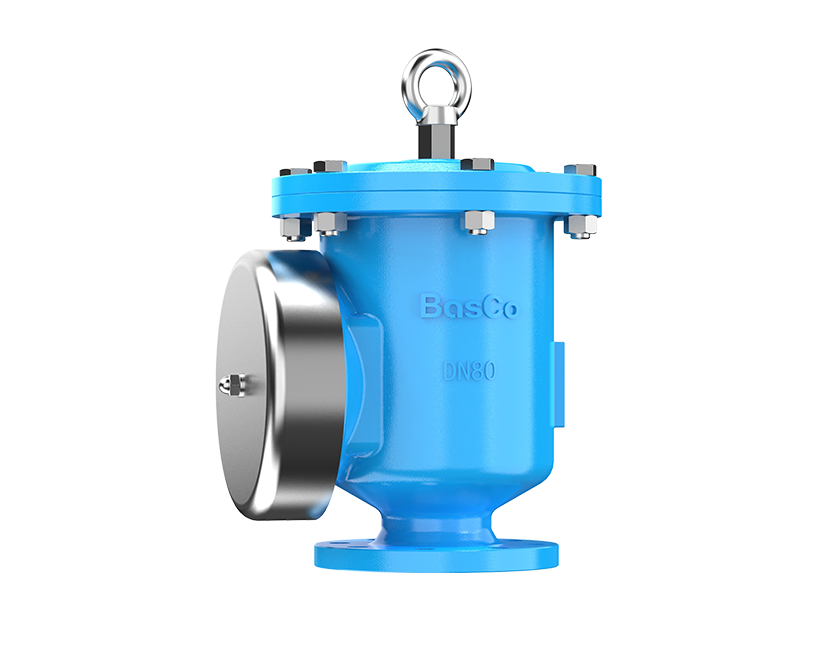

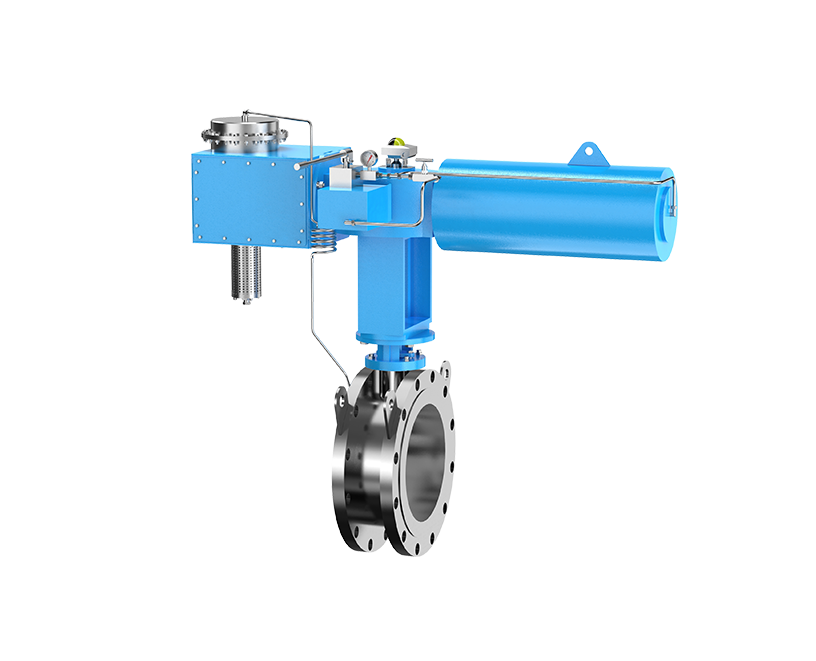








The BasCo 5660 series liquid-seal pressure/vacuum relief valve, also known as a hydraulic safety valve, is a self-actuated pressure protection device mounted on atmospheric fixed-roof tanks. A liquid barrier replaces the conventional mechanical metal seal. It maintains a gas-tight seal within the set pressure and vacuum range, vents automatically under overpressure, admits air under vacuum, and restores the seal after pressure equalizes.
The design addresses leakage and sticking in mechanical breather valves and liquid carryover and frequent replenishment in conventional hydraulic safety valves. It offers zero leakage within the set pressure range, resistance to crystallization, splash control and reliable operation. It meets SY/T 0511-2024 and API 2000 requirements and is intended for atmospheric tanks handling flammable or crystallizing media or subject to stringent emissions requirements in petrochemical, chemical, pharmaceutical and fine chemical service.
Operating principle
A coaxial partition and a liquid reservoir use a dedicated liquid as both the sealing and operating medium. The pressure difference across the tank moves the liquid levels to vent or admit air automatically.
Pressure venting
As tank pressure rises, the liquid level inside the partition falls and the outer level rises. At the pressure setpoint, the outer liquid surface drops below the lower edge of the partition, allowing gas to pass through the liquid seal and vent. When pressure falls, the liquid levels return and the seal is restored.
Vacuum relief
Under tank vacuum, the outer liquid level rises and the inner level falls. At the vacuum setpoint, the inner liquid surface drops below the lower edge of the partition, allowing outside air to enter through the seal. After pressure equalizes, the liquid levels return and the seal is restored.

Key technical advantages
Zero leakage before opening
A conventional mechanical valve uses metal or soft contact between the disc and seat. Leakage increases as pressure approaches the setpoint, causing product loss and VOC emissions. The continuous liquid barrier in the BasCo 5660 isolates the flow path and prevents leakage before opening.
Resistance to sticking from frost or crystallization
Crystallization, coking, viscous media and frost can jam the discs, stems and springs of conventional valves. The BasCo 5660 has no moving mechanical sealing pairs or friction components. Its seal liquid isolates the medium from moving metal parts. A dedicated low-freezing-point liquid is available for cold service and media prone to crystallization or polymerization, or with high viscosity.
Splash control
High-speed venting can entrain seal liquid in conventional hydraulic valves, causing liquid loss, tank-roof contamination and frequent replenishment. The BasCo 5660 uses multiple baffles and a mist capture structure to redirect and slow the flow, retain droplets and return them to the reservoir. This reduces seal liquid loss, extends replenishment intervals and helps avoid contamination and slippery surfaces.
Configurations
| Configuration | Features | Application |
| Standard | Full liquid seal for pressure and vacuum | Routine venting of most atmospheric tanks, especially with media prone to crystallization or sticking |
| Integrated flame arrester | Liquid seal with built-in flame arrester element | Flammable media tank areas requiring both venting and flame arresting |
Suitable operating conditions
Recommended applications
- Tanks for volatile or flammable media such as gasoline, diesel, solvents, fine chemicals and pharmaceutical feedstocks.
- Media prone to crystallization, polymerization or coking, and high-viscosity service where mechanical valves may stick.
- Areas with strict VOC emission and product-loss limits.
- Tanks in cold regions where frost may block valves in winter.
- Hazardous tank areas in petrochemical, chemical, pharmaceutical and fine chemical plants.
Unsuitable applications
- Media that react chemically with the seal liquid; confirm compatibility in advance.
- High-pressure tanks beyond the operating range of a liquid-seal design.