

In many dust-handling and powder-processing plants, explosion protection is no longer treated as a simple compliance item. I see more engineers and plant owners asking a harder question: how can we safely release explosion pressure when the equipment is indoors, close to operators, or surrounded by valuable process assets? Traditional explosion venting works well when the flame and pressure can be discharged to a safe outdoor area, but that option is not always available in compact factories, retrofit projects, or high-density production lines.
In my engineering judgment, a flameless explosion venting device is the right direction when combustible dust explosion risk exists and direct flame discharge cannot be safely routed outdoors. The key trade-off is that the device must control flame, heat, and pressure while still allowing fast pressure relief, so selection should never be based on connection size alone. I recommend evaluating the process material, protected equipment volume, installation location, venting efficiency, maintenance access, and certification requirements together before choosing a model. For indoor applications, a properly selected non-reclosing type flameless explosion venting device, such as BasCo’s solution, can provide a practical balance between explosion safety, installation flexibility, and lifecycle reliability.
When customers ask me how to select a flameless explosion venting device, I usually start with the decision path rather than the product catalog. The flowchart below is useful because it reflects the way engineers should think: first define the hazard, then judge whether conventional venting is acceptable, and only then move into device sizing and installation details. That sequence helps avoid one of the most common mistakes I see in projects, which is selecting a venting product before the real protection scenario is fully understood.

Flameless Explosion Venting Device Selection Flowchart
Flameless explosion venting matters because many combustible dust systems are now installed inside buildings where ordinary vent panels cannot discharge flame safely. In a dust explosion, the protected vessel or duct system needs rapid pressure relief, but the released flame front, hot gases, and burning particles can create secondary hazards if they enter an occupied workspace. This is especially important around dust collectors, silos, mills, elevators, filters, and pneumatic conveying systems.
In real projects, I often see the problem appear during layout review rather than during early equipment purchasing. A process engineer may specify explosion venting correctly, but the building layout leaves no safe outdoor vent path. At that point, the project team has to decide whether to redesign the plant, extend vent ducts, relocate equipment, or use flameless explosion venting. A flameless device becomes valuable because it can suppress flame propagation at the discharge point while still allowing pressure to be relieved.
With outdoor explosion venting, the main focus is usually vent area, discharge direction, and safe separation distance. With flameless explosion venting, I pay equal attention to flame arresting performance, temperature reduction, pressure drop, and post-event inspection. The device is not just an accessory installed over a vent panel; it is a safety component that has to perform under extremely fast transient conditions.
This is why I discourage buyers from treating flameless venting as a simple “space-saving” option. It can solve layout problems, but only when the protected equipment, dust characteristics, and installation environment are compatible. If those inputs are ignored, the plant may end up with a device that looks correct mechanically but does not deliver the intended protection performance.
| Project Condition | Engineering Concern | Selection Direction |
|---|---|---|
| Equipment installed outdoors with safe discharge area | Flame and pressure can be directed away from people and assets | Conventional explosion venting may be suitable |
| Equipment installed indoors or near operators | Open flame discharge creates unacceptable secondary risk | Consider flameless explosion venting |
| Limited duct routing space | Long vent ducts may reduce venting efficiency and complicate layout | Evaluate a flameless device near the protected equipment |
| Retrofitted production line | Existing building constraints limit conventional protection options | Use a selection flowchart and verify installation compatibility |
In BasCo engineering discussions, we usually explain dust explosion protection by starting with the event itself. When combustible dust is dispersed in air and meets an ignition source inside equipment such as a dust collector, silo, mill, filter, bucket elevator, or powder handling vessel, pressure can rise extremely fast. If that pressure is not relieved correctly, the equipment body may be damaged, and flame or burning particles may be discharged into the surrounding work area.
A flameless explosion venting device is designed to reduce that external hazard while still allowing explosion pressure to be released. During a dust explosion event, the venting element opens and gives the pressure a controlled relief path. At the same time, the flame front, hot gases, and burning particles pass through the flame-arresting structure of the device, where flame propagation is controlled and thermal energy is reduced before discharge reaches the surrounding environment.
From our BasCo engineering perspective, this is the key difference between ordinary explosion venting and flameless explosion venting. Ordinary venting may be suitable when flame and pressure can be safely discharged outdoors. Flameless venting becomes important when the equipment is indoors, close to operators, near other process assets, or difficult to connect to a safe outdoor vent path. The goal is not only to relieve pressure, but also to manage flame, heat, and post-event safety in a more controlled way.
The video below shows dust explosion protection equipment working with a flameless explosion venting device. It helps plant engineers, EHS teams, and procurement teams understand why this device should be selected based on dust characteristics, equipment volume, installation location, venting efficiency, clearance, and maintenance access rather than connection size alone.
Dust explosion protection equipment working with a flameless explosion venting device.
I start selection by defining the explosion protection scenario, not by choosing a model number. The protected equipment type, internal volume, operating pressure, dust explosibility, maximum explosion pressure, pressure rise rate, and expected reduced explosion pressure all influence the final device selection. If these values are missing, the selection becomes guesswork, and guesswork is not acceptable in explosion safety.
The decision flow should also confirm whether flameless venting is actually allowed for the process. Some applications may involve sticky, oily, fibrous, toxic, or high-temperature materials that require additional engineering review. I also check whether the discharged gases after venting could create indoor environmental or personnel exposure concerns. A good device selection process should identify those issues before procurement, not after installation.
The flowchart shown above helps guide the conversation from hazard recognition to equipment selection. In my experience, that visual process is especially helpful when engineering, EHS, procurement, and operations teams are all involved in the same project. It keeps the discussion focused on whether the application needs flameless venting, whether the installation conditions support it, and whether the device can be maintained properly after installation.
For BasCo projects, I would use the flowchart as an early-stage communication tool with the customer. It allows us to ask the right questions before quoting or sizing. That saves time and reduces the risk of selecting a device that later conflicts with process layout, maintenance space, or safety requirements.
A non-reclosing type flameless explosion venting device is designed to open during an explosion event and remain open afterward. From an engineering perspective, this is simple, predictable, and easy to inspect. After activation, the system should be shut down, inspected, and restored before returning to service. That behavior is important because an explosion event should never be treated as a normal operating cycle.
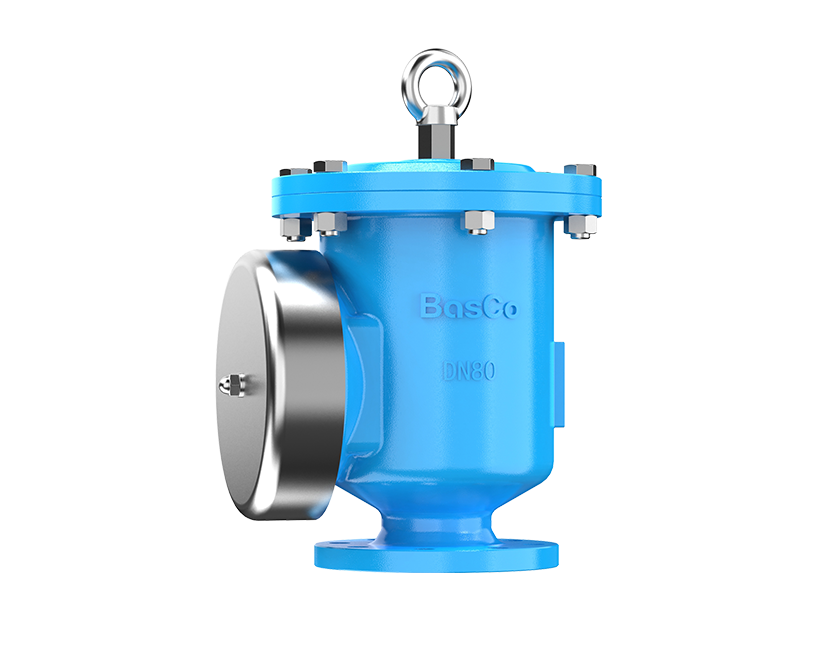
The BasCo Non-reclosing Type Flameless Explosion Venting Device is intended for applications where controlled pressure relief and flame mitigation are required in a compact installation. The non-reclosing concept supports clear post-event maintenance logic because operators can visually confirm that a venting event has occurred. In plant safety management, that kind of obvious failure-state indication can be more valuable than many buyers initially realize.

BasCo Non-reclosing Type Flameless Explosion Venting Device. Click the image to view the product page.
One mistake I see in safety equipment purchasing is focusing only on first activation performance. In reality, the post-event condition matters just as much. After a flameless explosion venting device activates, maintenance teams need to know what happened, what must be replaced, and whether the protected equipment is safe to restart. A non-reclosing type design supports that process because the device does not silently return to a normal-looking state after a serious event.
This is also where product documentation and engineering support become important. The device should be selected with clear expectations for inspection, replacement parts, cleaning, and restart approval. BasCo’s role should not be limited to supplying hardware; the value is stronger when the device is integrated into the customer’s full explosion protection and maintenance logic.
| Selection Factor | Why It Matters | Engineer’s Practical View |
|---|---|---|
| Non-reclosing structure | Indicates that a venting event has occurred | Useful for shutdown, inspection, and controlled restart procedures |
| Flame arresting capability | Reduces flame discharge risk in indoor or restricted spaces | Critical when people or equipment are near the venting location |
| Pressure relief efficiency | Helps limit pressure rise inside protected equipment | Must be evaluated with equipment volume and dust explosion data |
| Maintenance accessibility | Supports inspection after activation or process contamination | Should be confirmed during layout design, not after installation |
I would consider BasCo’s flameless explosion venting solution when a plant needs explosion pressure relief but cannot safely discharge flame outdoors. Typical scenarios include indoor dust collectors, process vessels located near walkways, equipment installed in compact workshops, and retrofit projects where structural changes are expensive or impractical. These are the applications where the real value of flameless venting becomes clear.
BasCo is especially relevant when the buyer needs a device that fits into a broader industrial safety strategy rather than a single isolated component purchase. In my experience, the strongest projects happen when the supplier, engineering contractor, and end user discuss the process conditions together. That conversation should cover not only sizing, but also installation angle, surrounding clearance, dust accumulation risk, inspection access, and replacement planning.
Procurement teams often compare explosion protection devices by size, material, and price. I understand that approach, but it does not capture the full risk profile. A lower-cost device that creates installation difficulties, uncertain maintenance requirements, or poor application fit may increase lifecycle cost and operational risk. Explosion protection purchasing should always include engineering review because the cost of a wrong selection is far greater than the price difference between devices.
For this reason, I recommend that buyers share process data early when evaluating BasCo’s non-reclosing type flameless explosion venting device. Material characteristics, equipment drawings, operating conditions, and plant layout all influence selection quality. The more complete the input, the more reliable the final recommendation will be.
Testing is essential because flameless explosion venting devices operate under conditions that cannot be fully understood from static drawings alone. During an explosion event, pressure rises rapidly, the vent opens, flame and hot gases enter the flame arresting structure, and the device must reduce the external hazard while allowing controlled pressure relief. This is a demanding sequence, and it is exactly why engineers pay close attention to test behavior.
The BasCo flameless explosion venting device testing video provides a useful visual reference for how the device behaves under explosion venting conditions. I do not treat a video as a replacement for technical documentation or certification review, but it helps customers understand the physical event behind the engineering calculation. For non-specialists, seeing the test process often makes the safety logic more concrete.
BASCO flameless explosion venting device testing
In engineering discussions, I use testing as a bridge between calculation and confidence. Standards, formulas, and design data are necessary, but plant teams also need to understand what the device is expected to do during a real event. A test video can support that understanding by showing the intensity of the pressure release and the importance of flame control.
However, I also remind customers that every application must still be reviewed individually. Dust properties, vessel geometry, installation orientation, and surrounding conditions can change the protection strategy. Testing demonstrates capability, while engineering selection confirms suitability for the specific project.
The most common mistake I see is selecting a flameless explosion venting device based only on nominal size. Size matters, but it is only one part of the decision. The device must match the explosion characteristics of the dust, the protected equipment volume, the expected reduced pressure, and the installation environment. Without those checks, a product that appears mechanically compatible may not be suitable from a safety engineering standpoint.
Another mistake is ignoring maintenance space. Flameless venting devices need inspection access, and after an activation event, operators must be able to examine the device and surrounding area safely. I have seen layouts where the device was technically installed, but access was so poor that routine inspection became difficult. Good safety design includes the technician who has to maintain the system later.
When I review a project, I usually focus on a few practical checkpoints: whether the dust data is available, whether indoor discharge is acceptable, whether enough clearance exists, whether personnel exposure has been considered, and whether the plant has a restart procedure after activation. These checkpoints are not complicated, but they prevent many expensive mistakes.
| Common Mistake | Possible Consequence | Better Engineering Practice |
|---|---|---|
| Choosing only by flange size | Device may not match the required venting performance | Base selection on explosion data, equipment volume, and reduced pressure targets |
| Ignoring indoor discharge conditions | Heat, dust, or pressure effects may create secondary hazards | Review surrounding personnel areas, equipment, and ventilation |
| Leaving no maintenance access | Inspection and replacement become difficult after activation | Confirm access space during layout design |
| Treating testing as the only proof of suitability | Application-specific risks may be overlooked | Use testing, documentation, and project-specific engineering review together |
Yes, flameless explosion venting should be evaluated early because it affects equipment layout, structural design, maintenance planning, and safety zoning. When the decision is delayed, the project team may discover too late that conventional venting cannot be routed safely. At that stage, changes become more expensive and may disrupt installation schedules.
Early evaluation also helps align engineering and procurement. Engineers can define the protection requirement, while procurement can compare qualified solutions based on real application needs. This prevents the common disconnect where purchasing receives a product name but not the reasoning behind the selection. In explosion protection, that reasoning is part of the safety value.
From my perspective, early selection is not about buying the device sooner. It is about making sure the plant layout supports the device before steel, ducts, platforms, and electrical systems are finalized. A flameless explosion venting device may require clearance, inspection access, and specific mounting conditions. Those details are much easier to solve during design than during commissioning.
This is where I see BasCo adding practical value for OEMs and plant engineers. By discussing the application early, BasCo can help the customer avoid mismatches between equipment design and explosion protection requirements. That approach is more professional than simply shipping a device after the rest of the system has already been locked in.
My recommendation is to treat flameless explosion venting device selection as an engineering decision, not a purchasing shortcut. Start with the combustible dust hazard, confirm whether outdoor venting is practical, and then evaluate whether a flameless solution provides the safest and most realistic installation path. If the equipment is indoors, close to people, or difficult to vent outside, flameless explosion venting deserves serious consideration.
For applications that require clear post-event inspection and practical indoor explosion protection, I see strong value in a non-reclosing type design. BasCo’s Non-reclosing Type Flameless Explosion Venting Device fits this decision logic because it supports pressure relief, flame mitigation, and straightforward maintenance response after activation. As an engineer, I would involve BasCo early in the layout and data review stage so the final device selection reflects the real process conditions, not just the drawing dimensions.
In the end, the best explosion protection solution is the one that performs correctly during the event and remains manageable after the event. That requires honest engineering, complete process information, and a supplier that understands industrial risk beyond the product itself. When those pieces come together, flameless explosion venting becomes not only a safety device, but a practical part of reliable plant design.

Where Are Rupture Disks Used in Chemical and Petrochemical Plants?
2026-09-21Burst Pressure Tolerance Explained: How Accurate Are Rupture Disks?
2026-09-16Full-Process Quality Control for Rupture Discs
2026-09-01Rupture Disk Selection Guide: How to Choose the Right Type, Pressure, Material, and Size
2026-08-25Copyright © Jiangsu Bafang Safety Device Co., LTD. All Rights Reserved