

As oil and gas recovery systems become more widespread under tightening environmental and safety regulations, flame arrestors have quietly become one of the most critical—and misunderstood—components in the entire system. I've seen many facilities invest heavily in vapor recovery technology, only to undermine the whole safety chain with a poorly selected, poorly maintained, or poorly understood flame arrestor.
From an engineering standpoint, a flame arrestor is often treated as a “standard accessory”. In reality, it is the final physical barrier between a controllable incident and a catastrophic accident. When it fails, the consequences are rarely minor. In this article, I want to walk through how flame arrestors actually work, why they fail in real oil and gas recovery applications, and what I believe operators must do to prevent them from becoming nothing more than a false sense of security.

In theory, everyone knows what a flame arrestor does. In practice, many systems rely on it without fully respecting the conditions under which it can—and cannot—perform.
A flame arrestor works by stopping flame propagation through a combination of heat absorption and wall quenching effects. When a flame front enters the arrestor element, it is divided into countless micro-channels. These narrow passages rapidly conduct heat away from the flame, reducing the gas temperature below its ignition point. At the same time, free radicals generated during combustion collide more frequently with the channel walls, suppressing the chemical chain reaction required for flame continuation.
The key detail that often gets overlooked is this: flame arrestors are not universal. Their effectiveness depends heavily on gas composition, explosion group, flame speed, pressure, and whether the event is deflagration or detonation. Treating all arrestors as interchangeable is one of the most common—and dangerous—mistakes I see in vapor recovery projects.

When flame arrestors fail in oil and gas recovery systems, it is rarely due to a single cause. In almost every investigation I've participated in, failure was the result of multiple weaknesses stacking on top of each other—design assumptions, manufacturing shortcuts, operating realities, and maintenance gaps all playing a role.
What makes this especially concerning is that many of these failures are not immediately visible. A flame arrestor can look intact from the outside while being completely ineffective internally.
Design-stage errors are, in my experience, the most fundamental cause of flame arrestor failure. Once the wrong arrestor is selected, no amount of careful installation or maintenance can compensate for that mistake.
I've seen engineers select arrestors based solely on pipe diameter or nominal flow rate, without fully analyzing vapor composition, temperature fluctuations, or potential explosion scenarios. In oil and gas recovery systems, vapor mixtures can vary significantly over time, and a flame arrestor that performs adequately under one condition may be dangerously under-rated under another.
Another common issue is failing to distinguish between deflagration and detonation risks. Arrestors designed only for deflagration cannot withstand the pressure and flame speeds associated with detonation events. Installing the wrong type effectively renders the device useless during the very scenario it is meant to prevent.

Internal structure of BASCO Flame Arrester
Absolutely—and this is an area where the industry still underestimates the risk.
As demand for vapor recovery systems has surged, so has the number of flame arrestor suppliers. Not all manufacturers operate at the same technical level. Flame arrestors are not simple assemblies; they require precise channel geometry, controlled materials, and strict quality assurance. Cutting corners on materials or machining tolerances directly compromises heat dissipation and quenching performance.
I've encountered arrestors made with substandard metals that corroded prematurely, as well as elements assembled with inconsistent channel spacing. These issues are rarely obvious during installation, but they significantly reduce safety margins during real flame events.
Even a correctly designed and well-manufactured flame arrestor can fail if it is physically damaged during handling or installation.
Mechanical impacts, improper lifting, or misalignment during flange tightening can deform the internal flame arresting element. Once the element shifts or bends, the carefully engineered channel structure is compromised. In some cases, this deformation creates preferential flow paths that allow flames to pass through with minimal heat loss.
What's especially dangerous is that this type of failure often goes unnoticed. Without internal inspection, operators may assume the arrestor is still functional simply because it remains installed in the line.
Blockage is, without question, one of the most common failure modes in oil and gas recovery systems—and also one of the least proactively managed.
Recovered vapors are rarely clean. They often contain oil mist, particulates, corrosion products, or polymerized hydrocarbons. Over time, these contaminants accumulate on the surface of the flame arresting element, gradually narrowing the micro-channels.
As blockage increases, two dangerous conditions emerge. First, system pressure drop rises, potentially affecting upstream equipment. Second, localized flow velocities increase through remaining open channels, which can allow flames to penetrate rather than be quenched. In severe cases, complete blockage can even lead to structural rupture under pressure.

Blockage in flame arrester
Corrosion-related failure is often slow, subtle, and devastating.
When material selection does not fully account for the chemical composition of recovered vapors, flame arrestor elements can corrode from the inside out. Pitting corrosion alters channel geometry, while uniform corrosion reduces thermal conductivity—both of which undermine the arrestor's ability to absorb heat and quench flames.
In several cases I've reviewed, arrestors passed visual external inspection while internal elements had already lost their designed thermal properties. By the time corrosion was discovered, the device had likely been ineffective for months or even years.
Maintenance is where theory meets reality. Even the best-designed flame arrestor will fail if it is not properly maintained.
Many operating teams lack formal training on flame arrestor function and limitations. Without that understanding, inspections become superficial, cleaning intervals are extended indefinitely, and performance testing is ignored altogether. In some facilities, flame arrestors are treated as “install and forget” devices, which is a dangerous misconception.
A proper maintenance program should include periodic disassembly, internal inspection, cleaning, and performance verification. These activities require time, planning, and technical discipline—but they are far less costly than the consequences of a failure.

One uncomfortable truth is that flame arrestors often exist in a regulatory gray area. In many regions, there is no unified mandatory standard for periodic performance testing once a device is installed.
This leads to a compliance mindset rather than a safety mindset. Inspections become paperwork exercises, and functional verification is replaced by visual checks. Combined with a general underestimation of flame arrestor importance, this creates an environment where failure is not a matter of “if”, but “when”.
Correct selection starts with a detailed understanding of actual operating conditions—not design assumptions.
In oil and gas recovery systems, different applications require different arrestor types, explosion ratings, and installation configurations. Deflagration arrestors, non-stable detonation arrestors, and stable detonation arrestors each serve specific roles. Selecting the wrong category is one of the fastest ways to compromise system safety.
Below is a practical summary I often use when reviewing system designs:
|
Operating Consideration |
Selection Impact |
|
Vapor composition & explosion group |
Determines channel size and material |
|
Deflagration vs detonation risk |
Defines arrestor type |
|
Installation location (end-of-line vs in-line) |
Affects structural design |
|
Temperature and corrosion potential |
Drives material selection |

Classification of BASCO Flame Arrester
Procurement teams play a far greater role in safety outcomes than many realize.
Choosing certified, traceable products from reputable manufacturers is not just a quality issue—it is a risk management decision. Documentation, test reports, and compliance with recognized standards should be non-negotiable requirements. The lowest purchase price often hides long-term costs in the form of reduced lifespan, increased maintenance, and elevated failure risk.
From my experience, effective risk reduction is achieved through consistency rather than complexity.
Facilities that perform best tend to standardize installation procedures, enforce directional markings, and integrate flame arrestors into broader safety and monitoring systems. Training is continuous rather than one-time, and maintenance is scheduled rather than reactive.
Some operations are now supplementing passive flame arrestors with active monitoring technologies that track pressure drop and temperature changes, allowing early detection of blockage or degradation before failure occurs.
Material science and manufacturing precision are steadily improving flame arrestor performance. Advanced alloys offer better corrosion resistance, while optimized channel geometries enhance quenching efficiency without excessive pressure loss.
Equally important are improvements in inspection and maintenance technologies. Designs that allow easier disassembly and cleaning reduce the likelihood that maintenance will be skipped. In my view, these innovations represent one of the most practical paths toward long-term reliability.

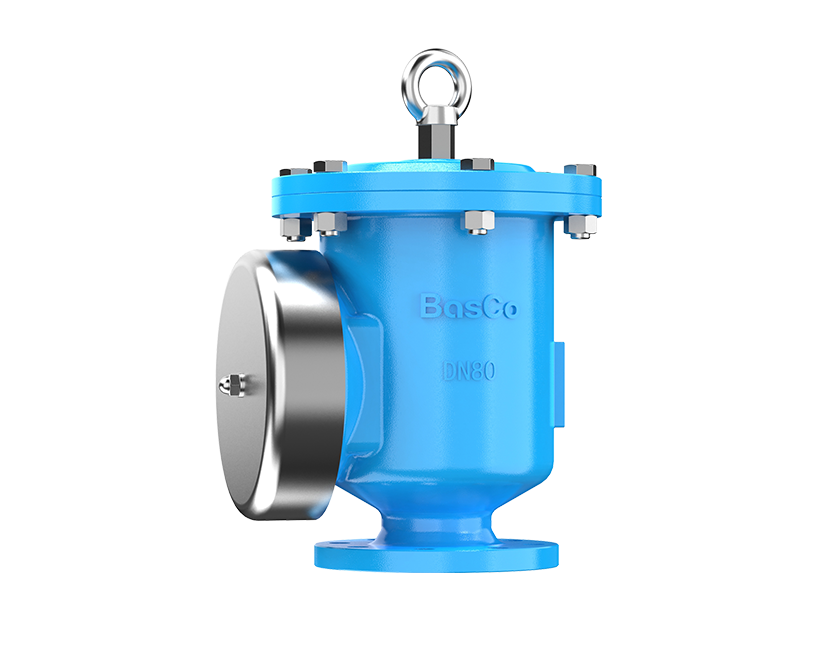
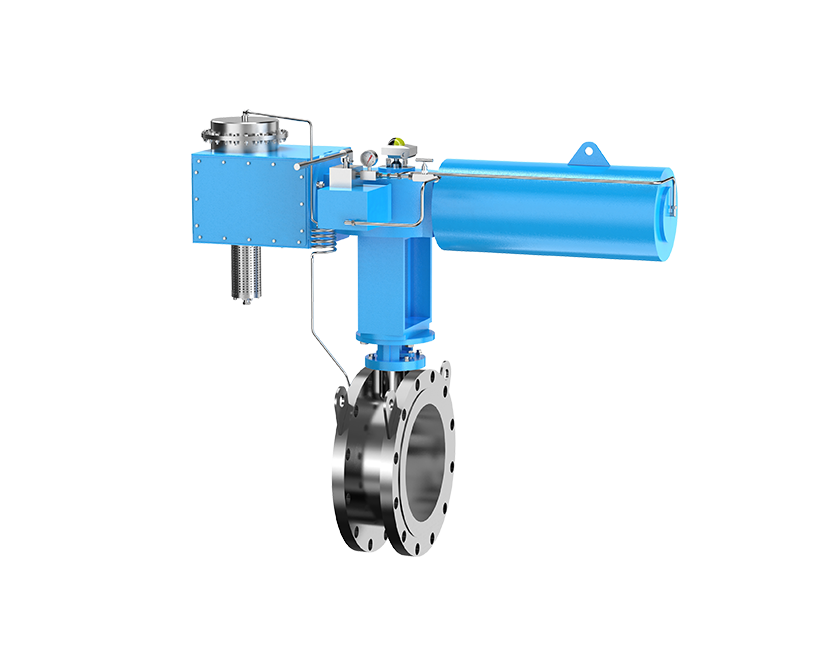
Flame Arrester from BASCO
Flame arrestor failure in oil and gas recovery systems is rarely caused by bad luck. It is the cumulative result of design shortcuts, procurement compromises, operational complacency, and maintenance neglect.
From where I stand, preventing failure is entirely achievable—but only if flame arrestors are treated as critical safety devices rather than background hardware. When selection is thoughtful, manufacturing quality is verified, maintenance is disciplined, and responsibility is clearly assigned, flame arrestors can perform exactly as intended.
I strongly believe that the difference between a flame arrestor that saves a facility and one that is “functionally decorative” comes down to attention, attitude, and accountability. When those are in place, flame arrestors become what they were always meant to be: a solid, reliable last line of defense.

How to Size a Pressure Vacuum Relief Valve According to API 2000
2026-08-18Flame Arrester Guide: Types, Applications, Selection, and Industrial Solutions
2026-08-04Common Causes of Dust Collector Explosions and How to Protect Against Them
2026-07-13BasCo conducts "CPR+AED Emergency Training to Strengthen Workplace Life Safety Defense"
2026-06-18Copyright © Jiangsu Bafang Safety Device Co., LTD. All Rights Reserved