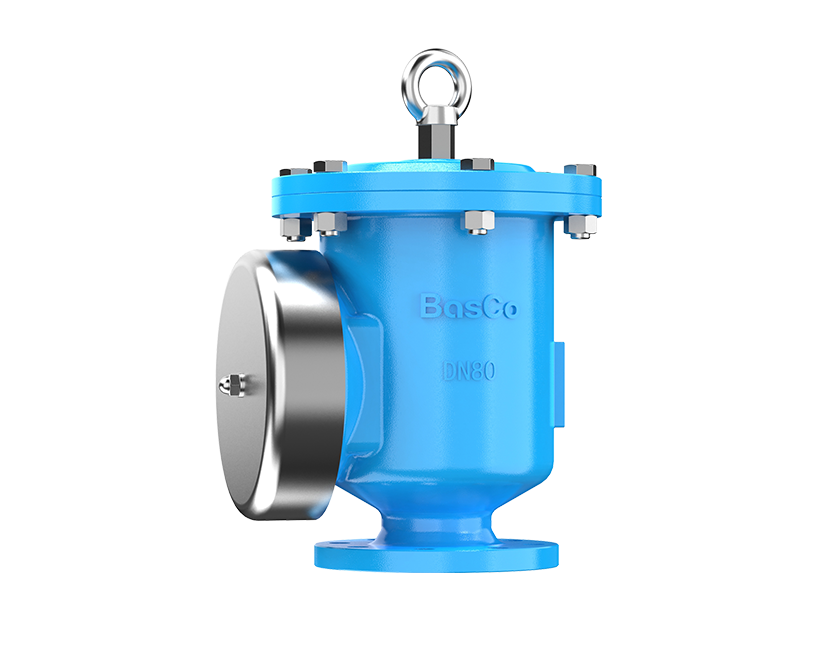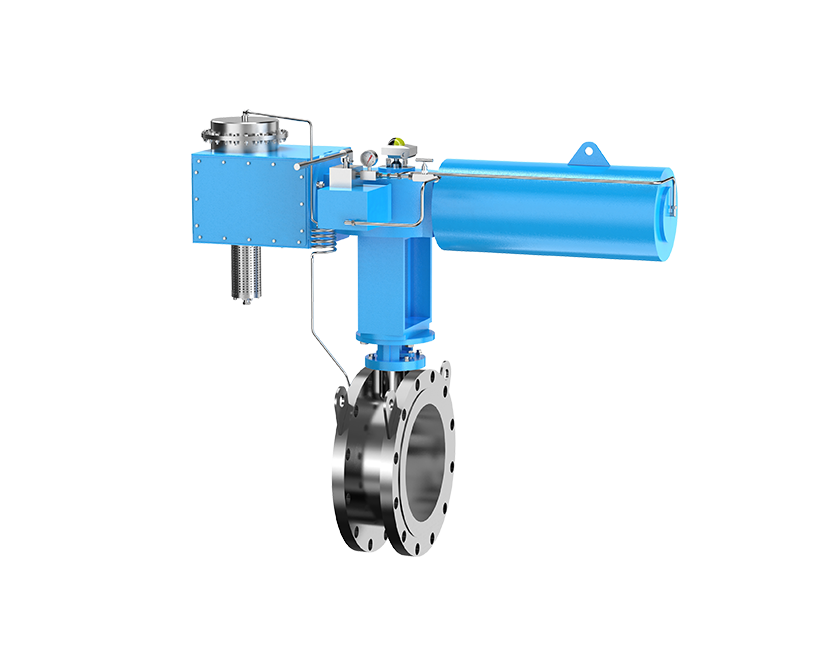


At BasCo, we often speak with plant engineers, tank manufacturers, and procurement teams who use the terms emergency relief valve and safety relief valve almost interchangeably. In real pressure protection design, however, these devices are not selected for the same operating scenario. A safety relief valve is usually chosen for controlled overpressure protection in pressure systems, while an emergency relief valve is often used when a tank needs rapid venting capacity during abnormal or emergency conditions.
From our engineering experience at BasCo, the core difference is this: a safety relief valve protects equipment against defined overpressure events through a set opening pressure, while an emergency relief valve is selected when a tank or low-pressure vessel needs large-capacity emergency venting, and in many cases, both pressure and vacuum protection. The key trade-off is that safety relief valves are often more focused on controlled pressure relief, while emergency relief valves are more focused on abnormal tank protection, fire exposure, vapor expansion, vacuum risk, and rapid pressure equalization. Our recommendation is to select the valve based on the protected equipment, the credible pressure event, required relieving capacity, discharge condition, and whether vacuum protection is needed.
In this article, I will explain the difference between an emergency relief valve and a safety relief valve from the perspective of our BasCo engineering team. I will also show where the BasCo 4800 Series Open-End Structural Pressure Relief Valve and the BasCo 7200 Pressure/Vacuum Emergency Relief Valve fit into real industrial applications.
A safety relief valve is a pressure protection device designed to open when system pressure reaches a defined set pressure. Its main function is to relieve excess pressure before the protected equipment exceeds its allowable limit. In BasCo application reviews, we usually discuss safety relief valves in relation to pressure vessels, pipelines, process systems, and equipment where positive pressure control is the primary concern.
The BasCo 4800 Series Open-End Structural Pressure Relief Valve is a practical example of a relief device used when direct positive pressure discharge is required. It is designed around a straightforward open-end structure, which makes it suitable for applications where the discharge path can be safely managed and the equipment needs dependable overpressure protection. As with any safety relief valve selection, the final decision should be based on set pressure, relieving capacity, media, temperature, installation direction, and discharge safety.

BasCo 4800 Series Open-End Structural Pressure Relief Valve. Click the image to view the product page.
When we review a safety relief valve application, we focus first on the pressure relationship. The valve must remain closed during normal operation, open reliably when pressure reaches the set point, and relieve enough flow to keep the protected equipment within a safe pressure range. If the set pressure is too close to normal operation, the valve may open frequently or become unstable. If the set pressure is too high, the equipment may be exposed to unsafe pressure before relief begins.
We also pay attention to the discharge area. An open-end pressure relief valve may be simple and effective, but the released media must not create unacceptable risk for operators, platforms, electrical equipment, or nearby process units. This is why BasCo engineers review both valve performance and installation layout before confirming a recommendation.
An emergency relief valve is designed for abnormal or emergency pressure events, especially on storage tanks and low-pressure vessels. These events may include fire exposure, rapid vapor generation, blocked venting, thermal expansion, sudden filling, liquid transfer problems, or vacuum formation during unloading or cooling. In many tank applications, emergency relief is not only about positive pressure. Vacuum protection may be just as important.
The BasCo 7200 Pressure/Vacuum Emergency Relief Valve is designed for applications where tanks need emergency pressure relief and vacuum relief in one protection strategy. From our engineering perspective, this type of valve is especially important when the tank may experience both outward pressure load and inward vacuum load. A tank can fail from overpressure, but it can also deform or collapse if vacuum is not relieved properly.
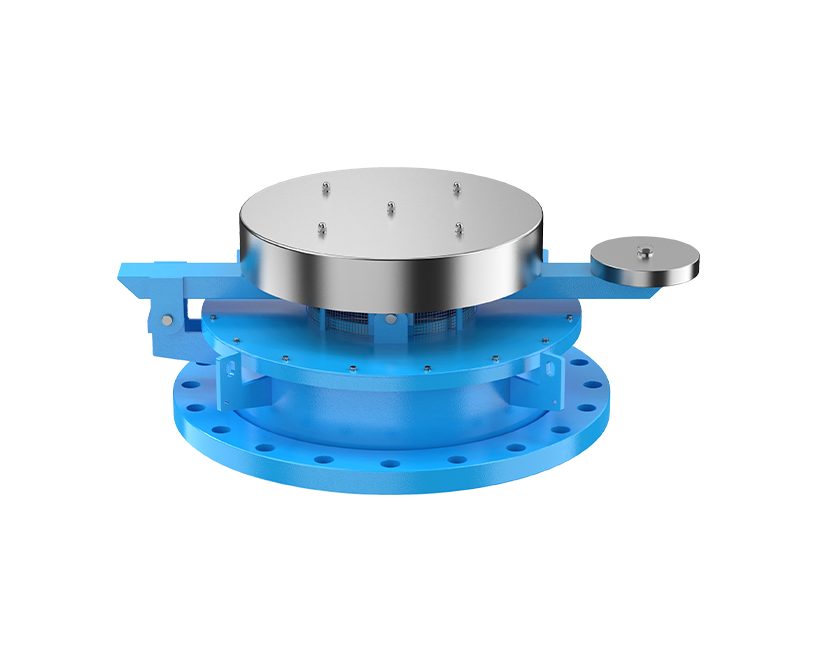
BasCo 7200 Pressure/Vacuum Emergency Relief Valve. Click the image to view the product page.
In our work with tank protection projects, emergency relief valve selection starts with the emergency case. A tank that operates safely during routine filling and emptying may still need a much larger venting path during fire exposure or abnormal vapor generation. Normal breathing capacity and emergency venting capacity should not be treated as the same requirement.
We also review vacuum scenarios carefully. Rapid pump-out, cooling, steam condensation, or blocked inlet air can create vacuum faster than the tank structure can tolerate. For that reason, the BasCo 7200 Series is often considered when both emergency pressure relief and vacuum protection need to be addressed together.
The main difference is the protection scenario. A safety relief valve is generally selected for defined overpressure protection in a pressure system. An emergency relief valve is selected for abnormal tank protection, where emergency venting capacity, vapor expansion, fire exposure, vacuum relief, or rapid pressure equalization may be required.
In practical terms, I would not ask only, "Which valve is better?" A better engineering question is, "What pressure event are we protecting against?" If the system needs controlled positive pressure relief, a safety relief valve may be appropriate. If the tank must handle emergency pressure buildup and possible vacuum, an emergency relief valve should be evaluated.
| Comparison Item | Safety Relief Valve | Emergency Relief Valve |
|---|---|---|
| Main purpose | Controlled positive pressure relief. | Emergency venting for abnormal tank conditions. |
| Typical equipment | Pressure vessels, pipelines, process equipment, and pressure systems. | Storage tanks, low-pressure vessels, and tank venting systems. |
| Pressure direction | Usually focused on overpressure relief. | May include both pressure relief and vacuum relief. |
| Typical scenario | Defined pressure rise above normal operating conditions. | Fire exposure, rapid vapor generation, blocked venting, filling, unloading, or vacuum formation. |
| Selection focus | Set pressure, capacity, media, temperature, and discharge safety. | Emergency capacity, pressure setting, vacuum setting, tank rating, and abnormal event review. |
Engineers should consider a safety relief valve when the main concern is positive pressure relief from a defined pressure system. This can include pressure vessels, process lines, equipment housings, and systems where pressure buildup must be relieved before reaching the allowable limit. In these cases, the valve must be selected to open at the correct set pressure and relieve enough flow to control the pressure rise.
At BasCo, we would consider the 4800 Series Open-End Structural Pressure Relief Valve when the project requires direct pressure discharge and the open-end release condition is acceptable. Before recommending it, our team reviews whether the media can be safely discharged, whether the surrounding area is suitable, and whether the valve capacity matches the pressure event.
A safety relief valve is only effective when its set pressure and relieving capacity match the protected equipment. If the set pressure is too low, the valve may open during normal operation and create maintenance problems. If the set pressure is too high, it may not protect the equipment in time. This balance is one of the most important parts of the selection process.
Capacity matters just as much as set pressure. A valve can open correctly but still be undersized for the required flow. That is why our BasCo engineers ask for operating pressure, required set pressure, relieving flow, media, temperature, and installation details before confirming a valve model.
Engineers should consider an emergency relief valve when a tank or low-pressure vessel may experience abnormal pressure or vacuum conditions beyond normal breathing. This is common in storage tanks where fire exposure, vapor expansion, fast filling, blocked vents, pump-out, or cooling can create a sudden pressure imbalance. In these cases, the valve is not just managing normal operation. It is protecting the tank during credible upset events.
At BasCo, we would consider the 7200 Pressure/Vacuum Emergency Relief Valve when both pressure and vacuum protection are relevant. This is especially important for tanks with low design pressure, large vapor space, flammable or volatile media, or operating conditions that can shift quickly between pressure buildup and vacuum formation.
One of the most common mistakes we see is focusing only on overpressure. Vacuum can be just as damaging, especially for atmospheric and low-pressure storage tanks. Rapid unloading, blocked vents, or cooling can create inward pressure that deforms the tank shell. If the tank was not designed for that vacuum load, damage can occur quickly.
For emergency relief valve selection, we ask for tank design pressure, vacuum rating, filling rate, emptying rate, media vapor behavior, temperature range, and emergency scenario. These details help us understand whether the tank needs pressure relief only, vacuum relief only, or a combined pressure/vacuum emergency relief solution.
When we compare the BasCo 4800 Series and the BasCo 7200 Series, we start with the protected equipment and the pressure event. If the application involves direct positive pressure relief and an open-end discharge structure is suitable, the 4800 Series may be the practical choice. If the application involves tank emergency venting and possible vacuum protection, the 7200 Series is usually the better direction.
The decision also depends on media and discharge conditions. Open discharge may be acceptable for some services but not for others. Emergency venting may require larger capacity, careful tank rating review, and more attention to abnormal operating cases. We do not select these products as interchangeable parts because their protection logic is different.
| Project Condition | BasCo Engineering Direction | Typical Product Fit |
|---|---|---|
| Positive pressure relief is the main requirement. | Review set pressure, flow capacity, media, and discharge safety. | BasCo 4800 Series Open-End Structural Pressure Relief Valve. |
| Tank needs emergency pressure venting. | Review emergency flow demand, tank design pressure, and abnormal scenarios. | BasCo 7200 Pressure/Vacuum Emergency Relief Valve. |
| Vacuum risk exists during unloading, cooling, or condensation. | Review vacuum rating, inward flow requirement, and tank collapse risk. | BasCo 7200 Pressure/Vacuum Emergency Relief Valve. |
| Open-end discharge is acceptable and safe. | Check release direction, surrounding equipment, and operator exposure. | BasCo 4800 Series Open-End Structural Pressure Relief Valve. |
Good valve selection starts with complete application data. When we receive only a valve size and pressure value, our BasCo engineering team usually needs to ask more questions. Connection size tells us how the valve fits mechanically, but it does not tell us whether the valve can protect the equipment during the actual pressure event.
For a safety relief valve, we need to understand operating pressure, set pressure, relieving capacity, media, temperature, material requirements, and discharge conditions. For an emergency relief valve, we also need tank design pressure, vacuum rating, emergency venting case, filling and emptying rates, vapor behavior, and whether fire exposure or abnormal thermal expansion must be considered.
Incomplete data often leads to two problems: oversizing or undersizing. Oversizing may increase cost, create installation difficulties, or affect stable sealing. Undersizing is more serious because the valve may not relieve pressure fast enough during the event. Neither outcome is good engineering.
At BasCo, we prefer to review the pressure protection system before confirming a final model. This includes the tank or vessel, nozzle location, surrounding layout, discharge path, media condition, and maintenance access. A valve that looks correct in a catalog still has to work correctly in the plant.
| Required Information | Why It Matters | Applies To |
|---|---|---|
| Protected equipment type | Confirms whether the device protects a pressure system, tank, or low-pressure vessel. | Both valves. |
| Operating pressure and set pressure | Defines normal operation and relief activation point. | Both valves. |
| Required relieving capacity | Determines whether the valve can discharge enough flow. | Both valves. |
| Vacuum rating and vacuum scenario | Confirms whether inward protection is required. | Emergency relief valve. |
| Filling and emptying rates | Shows how fast tank pressure can change. | Emergency relief valve. |
| Media and temperature | Affects material, sealing, corrosion resistance, and discharge safety. | Both valves. |
| Discharge location | Determines personnel safety and layout requirements. | Both valves. |
The first mistake is selecting the valve only by nominal size. A valve can match the nozzle but still be wrong for the pressure event. At BasCo, we always compare mechanical connection with set pressure, capacity, media, and discharge conditions before confirming suitability.
The second mistake is using a safety relief valve where emergency tank venting is actually required. Normal pressure relief and emergency relief are not always the same. If the tank is exposed to fire, rapid vapor generation, or large abnormal flow, emergency relief capacity may be needed.
The third mistake is ignoring vacuum protection. This is especially common in storage tank applications. A tank may be protected from overpressure but still vulnerable to inward collapse during pump-out, cooling, or condensation. If vacuum risk exists, an emergency pressure/vacuum relief valve should be reviewed.
The fourth mistake is overlooking discharge safety. A relief valve may perform mechanically, but if it discharges toward walkways, platforms, electrical systems, or occupied areas, the installation can create secondary hazards. Relief direction and surrounding layout should be reviewed early in the project.
Our final recommendation is to select the valve by protection scenario, not by product name. A safety relief valve is usually the right direction when the main requirement is controlled positive pressure relief from a defined pressure system. An emergency relief valve is the better direction when a tank or low-pressure vessel needs emergency venting capacity, pressure/vacuum protection, or protection against abnormal pressure events.
For applications that need direct open-end pressure relief, the BasCo 4800 Series Open-End Structural Pressure Relief Valve may be a practical option. For tank applications that require emergency pressure relief and vacuum protection, the BasCo 7200 Pressure/Vacuum Emergency Relief Valve should be considered. In both cases, the right selection depends on pressure data, required capacity, media, temperature, discharge condition, and installation layout.
At BasCo, our engineering team believes a well-selected relief valve should stay stable during normal operation, open reliably when protection is required, and remain practical to inspect and maintain throughout its service life. That is the standard we use when helping customers compare emergency relief valves and safety relief valves for real industrial systems.

Where Are Rupture Disks Used in Chemical and Petrochemical Plants?
2026-09-21Burst Pressure Tolerance Explained: How Accurate Are Rupture Disks?
2026-09-16Full-Process Quality Control for Rupture Discs
2026-09-01Rupture Disk Selection Guide: How to Choose the Right Type, Pressure, Material, and Size
2026-08-25Copyright © Jiangsu Bafang Safety Device Co., LTD. All Rights Reserved