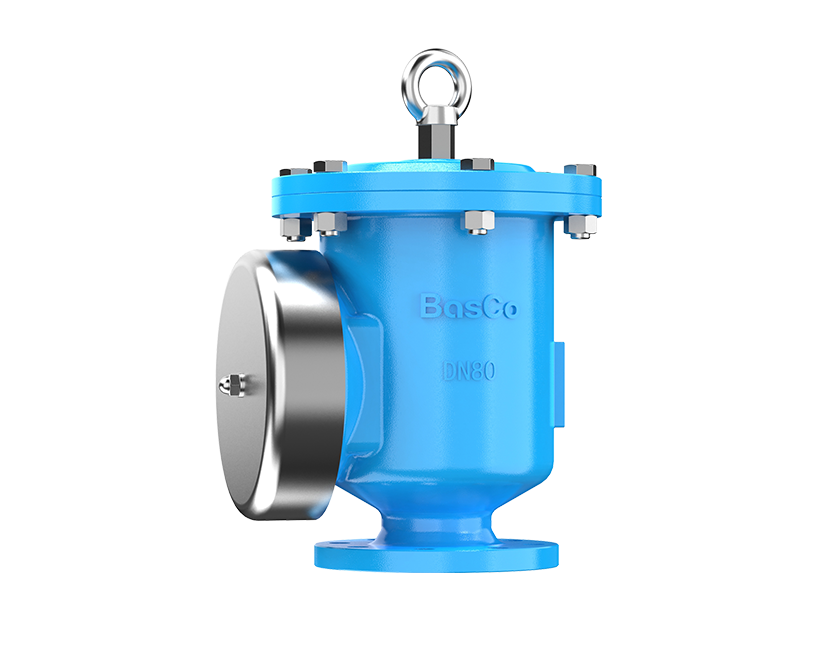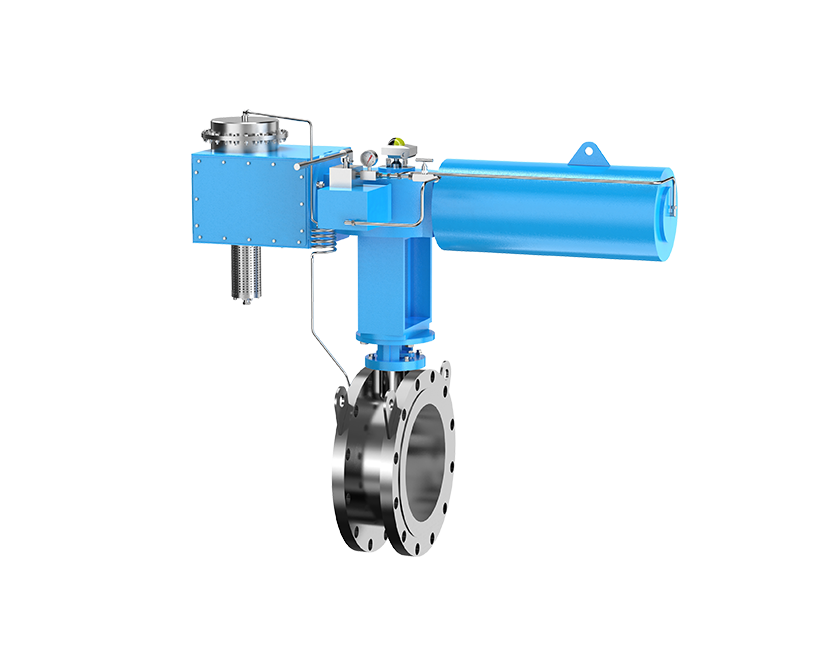


In industrial facilities that handle flammable gases and vapors, flame control devices are non-negotiable. Whether it's a refinery vent system, a chemical plant vapor recovery loop, or a storage terminal tank farm, the ability to stop flame propagation can make the difference between a controlled event and a catastrophic explosion. Two fundamental devices dominate this landscape: flame arresters (often called deflagration arresters) and detonation arresters.
These devices may look similar from the outside, and both rely on heat-quenching elements inside the housing. But their engineering requirements, performance expectations, and acceptable use cases differ dramatically. Understanding these differences is essential for process engineers, safety managers, OEM designers, and procurement teams selecting protective equipment for gas-handling systems.
This article breaks down the practical distinctions between flame arresters and detonation arresters, how they work, where each is appropriate, and what industrial buyers should consider when specifying equipment.

A flame arrester is designed to stop deflagrations—events where a flame front travels at subsonic speed through a gas or vapor mixture. The governing physics is straightforward but powerful: if the flame front can be cooled below the gas's auto-ignition temperature, the flame cannot continue propagating downstream. You can find a more detailed engineering reference on flame arresters in our pillar guide, which explains how flame arresters protect tanks and piping systems from flashback ignition.
To achieve this, flame arresters force the gas through a matrix of narrow metal passages—typically crimped metal ribbons, mesh layers, or slotted plates. These passages dramatically increase surface area. When a flame approaches, heat transfers from the hot flame to the cooler metal surfaces, reducing the flame temperature and ultimately extinguishing it.
This mechanism works exceptionally well for slow-moving flames in systems with relatively stable pressures. But it also means flame arresters are inherently sensitive to blockage, corrosion, or fouling. If the passages enlarge, deform, or become obstructed, quenching efficiency drops and safety margins erode. As a result, flame arrester effectiveness depends heavily on MESG-based sizing, installation conditions, and maintenance discipline.
In practice, flame arresters see widespread use in end-of-line tank vents, breather valves, short piping runs, and other scenarios where combustion risks are limited to slow flame propagation.

Detonation arresters, by contrast, are engineered to stop supersonic flame fronts and coupled shock waves—an entirely different class of combustion event. When a gas-air mixture transitions from deflagration to detonation, pressure spikes can reach hundreds of psi within milliseconds, and flame speeds exceed the speed of sound. No conventional flame arrester can withstand these forces.
A detonation arrester incorporates the same quenching principle as a flame arrester but with significant enhancements:
While detonation arresters may look similar externally, their mechanical integrity, thermal mass, and flow path design are substantially more demanding. They must halt flame propagation even when the system experiences shock compression, turbulence, or acceleration conditions that push gases toward detonation.
These capabilities make detonation arresters indispensable for long pipelines, vapor recovery systems, complex distribution networks, and applications handling reactive or fast-burning gases.
Many engineers encounter flame arresters early in their careers—often in tank farms or small-scale venting systems—and assume that“a flame arrester is a flame arrester”. But real-world incidents frequently occur when a system changes over time: pipelines get longer, operating pressures shift, or new gas mixtures enter service.
The flame arrester originally specified for a benign environment may suddenly face conditions conducive to flame acceleration. In these situations, even a correctly sized flame arrester can fail, not because it's defective, but because the system has evolved into a detonation-capable environment.
Understanding this distinction up front saves capital cost, downtime, and in some cases, lives.

Flame arresters serve reliably in systems where the flame cannot accelerate to detonation. Typical applications include:
These systems share common characteristics: low pressure, limited turbulence, short distances, and predictable gas composition. In such environments, a flame arrester provides robust, cost-effective protection.
Detonation arresters are essential for:
Engineers often underestimate the distance required for a flame to transition to detonation. In practice, even moderate pipe lengths, elbows, tees, or sudden expansions can generate turbulence sufficient for acceleration. Detonation arresters are therefore not just conservative—they are necessary wherever flame acceleration cannot be confidently ruled out.
From a procurement standpoint, flame arresters and detonation arresters differ in weight, durability, and economics.
Flame arresters are generally:
Detonation arresters, on the other hand, represent a higher engineering tier:
For industrial buyers, the decision is not simply budgetary. It hinges on understanding the actual combustion risk profile of the system, including operational variability, gas composition, and the physical layout of piping.

Both types of arresters inevitably impose flow restrictions. Narrow passages create resistance, and more complex matrices increase pressure drop. Flame arresters tend to allow higher flow for a given size because their quenching structure is simpler. Detonation arresters, with denser elements, sometimes require upsizing to maintain adequate system throughput.
Process engineers must balance:
In systems where pressure drop is tightly constrained, early coordination between process engineering and equipment suppliers is critical.
Flame arrester performance depends on unobstructed, intact quenching passages. Fouling, corrosion, dust accumulation, or condensate buildup can degrade safety performance long before the device fails visibly.
Detonation arresters, while more robust, face similar risks. The difference is that detonation arresters are designed for extreme events, but they still require routine inspection to ensure full capability when needed.
For procurement and maintenance teams, lifecycle cost considerations often outweigh initial purchase price. A lower-cost flame arrester that requires frequent cleaning or replacement may be more expensive over time than a higher-grade detonation arrester designed for rugged environments.
One of the most overlooked aspects of arrester selection is compliance with applicable performance standards. Detonation arresters undergo far more rigorous testing, often including:
For global operations, certification to standards such as ISO, ATEX, or API not only ensures safety but also simplifies cross-border acceptance. Choosing uncertified or under-tested equipment introduces hidden project risk, especially in systems that may experience pressure fluctuations or gas composition changes over time.

|
Factor |
Flame Arrester (Deflagration Arrester) |
Detonation Arrester |
|
Type of Event Stopped |
Subsonic flame propagation (deflagration) |
Supersonic flame and shock waves (detonation) |
|
Internal Construction |
Narrow passages for heat absorption; lighter build |
Heavy-duty quenching matrix; reinforced housing |
|
Pressure Capability |
Low-pressure environments |
High-pressure, shock-resistant environments |
|
Typical Applications |
Tank vents, short piping, end-of-line protection |
Long pipelines, vapor recovery, reactive gas systems |
|
Cost |
Lower |
Higher |
|
Flow/Pressure Drop |
Generally lower |
Higher due to denser matrix |
|
Certification Requirements |
Less stringent |
Strict detonation performance certification |
|
Risks if Misapplied |
Flame acceleration may overwhelm the device |
Reduced efficiency if fouled, but still rated for extreme events |
Choosing between a flame arrester and a detonation arrester is not simply a matter of hazard classification—it demands a systems-level understanding of how gas behavior changes under confinement. A piping network that is safe under one operating condition may become detonation-capable after a process change such as:
This means engineers should not rely solely on historical use or“similar system” assumptions. Instead, selection should be grounded in a structured evaluation incorporating MESG classifications, piping geometry, and worst-case combustion scenarios.
For many buyers, the safest path is to choose detonation-rated devices when there is any uncertainty about flame acceleration potential. Although more expensive, detonation arresters provide a wider safety envelope and reduce the risk of needing a system redesign later.

Flame arresters and detonation arresters share a similar purpose, but their capabilities diverge sharply. A flame arrester is ideal for predictable, low-pressure environments where only subsonic flames are possible. A detonation arrester, with its reinforced structure and shock-resistant design, is essential in systems where flame acceleration or supersonic combustion could occur.
For industrial operators, specifying the correct device is both a safety and operational decision. The right arrester protects assets, prevents catastrophic events, and ensures compliance with industry standards. The wrong choice can leave a system vulnerable to failure at the moment protection matters most.
If you need support evaluating flame or detonation risk in your piping, venting, or vapor recovery system, BASCO can help you develop a specification strategy aligned with engineering best practices and applicable standards.

Where Are Rupture Disks Used in Chemical and Petrochemical Plants?
2026-09-21Burst Pressure Tolerance Explained: How Accurate Are Rupture Disks?
2026-09-16Full-Process Quality Control for Rupture Discs
2026-09-01Rupture Disk Selection Guide: How to Choose the Right Type, Pressure, Material, and Size
2026-08-25Copyright © Jiangsu Bafang Safety Device Co., LTD. All Rights Reserved