

Industrial storage tanks operate under complex conditions involving volatile liquids, flammable vapors and rapidly changing temperatures. Without a proper Tank Protection System (TPS), facilities can suffer:
• Overpressure explosions
• Vacuum collapse
• Flashback ignition through vent lines
• Vapor cloud explosions (VCE)
• Fire escalation and structural damage
• Product loss and environmental releases
Many failures are directly related to improper venting, clogged flame arresters, frozen PVRVs, or incorrect emergency venting capacity. For example, our article What is a Pressure Vacuum Relief Valve? explains how a stuck PVRV can deform or even collapse a tank.
This guide unifies all major concepts into one engineering reference, helping designers, operators and safety managers build complete, reliable tank protection systems.
Storage tanks “breathe” for several reasons:
• Solar heating– liquid and vapor expand, driving internal pressure up.
• Cooling– temperature drops cause contraction and vacuum.
• Filling (outbreathing)– incoming liquid displaces vapors which must escape.
• Pump-out (inbreathing)– liquid removal requires replacement gas or nitrogen.
• Chemical reactions– some stored media generate gas over time.
• Fire case– external fire rapidly boils the product and produces huge vapor flow.
While all of these scenarios involve pressure movement, they are fundamentally different in both severity and required protection capacity. A common engineering mistake is assuming that a normal breather valve can also function as an emergency pressure relief device. In reality, normal tank breathing and emergency overpressure protection must be treated as separate design cases. This distinction is explained in detail in our article Breather Valve vs Pressure Relief Valve: Engineering Differences and Tank Safety Risks, which walks through pressure ranges, flow capacity, and failure consequences under abnormal conditions.
To understand how ignition hazards appear at the tank vent, see Flame Arrestor or Arrester, which illustrates why open vents exposed to lightning, welding sparks or static discharge are so dangerous.
A complete Tank Protection System usually includes several coordinated devices:
• Flame arresters (end-of-line and in-line)
• Pressure Vacuum Relief Valves (PVRVs) and breather valves
• Emergency relief vents for fire case
• Nitrogen blanketing valves
• Explosion venting devices and flameless vents
• Explosion isolation valves
• Spark detection & extinguishing systems
• Additional accessories such as gauges, gauging hatches, rain caps and drip rings
For an overview of supporting equipment on a typical tank roof, refer to What are Tank Accessories?
Flame arresters protect tanks and piping systems by preventing flame propagation into flammable atmospheres. They are mandatory wherever flammable gases or vapors are handled near ignition sources.
A flame arrester is a safety device that allows gas flow while stopping the passage of a flame front. It uses a carefully engineered element (typically a crimped stainless-steel matrix) to absorb heat and cool the flame below the ignition temperature of the downstream mixture. For a basic definition and classification, see What is a Flame Arrester?
The main types include:
• End-of-line flame arresters– mounted at the end of vent lines on tanks or process vessels. They stop external ignition sources while allowing the tank to breathe.
• In-line flame arresters– installed inside pipelines such as vapor recovery lines, loading arms or gas mixing systems.
• Detonation flame arresters– designed for high-speed detonations in long pipes, where flames can accelerate to supersonic velocities.
For a detailed comparison between two of the most common designs, read Inline vs End-of-Line Flame Arresters: Which Is Better for Your Facility? A detailed engineering comparison of deflagration and detonation arresters further illustrates why in-line detonation arresters require reinforced housings and shock-resistant quenching elements compared with conventional flame arresters. In long or confined pipelines where flame acceleration is possible, detonation-rated devices become critical; for a detailed engineering discussion on explosion behavior, piping run-up distance, and real-world selection logic, see our guide on in-line stable detonation flame arrester selection.
Flame arresters rely on the concept ofquenching distance– the minimum passage size at which a flame can no longer propagate in a given gas mixture. The internal flame cell matrix splits the flame into many small channels, forcing intense heat transfer to the metal walls. As the flame front enters the arrester, heat is removed so quickly that the gas temperature falls below the ignition point, and the flame is extinguished.
The geometry and material of this flame cell strongly influence performance, pressure drop and price. Our article Flame Arrester Price Breakdown explains how element design and certification requirements affect cost.
When selecting a flame arrester, engineers must consider:
• Gas group and explosion class according to IEC/ATEX
• Intended explosion type (deflagration vs detonation)
• Installation position (tank vent, pipeline, vapor recovery line)
• Operating pressure, vacuum and temperature range
• Allowable pressure drop
• Corrosion resistance and materials of construction
• Maintenance interval and cleaning method
• Required approvals (ATEX, ISO, CE, UL, local regulations)
For sector-specific guidance in oil & gas, chemical and marine applications, see Applications of Flame Arresters in Oil & Gas, Chemical, and Marine Industries.
• Ensure sufficient straight pipe lengths upstream and downstream for in-line and detonation arresters.
Typical failure modes include:
• Cloggingfrom dust, polymerization, corrosion products or sticky liquids. Many of these corrosion-related failure modes are directly influenced by improper flame arrester material selection, especially when stainless steel grades are used outside their suitable environmental limits.
• Corrosionof the flame cell, increasing passage size beyond the quenching distance.
• Misapplication– using a deflagration arrester where detonation is possible.
• Excessive pressure dropleading to process upsets.
To avoid these issues and choose the correct device for your duty, review How to Choose the Suitable Flame Arrester.
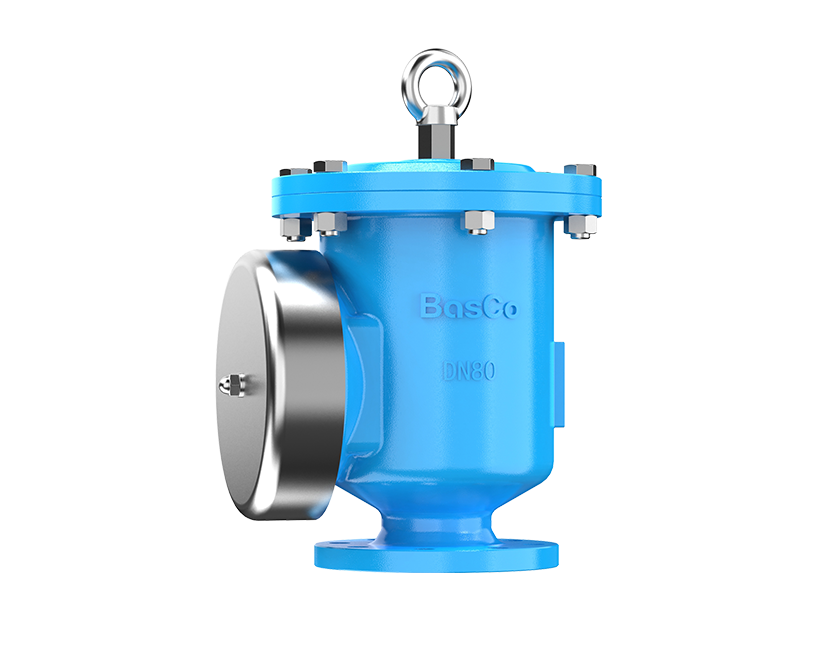
Pressure Vacuum Relief Valves, also known asbreather valves, are installed on low-pressure storage tanks to protect them from both overpressure and vacuum. They are essential for controlling normal breathing under temperature changes and during filling or pump-out.
A PVRV contains two main functions:
• Pressure mode– opens when internal pressure exceeds the set point, releasing vapors.
• Vacuum mode– opens when internal pressure drops below the vacuum set point, allowing air or inert gas to enter.
For a basic introduction to these devices, see What is the breather valve? and the manufacturer-focused perspective in Breather Valve Manufacturer. While PVRVs are often discussed as simple breather valves, their real-world performance is heavily influenced by installation location; for a detailed engineering comparison of how inline and end-of-line PVRVs behave differently in actual systems, see our guide on inline vs end-of-line pressure vacuum relief valves.
Undersized PVRVs can cause:
• Tank shell deformation or rupture due to overpressure
• Vacuum collapse when liquid is pumped out or when temperature drops
Oversized valves may increase product losses and emissions. To see how PVRVs fit into the overall venting strategy, refer to Tank Protection Valve.
API 2000 (and its equivalent ISO 28300) define required venting capacities based on:
• Liquid inbreathing and outbreathing rates
• Thermal effects due to ambient temperature swings
• Fire case vapor generation
• Foaming, boiling and reaction conditions
The PVRV must be sized so that the tank pressure stays within its Maximum Allowable Working Pressure (MAWP) under all scenarios. The Tank Protection System article gives a concise overview of how PVRVs, emergency vents and blanketing valves work together.
A practical discussion of these issues appears in Emergency Relief Valve Tank, which looks at emergency scenarios when normal venting is insufficient.
• Ensure safe access for periodic inspection and testing.
For detailed engineering guidance on PRV configuration, vacuum protection and two-phase LNG relief scenarios, see our LNG tank pressure safety device selection guide.
Normal PVRVs handle day-to-day operation, but during fire exposure or abnormal conditions, emergency venting devices provide additional capacity to prevent catastrophic tank rupture.
Emergency relief valves open at a higher set pressure than the normal PVRV to carry very large vapor flows during fire exposure. They are often combined with frangible roof sections or emergency hatches. To understand how these devices differ from conventional safety valves, see Emergency Relief Valve vs Safety Relief Valve.
Explosion vent panels are thin, pre-weakened membranes that rupture at a defined pressure. They are widely used on silos, dust collectors and process vessels containing combustible dusts or gases. For more detail, read What is an explosion venting panel? and the follow-up engineering discussion in Explosion Venting Panels.
In indoor installations where flames cannot be discharged outside, a flameless vent combines a conventional panel with a flame-quenching element. When an explosion occurs, pressure is relieved while flames and glowing particles are cooled and retained. See What is a Flameless Explosion Venting Device? and Flameless Explosion Venting for typical use cases in indoor dust handling systems.
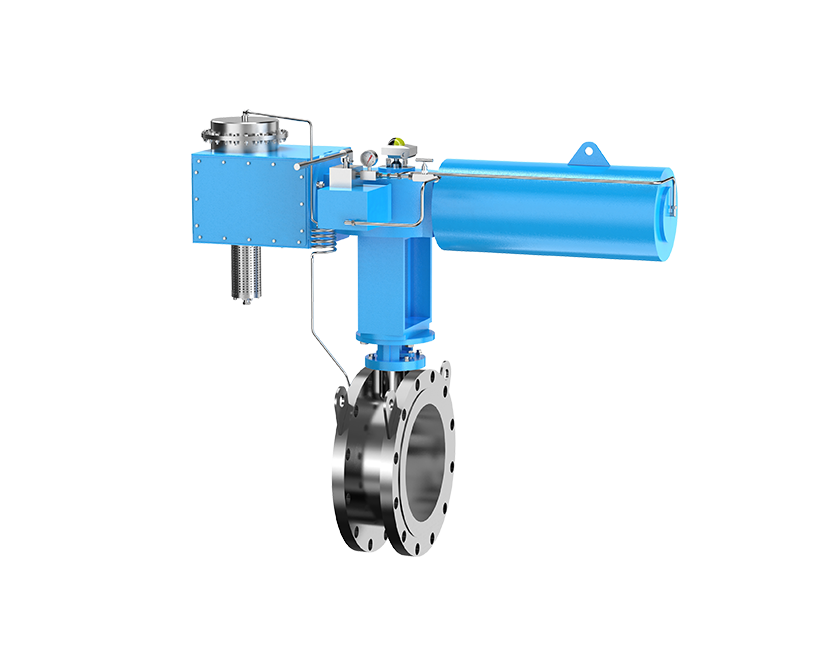
Explosion isolation valves prevent flame from propagating through interconnected ducts and pipework, stopping secondary explosions in upstream or downstream equipment. Our article Explosion Isolation Valve explains how fast-acting valves close in milliseconds after detecting pressure rise.
Many tanks storing flammable or oxidation-sensitive products are protected by nitrogen blanketing. By maintaining a small positive pressure of inert gas, these systems:
• Reduce oxygen concentration below flammable limits.
• Minimize product degradation caused by oxidation or moisture.
• Reduce VOC emissions to the atmosphere.
A blanketing valve is a low-pressure control valve that admits nitrogen into the tank whenever the pressure falls below a pre-set value. It ensures that a slight positive pressure is always maintained at the tank’s vapor space. The fundamentals are described in What is a Nitrogen Blanketing Valve?.
Modern systems combine pressure sensing, control valves and sometimes flow restrictors to provide stable blanketing. They must work smoothly together with the PVRV vacuum mode to avoid oscillations and valve chatter. For more detailed control strategies, see Nitrogen Blanketing Control Valve.
A well-engineered tank protection system does not treat each device in isolation. Instead, it integrates flame arresters, PVRVs, blanketing valves, emergency vents and explosion protection hardware into a unified scheme that covers all credible operating and accident scenarios.
A high-level overview of such a system is provided in Tank Protection System.
Typical roof configuration on a fixed-roof tank may include:
• End-of-line flame arrester combined with PVRV on the main vent nozzle.
• Nitrogen blanketing valve connected to the vapor space.
• Emergency vent valve or frangible roof.
• Gauging hatches, manways, level instruments and sampling points.
• Optional detonation arrester on long vapor recovery lines.
In many production lines—such as wood processing, grain handling and textile manufacturing—sparks and hot particles travel through ducts and enter dust collectors or silos, where they can trigger catastrophic explosions. Spark detection & extinguishing systems monitor these ducts with infrared sensors and activate water sprays or isolation devices within milliseconds.
For a technical overview, see Spark Detection and Extinguishing Systems and our more detailed engineering guide What Is a Spark Detection & Extinguishing System? Complete Guide for Industrial Fire Prevention.
Spark detection should be combined with explosion vents, isolation valves and proper housekeeping to form a complete explosion protection concept that meets NFPA and EN standards.
A crude oil storage tank suffered severe shell buckling during a fast pump-out. Investigation showed that the vacuum capacity of the PVRV was too small, and the blanketing valve could not respond quickly enough. Proper API 2000 calculations and redundancy would have prevented the incident.
A solvent tank experienced repeated PVRV lifting and high emissions. Inspection revealed a heavily clogged end-of-line flame arrester. Poor condensate drainage and lack of cleaning allowed sticky vapors to polymerize in the flame cell. This failure mode is described in Flame Arrestor or Arrester.
A dust collector without proper explosion venting suffered a violent rupture after a filter bag fire propagated into the dust cloud. A correctly sized vent panel, like those discussed in Explosion Venting Panels, would have safely relieved the pressure and minimized equipment damage.
A storage tank is only as safe as its venting and protection system. Flame arresters, PVRVs, nitrogen blanketing valves, emergency vents, explosion vent devices and spark detection systems must be engineered as parts of a single, coherent strategy.
By following industry standards such as API 2000 / ISO 28300, NFPA 30, NFPA 69 and ATEX/IEC 60079, and by selecting equipment from experienced manufacturers, plant owners can significantly reduce the risk of explosions, vacuum collapses, product loss and environmental incidents.
For supporting hardware used around these safety devices, you can also review Best Tank Accessories Manufacturers, which discusses typical accessory selections for industrial tank farms.
BASCOcontinues to support global customers in oil & gas, chemical, marine, pharmaceutical and energy industries with engineering-grade tank protection solutions, technical consulting and customized product design.

Where Are Rupture Disks Used in Chemical and Petrochemical Plants?
2026-09-21Burst Pressure Tolerance Explained: How Accurate Are Rupture Disks?
2026-09-16Full-Process Quality Control for Rupture Discs
2026-09-01Rupture Disk Selection Guide: How to Choose the Right Type, Pressure, Material, and Size
2026-08-25Copyright © Jiangsu Bafang Safety Device Co., LTD. All Rights Reserved