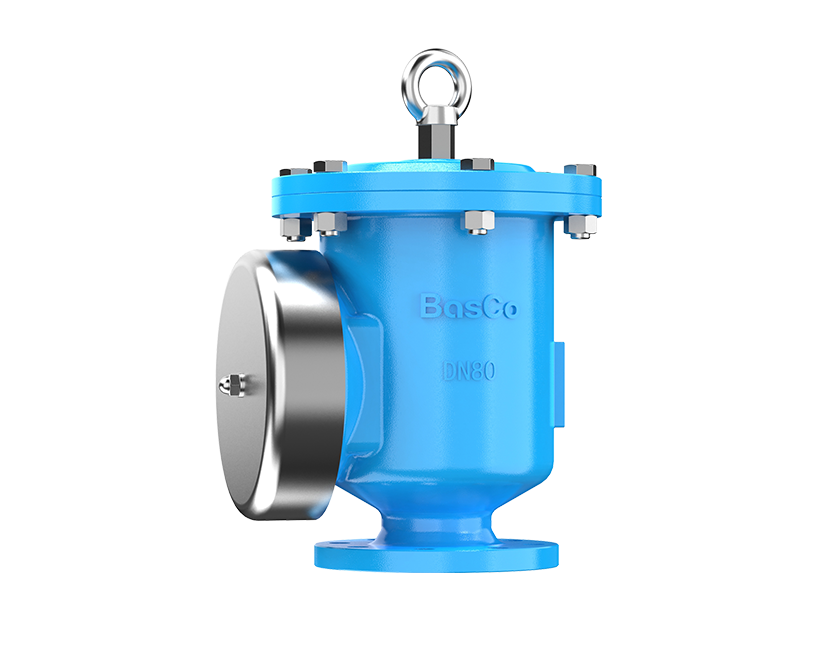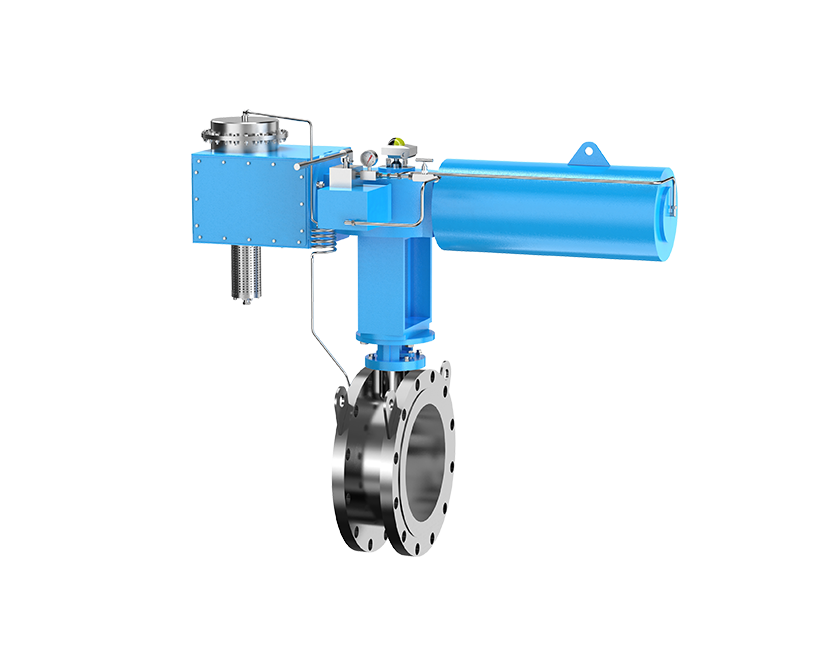


In tank design meetings and safety reviews, one question keeps coming up: Do we really need both a breather valve and a pressure relief valve? The question usually sounds innocent, often driven by cost, footprint, or simplification goals. But from an engineering standpoint, it signals a deeper misunderstanding of how tanks behave under different operating conditions.
I've reviewed enough tank failures, near-misses, and post-incident reports to say this confidently: breather valves and pressure relief valves are not interchangeable. They solve different problems, respond to different pressure profiles, and protect against entirely different failure modes. Treating them as equivalents doesn't just violate standards—it introduces silent risk into the system.
In this article, I'll break down how each valve actually functions, how standards like API 2000 intentionally separate normal venting from emergency relief, and why many tanks legitimately require both. My goal is not to define valves, but to explain the engineering logic behind their selection so the decisions you make hold up under real operating stress—not just on drawings.
A breather valve is a normal-operation device. Its entire purpose is to allow a tank to “breathe” as internal volume and vapor conditions change during routine operation. It is not designed for emergencies, and it is not sized for worst-case failure scenarios.

Every atmospheric or low-pressure storage tank breathes continuously. When product enters the tank, vapor space compresses and internal pressure rises. When product leaves, vapor space expands and vacuum forms. Ambient temperature swings add another layer, as vapor expands during the day and contracts at night.
Breather valves manage these predictable, low-energy events. They open and close frequently, often thousands of times per year, maintaining tank pressure within safe structural limits while minimizing vapor loss. In well-designed systems, this happens quietly and invisibly.
2. Typical Pressure & Vacuum Range
This is where many selection mistakes begin. Breather valves operate in very low pressure ranges, almost always measured in millibar (mbar) or inches of water column. Typical setpoints might be +20 mbar for pressure and–10 mbar for vacuum, depending on tank design.
From an engineering perspective, this makes sense. Atmospheric tanks are thin-walled structures. They are not pressure vessels, and even modest pressure increases can cause shell distortion or roof damage. The breather valve's job is to prevent those conditions from ever developing.
3. Common Applications
In my work, breather valves are standard on:
Anywhere normal filling, emptying, and thermal cycling occur, breather valves are essential. But they are intentionally limited devices.
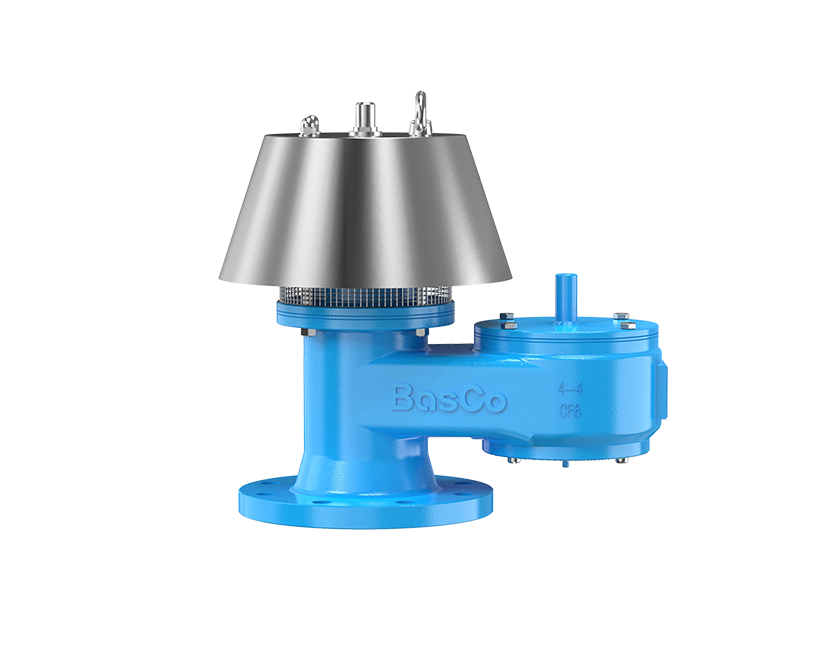
A pressure relief valve (PRV) is not concerned with routine operation. It exists for abnormal, high-risk events—the situations engineers hope never occur but must always design for.

PRVs protect tanks from sudden and extreme pressure escalation. Typical scenarios include external fire exposure, runaway chemical reactions, blocked outlets, or control system failures. These events generate pressure far faster than normal breathing ever could.
When a PRV opens, it does so forcefully and decisively. This is not a modulating control device. It is a last-line safety mechanism designed to prevent catastrophic rupture.
Unlike breather valves, PRVs operate in bar or psi ranges, not mbar. Their set pressure is selected relative to the tank's maximum allowable working pressure (MAWP) or design pressure.
Equally critical is discharge capacity. Emergency scenarios can generate vapor volumes many times greater than normal breathing. PRVs are sized to handle these extreme flow rates, often using fire-case calculations based on radiant heat input and vaporization rates.
A breather valve simply cannot move this volume of vapor quickly enough, regardless of how it is adjusted.
I specify PRVs on:
Any vessel where pressure escalation could exceed normal venting capacity must be evaluated for emergency relief.

From a distance, these valves may appear similar. In practice, their design philosophy is completely different. I often explain it this way: breather valves manage predictable behavior, while PRVs protect against catastrophic deviation.
|
Engineering Factor |
Breather Valve (Normal Vent) |
Pressure Relief Valve (Emergency Relief) |
|
Pressure range |
mbar / inches WC |
bar / psi |
|
Primary function |
Routine breathing |
Emergency overpressure protection |
|
Flow capacity |
Low to moderate |
Very high |
|
Operating frequency |
Continuous cycling |
Rare activation |
|
Opening behavior |
Modulating |
Full discharge |
|
Standards basis |
API 2000 (normal vent) |
ASME / API emergency relief |
|
Failure consequence |
Tank distortion |
Tank rupture or explosion |
Understanding these differences is essential. Selecting the wrong valve doesn't fail gently—it fails structurally.
From an engineering standpoint, the answer is no, and the reasons are not negotiable. This misunderstanding usually happens when tank venting devices are evaluated in isolation instead of as part of an integrated protection strategy. In real installations, normal breathing, emergency relief, ignition prevention, and fire-case protection must work together as a complete tank protection system rather than as standalone components. For engineers looking to understand how breather valves, emergency vents, flame arresters, and blanketing valves fit into one coordinated design framework, this Tank Protection System overview provides a broader system-level perspective.
Breather valves are not designed to open fast enough or flow enough vapor during emergency conditions. Their springs, seats, and flow paths are optimized for small pressure differentials. During fire exposure or runaway vapor generation, pressure rise outpaces the valve's ability to respond.
I've seen projects attempt to “oversize” breather valves to compensate. This approach fails because capacity alone does not change the valve's operating principle. It still opens at mbar-level pressure and still lacks the discharge characteristics required for emergency relief.

When breather valves are misused as emergency devices, the failure modes are well documented. Post-incident analyses frequently show:
In each case, the tank technically had a vent. It simply did not have protection.
Many tanks legitimately require both a breather valve and a pressure relief valve. This is not redundancy—it is functional separation.
In these designs, normal breathing and emergency relief are separate design cases with separate devices.
Trying to cover all scenarios with a single valve always leaves at least one case unprotected.
Standards such as API 2000 explicitly distinguish normal venting from emergency venting. This separation is based on decades of operational experience and failure investigation conducted by organizations like the American Petroleum Institute.

API 2000 does not treat venting as a single calculation. It requires engineers to evaluate multiple independent scenarios:
Each scenario produces different flow rates, pressure rise profiles, and time constants. In my experience, most misapplications stem from collapsing these cases into one simplified assumption.
Valve selection is not a purchasing decision—it is a risk decision. Here's how I approach it.
Vapor density, toxicity, and flammability influence valve design and material selection. Sticky or polymerizing vapors can compromise valve performance if not accounted for.
If pressure excursions remain within mbar-level ranges, breather valves are appropriate. If credible scenarios exist beyond that range, emergency relief must be addressed separately.
Cold climates, icing, dust, and corrosive atmospheres all affect long-term reliability. I've seen well-sized valves fail simply because environmental exposure was ignored.
Even when regulations are loosely enforced, responsibility remains with the owner and engineer of record—not the valve supplier.
Breather valves require frequent inspection due to constant cycling. PRVs require periodic testing and certification because they may sit idle for years before activation.
These mistakes rarely appear in design documents—but they appear clearly in incident investigations.

When something goes wrong, regulators don't ask who sold the valve. They ask who approved the design. In my experience, proper documentation of venting logic is one of the strongest defenses an engineering team can have.
After years of reviewing tank systems, I can say this without hesitation: breather valves and pressure relief valves are not alternatives. They are complementary tools, each designed for a specific risk envelope.
If you're evaluating a tank design, upgrading an existing system, or questioning whether your venting strategy truly protects your operation, start by separating normal behavior from emergency reality. That mindset—not just the valve you choose—is what ultimately keeps tanks intact, operations compliant, and people safe.
Breather valves manage low-pressure normal breathing; PRVs protect against high-pressure emergencies.
No. It lacks the pressure range and flow capacity required for emergency relief.
Many do, especially when both normal operation and emergency scenarios are credible.
Structural failure, vapor release, regulatory violations, and serious safety risk.
API 2000 defines when normal venting is required and how it must be sized.

Where Are Rupture Disks Used in Chemical and Petrochemical Plants?
2026-09-21Burst Pressure Tolerance Explained: How Accurate Are Rupture Disks?
2026-09-16Full-Process Quality Control for Rupture Discs
2026-09-01Rupture Disk Selection Guide: How to Choose the Right Type, Pressure, Material, and Size
2026-08-25Copyright © Jiangsu Bafang Safety Device Co., LTD. All Rights Reserved