A flame arrester helps protect tanks, piping, and process equipment against flame transmission through flammable gas or vapor mixtures. Understanding its function is the first step toward choosing suitable protection for a vent opening or a connected pipeline.
A flame arrester allows normal gas or vapor flow while stopping flame propagation within its specified operating and installation limits. Selection must match the combustion hazard, gas group, pressure, temperature, flow duty, and installation arrangement.
At BASCO, we approach selection by reviewing the application before choosing a product series. This guide explains the working principle, main components, four product categories, and the information needed for an engineering review.

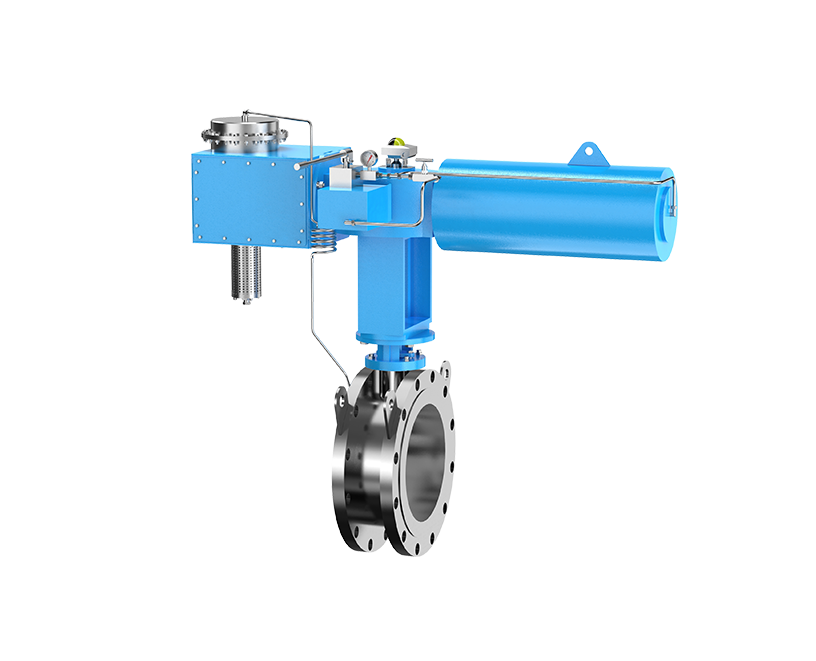
BASCO flame arrester structure. Internal arrangements vary by model.
A flame arrester is a protective device used where an ignited gas or vapor mixture could transmit flame into connected equipment. Common applications include tank venting, vapor recovery, and process piping. The need for an arrester and its location should follow the project’s hazard assessment.
In a typical dry flame arrester, the element contains many narrow metal passages. Their surfaces absorb heat from the flame front, reducing the energy available to sustain combustion through the element. Passage geometry and the complete assembly must suit the mixture and combustion conditions.
The element also creates resistance to normal flow. Its design must balance flame-quenching performance with the pressure loss that the tank or process can accept.
BASCO video: flame arrester working principle.
Start with the protection function. A flame arrester addresses flame transmission. Pressure and vacuum relief require separate consideration, whether provided by another device or by a purpose-designed integrated assembly.
The element performs the flame-quenching function, but performance depends on the complete assembly. Housing, seals, connections, and maintenance access all affect the suitability of the installed device.

Main components of a BASCO flame arrester.
| Component | Function | What to review |
|---|---|---|
| Flame arresting element | Provides the narrow passages that remove heat from the flame. | Specified element, gas-group suitability, condition, and replacement requirements. |
| Housing | Contains and supports the internal assembly. | Pressure and temperature limits, corrosion resistance, and mechanical support. |
| Connections and seals | Connect the device to the tank or piping. | Flange standard, sealing compatibility, orientation, and assembly instructions. |
| Service access | Allows inspection and maintenance of the element. | Safe isolation, removal clearance, cleaning method, and reassembly procedure. |
Material selection should address the housing, element, and seals individually. For a closer comparison, read our flame arrester materials guide.
First distinguish end-of-line protection at an opening to atmosphere from in-line protection within piping. For in-line applications, evaluate whether the relevant hazard is deflagration, stable detonation, or unstable detonation.

BASCO flame arrester classification: review installation position and combustion conditions together.
| Type / BASCO series | Application to evaluate | Key selection boundary |
|---|---|---|
| End-of-line / 6100 | Vent openings exposed to atmospheric ignition. | End-of-line duty, gas group, vent capacity, and any stabilized-burning requirement. |
| In-line deflagration / 6200 | Piping with a defined deflagration protection requirement. | Permitted pipe arrangement and distance from a potential ignition source. |
| In-line detonation / 6400 | Piping assessed for stable detonation duty. | Documented detonation rating and the specified operating envelope. |
| In-line unstable detonation / 6500 | Piping assessed for unstable detonation duty. | Explicit unstable-detonation coverage for the selected configuration. |
A product name or connection size does not establish suitability. Confirm the current datasheet, applicable certification scope, and installation instructions for the exact configuration.
Use these four series as starting points for a technical discussion. The final model and configuration depend on your process conditions.

Evaluate protection at a vent opening to atmosphere.
View 6100 Details →
Evaluate in-line protection for a defined deflagration duty.
View 6200 Details →
Review the specified stable-detonation protection duty.
View 6400 Details →
Review applications requiring unstable-detonation coverage.
View 6500 Details →For a deeper comparison, see in-line vs. end-of-line flame arresters and deflagration vs. detonation flame arresters.
Tank venting requires both a flow-capacity review and an assessment of possible flame entry. An end-of-line flame arrester may be considered where an external ignition source could reach a flammable vapor mixture at a vent opening.
Pressure loss through the arrester must be included in the complete venting assessment. Review the required in-breathing and out-breathing duties together with valves, pipework, and other restrictions.
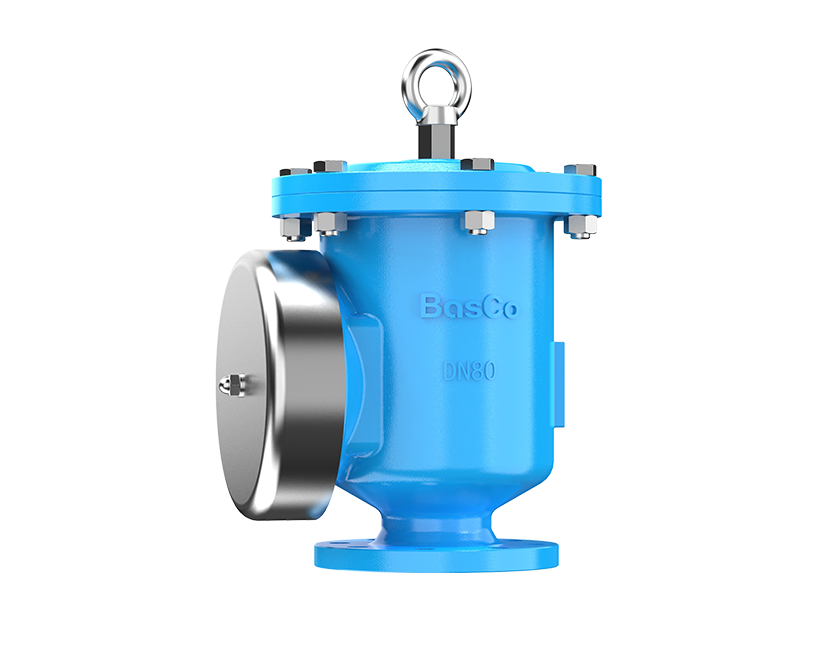
BASCO end-of-line pressure vacuum relief valve with integrated flame arrester. This is a separate integrated assembly; confirm its own ratings and capacity.
An integrated pressure vacuum relief valve and flame arrester combines two functions in one assembly. Selection still requires verification of both functions and the installed flow capacity. Read what a pressure vacuum relief valve does and our complete tank safety system guide for related considerations.
The following BASCO videos illustrate flame-arrester demonstrations. They help explain the protection concept; a demonstration video does not establish the certified limits of every product or installation.
BASCO comparison video: with and without an end-of-line flame arrester.
BASCO comparison video: with and without an in-line flame arrester.
For a purchasing decision, request documentation linked to the proposed model and configuration. Check the covered combustion duty, gas group, pressure and temperature limits, installation restrictions, and any burning-duration requirements.
A useful inquiry describes the process and installation, as well as the required connection. Our engineering review starts with the following information.
| Information to provide | Details to include | Why it matters |
|---|---|---|
| Medium | Gas or vapor composition, mixture variation, and contaminants. | Gas-group suitability and material compatibility. |
| Protection duty | Vent or in-line location; assessed combustion hazard. | End-of-line, deflagration, or detonation selection. |
| Operating envelope | Normal and limiting pressures and temperatures. | Comparison against the selected device’s documented limits. |
| Flow requirements | Required flow in each direction, reference conditions, and allowable pressure loss. | Capacity review using the applicable flow data. |
| Piping arrangement | Pipe sizes, lengths, bends, branches, and potential ignition locations. | Installation restrictions and flame-development assessment. |
| Service conditions | Condensation, deposits, corrosion, weather exposure, and access. | Maintenance planning and continued flow performance. |
| Project documentation | Installation market, project requirements, and required certificates. | Review of the exact model, configuration, and approval scope. |
Compare quotations on the same technical basis. Match the protection duty, gas group, operating envelope, flow requirement, materials, and documentation before comparing price.
Send BASCO your medium composition, pressure and temperature range, flow requirement, connection details, and piping sketch. These details provide a clearer basis for reviewing the appropriate series and configuration.
Correct selection must be followed by installation and maintenance in accordance with the supplied instructions. Do not assume that a different pipe layout, replacement element, or altered assembly preserves the original protection scope.
For practical follow-up, read our guides on flame arrester installation distance and cleaning and inspecting flame arresters.
The terms commonly refer to the same type of device. For procurement, identify the required protection duty and exact model rather than relying on spelling.
They serve different installation duties. Use the type specified for the assessed hazard and installation arrangement. An atmospheric vent application and a confined pipeline application require separate review.
Confirm stabilized-burning requirements separately. The selected unit’s documentation must address the required duty; do not infer continuous-burning capability from the general product category.
Pipe size is only one input. Review the gas mixture, combustion duty, pressure, temperature, required flow, allowable pressure loss, and piping arrangement together.
Share the application details with BASCO to discuss selection, installation requirements, and the documentation needed for your project.

Copyright © Jiangsu Bafang Safety Device Co., LTD. All Rights Reserved