

When people ask me about the difference between deflagration and detonation flame arresters, I usually pause before answering. Not because the definitions are unclear, but because the decision is rarely just about definitions. It's about flame behavior, pipe geometry, test philosophy, and—most importantly—what level of risk a system can realistically face over its lifetime.
In recent years, this discussion has become even more important as international standards evolved. With the formal replacement of ISO 16852 by ISO/IEC 80079-49:2024, flame arresters are no longer evaluated as isolated components, but as safety devices embedded within a broader explosive-atmospheres framework. That shift has changed how I interpret test results, certifications, and real-world suitability.
In this article, I'll explain how I personally assess deflagration and detonation flame arresters today, using ISO/IEC 80079-49 as the reference point and grounding every comparison in practical engineering experience rather than marketing language.
At the most fundamental level, the difference between deflagration and detonation comes down to how fast the flame travels and how pressure develops ahead of it. Deflagration is a subsonic combustion process. In most industrial test conditions, flame speeds are typically below 300 m/s, and the pressure rise occurs relatively gradually as the flame propagates.
Detonation is a different physical regime altogether. The flame front travels faster than the speed of sound and is coupled with a shock wave. In testing, flame velocities commonly exceed 1,600 m/s and can reach 3,000 m/s depending on gas group and mixture. The resulting pressure rise is abrupt and violent, producing extreme mechanical loads on piping and safety devices.
From my perspective, the most critical point is this: deflagration is not always a stable condition. In long pipelines, confined systems, or piping with obstacles, a deflagration can accelerate and transition into detonation. That transition risk is exactly why flame arrester selection should never rely on nominal operating conditions alone.
|
Feature |
Deflagration Arrester Element |
Detonation Arrester Element |
|
Construction |
Thinner, fewer layers of crimped ribbon |
Thicker, more layers, more densely packed |
|
Pressure Rating |
Designed for low-pressure events |
Built to withstand extreme shockwave pressure |
|
Flow Restriction |
Lower pressure drop |
Higher pressure drop due to denser element |
|
Primary Goal |
Absorb heat to quench a flame |
Survive a physical shockwave, then absorb heat |
Deflagration flame arresters are well suited for systems where flame acceleration is physically limited. In practice, I see them performing best in short, well-ventilated lines such as tank vent connections, breathing valves, and gas discharge lines that vent directly to atmosphere.
In these configurations, the distance between the potential ignition source and the flame arrester is tightly controlled. This matters because deflagration arresters are tested under defined pipe length limits. If those limits are exceeded in real installations, the arrester may be exposed to flame speeds and pressures beyond its certification envelope.

From a design perspective, deflagration flame arresters are attractive because they typically offer lower pressure drop, simpler construction, and lower cost. I'm comfortable recommending them when the system layout clearly prevents flame acceleration and when future operating changes are unlikely.
Detonation flame arresters are designed for uncertain or high-risk flame regimes. Whenever I see long pipe runs, enclosed systems, multiple bends, or obstacles that could promote turbulence, I start evaluating detonation-rated solutions almost immediately.
One important distinction I often explain to clients is the difference between stable detonation and unstable detonation conditions. Stable detonation arresters are used where the flame behavior is predictable and occurs in a defined section of piping, such as main recovery headers paired with tank systems. Unstable detonation arresters are selected when flame behavior cannot be reliably predicted due to complex geometry or mixed operating conditions.

Because detonation flame arresters must withstand shock waves and extreme pressure spikes, their internal flame-arresting elements are denser, thicker, and layered differently. This robustness increases manufacturing complexity and cost, but it also significantly expands the safety margin.
Despite the differences in rating and strength, both deflagration and detonation flame arresters rely on the same core principles. I usually describe these as thermal quenching and chemical reaction suppression.
The flame arrester element is typically constructed from corrugated or ribbon-type metal wound into a dense matrix. This structure dramatically increases surface area. As hot combustion gases pass through the narrow channels, heat is rapidly transferred into the metal. Once the gas temperature falls below the ignition threshold, the flame cannot propagate further.
At the same time, the porous structure disrupts combustion chemistry. Free radicals generated during combustion collide with the metal surfaces and lose their reactivity, breaking the chain reactions required to sustain burning. The difference between deflagration and detonation flame arresters lies in how much thermal and mechanical energy the element must absorb without deformation.

The componment of Flame Arrest
One of the most important updates engineers need to understand is that ISO 16852 is no longer the active international reference. Today, flame arresters fall under ISO/IEC 80079-49:2024, which integrates them into the IEC explosive-atmospheres standard family.
Under ISO/IEC 80079-49, flame arresters are evaluated not only on their ability to stop a flame, but also on their ability to remain functional after repeated extreme events. This is a critical philosophical shift. The standard recognizes that real systems may experience multiple abnormal events over time, not just a single explosion.
For deflagration flame arresters, the requirement remains that multiple consecutive deflagration tests must be successfully blocked. For detonation flame arresters, the logic is more demanding: the device must survive a series of detonation tests and then continue to successfully block deflagration events afterward. This sequence reflects real-world expectations of durability and residual safety.
Testing arrangements under ISO/IEC 80079-49 clearly illustrate the difference in expected performance. Deflagration tests use controlled ignition pipe lengths based on gas group classifications, ensuring flame speeds remain within the deflagration regime.
Detonation testing is intentionally severe. The test configuration is designed to force detonation, with flame speeds exceeding 1,600 m/s and even higher thresholds for hydrogen-air mixtures. Pressure sensors, flame detectors, and mechanical inspections confirm both flame extinction and structural integrity.
I often summarize these differences for project teams in the following way:
|
Aspect |
Deflagration Flame Arrester |
Detonation Flame Arrester |
|
Flame regime |
Subsonic |
Supersonic with shock wave |
|
Typical flame speed |
<300 m/s |
1,600–3,000 m/s |
|
Pressure rise |
Gradual |
Extremely rapid |
|
Test severity |
Moderate |
Extreme |
|
Structural demand |
Limited |
Very high |

One point that often surprises buyers is that a certified detonation flame arrester can be used in deflagration scenarios, but not the other way around. This is a direct consequence of the testing hierarchy defined in ISO/IEC 80079-49.
Because detonation flame arresters must demonstrate successful flame blocking after surviving detonation events, they inherently meet deflagration performance requirements. From a risk management perspective, this makes detonation arresters a higher-level solution, albeit with higher cost and pressure drop.
This hierarchy becomes especially relevant when system conditions may change over time. I've seen many installations where initial operating assumptions were conservative, but later process changes increased flame acceleration risk. In those cases, detonation-rated equipment avoided costly retrofits.
Explosion testing is only part of the evaluation. ISO/IEC 80079-49 also emphasizes strength and leakage testing, particularly for pipeline-installed devices. Detonation flame arresters are subjected to very high pressure tests—often an order of magnitude above design pressure—to confirm that no permanent deformation occurs.
Leakage tests verify that seals and connections remain gas-tight under pressure. These tests are especially important for hydrogen and other small-molecule gases. Some deflagration flame arresters, particularly end-of-line designs, are exempt from certain mechanical tests, which reinforces the importance of correct application boundaries.
In real projects, I rarely treat this as a purely technical decision. It's a balance between risk tolerance, cost, future flexibility, and regulatory comfort. If the system is short, well-ventilated, and clearly limited to deflagration conditions, a deflagration flame arrester is often the most efficient choice.
However, when uncertainty exists—long pipelines, hydrogen service, complex geometry, or future process changes—I tend to favor detonation-rated solutions. The additional upfront investment often pays for itself through reduced risk, simpler approvals, and long-term peace of mind.
|
System Condition |
My Typical Recommendation |
|
Short vent or breathing line |
Deflagration flame arrester |
|
Long or complex piping |
Detonation flame arrester |
|
Hydrogen or fast-reacting gases |
Detonation flame arrester |
|
Uncertain future operation |
Detonation flame arrester |

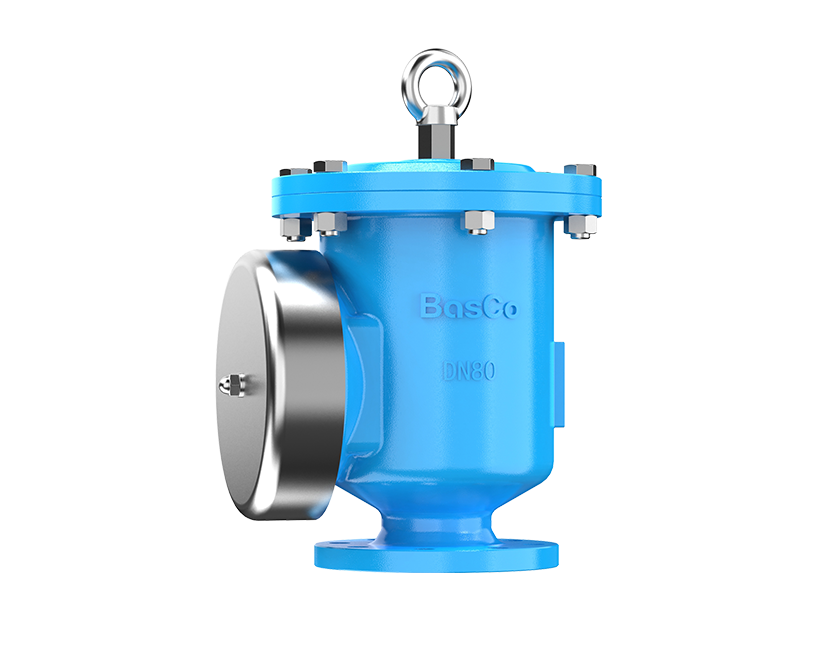
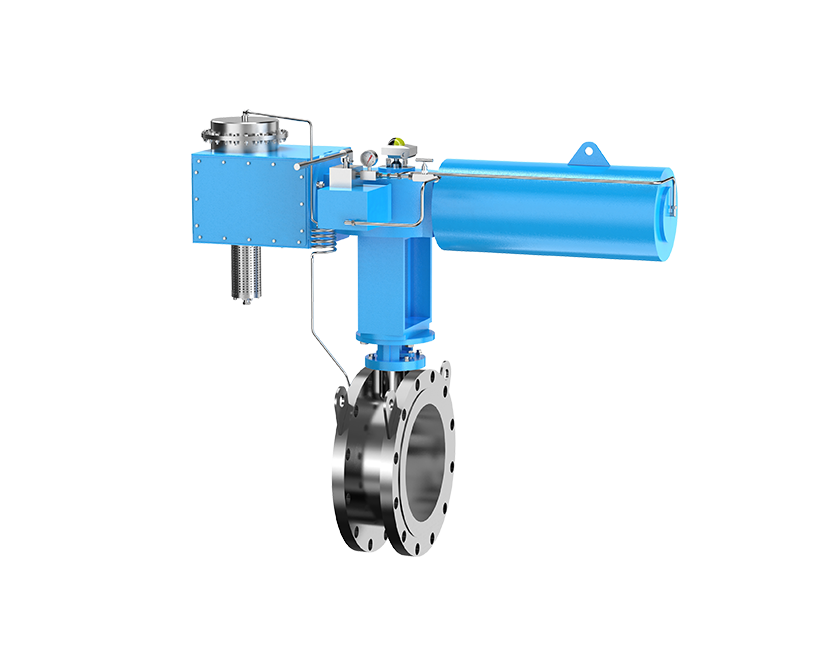
Classification of flame arrester from BASCO
In recent projects, I've noticed that detonation flame arresters are being selected more frequently, even in applications that were once considered deflagration-only. This shift isn't about overdesign—it reflects how ISO/IEC 80079-49:2024 places greater emphasis on post-event functionality, not just one-time flame stopping capability.
Under the current standard framework, detonation flame arresters must prove that they can survive severe shock loads and still remain effective against subsequent deflagration events. From a practical engineering standpoint, this aligns much better with real incident scenarios, where abnormal conditions rarely occur in isolation.
I also see detonation-rated devices favored when future operating conditions are uncertain. As systems evolve and higher-reactivity gases become more common, many engineers prefer solutions with a wider certified envelope—both to manage risk and to simplify compliance discussions under modern standards.

Structural diagram of BASCO Flame Arrester
After working with flame arresters for many years, I've learned that the real value lies not in product labels, but in understanding how flame behavior, system geometry, and standards intersect. ISO/IEC 80079-49:2024 reinforces this mindset by focusing on durability and post-event functionality, not just one-time performance.
If you're evaluating flame arresters today, I strongly recommend starting with your worst credible explosion scenario rather than your normal operating conditions. When you do that, the choice between deflagration and detonation protection becomes clearer—and far more defensible from both a safety and engineering standpoint.

How to Size a Pressure Vacuum Relief Valve According to API 2000
2026-08-18Flame Arrester Guide: Types, Applications, Selection, and Industrial Solutions
2026-08-04Common Causes of Dust Collector Explosions and How to Protect Against Them
2026-07-13BasCo conducts "CPR+AED Emergency Training to Strengthen Workplace Life Safety Defense"
2026-06-18Copyright © Jiangsu Bafang Safety Device Co., LTD. All Rights Reserved