

When I'm asked why flame arrester material selection causes so many project delays, failures, and rework costs, my answer is simple: the decision is often treated as a purchasing checkbox instead of an engineering risk assessment. On paper, SS304, SS316, and Monel may all look acceptable. In the field, however, the wrong material choice can quietly undermine safety, compliance, and uptime.
I've seen flame arresters removed after just a few months of service due to internal corrosion that was never visible during inspections. I've also seen EPC teams forced into emergency replacements because the original material choice was driven by short-term cost rather than operating reality. In this article, I'll walk through how these materials really behave, where they fail, and how I recommend decision-makers approach selection from an engineering and lifecycle standpoint.
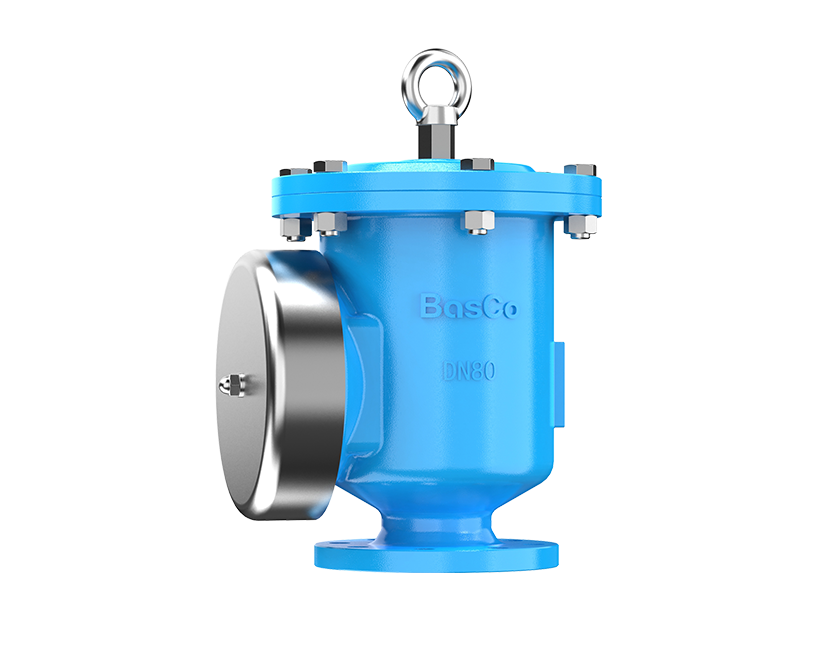
A flame arrester is fundamentally a safety device, but it is also a precision thermal component. Its job is to stop flame propagation by absorbing heat and quenching combustion through a carefully designed element, typically made from metal ribbons, crimped plates, or perforated structures. That element must maintain its geometry, surface condition, and thermal conductivity over years of exposure. In real-world installations, I never evaluate a flame arrester as a standalone device, because its material choice directly affects how well it integrates into the overall tank protection system design, including venting behavior, ignition prevention, and long-term operational reliability.
Material matters because flame arresters don't operate in clean laboratory environments. They sit in hydrocarbon vapor streams, salt-laden air, sour gas, humid storage tanks, and offshore platforms. If the material corrodes, fouls, or distorts, the flame arrester can no longer perform its core function reliably. At that point, you're not just dealing with maintenance—you're dealing with latent safety risk.
I always emphasize that flame arrester material selection is not about strength alone. It's about corrosion mechanisms, thermal cycling, chemical compatibility, and how the material responds to repeated cleaning and inspection over time.

When I evaluate a flame arrester application, I never start with material grades. I start with the environment. Corrosion resistance is usually the dominant factor, but it's closely tied to temperature, pressure, and the chemistry of the process media.
In humid or salt-rich environments, even trace chlorides can initiate pitting corrosion that progresses internally. In high-temperature applications, thermal cycling can cause expansion and contraction that stresses the flame arrester element. Cleaning practices also matter; aggressive chemical cleaning can accelerate material degradation if the alloy isn't suited for it.
Lifecycle cost is the final filter. I've seen teams save 15% on purchase price only to spend three times that amount on unplanned shutdowns, inspections, and replacements. Material selection must account for total ownership cost, not just the initial invoice.
SS304 is often the default material because it's widely available, easy to fabricate, and cost-effective. In controlled, dry, non-corrosive environments, it performs reliably and meets basic safety requirements. I've seen SS304 flame arresters operate successfully for years in clean vapor service with minimal maintenance.
The limitation of SS304 becomes obvious as soon as chlorides, moisture, or aggressive gases enter the picture. It lacks molybdenum, which means its resistance to pitting and crevice corrosion is limited. In humid coastal regions or chemical plants with wash-down procedures, SS304 often begins to corrode internally long before external signs appear.
I generally recommend SS304 only when the operating environment is clearly benign and unlikely to change over the equipment's life. Using it as a“good enough” option in uncertain conditions is one of the most common material selection mistakes I see.
SS316 adds molybdenum to the alloy, which significantly improves resistance to chlorides and localized corrosion. This one addition changes how the material behaves in marine, coastal, and mildly corrosive chemical environments. In my experience, SS316 is often the true baseline material for industrial flame arresters, not SS304.
Compared to SS304, SS316 handles humidity, salt exposure, and cleaning chemicals far better. It also performs more consistently under thermal cycling, which is critical for flame arrester elements exposed to fluctuating process temperatures. Many oil and gas, pharmaceutical, and chemical facilities standardize on SS316 for this reason.
That said, SS316 is not immune to all corrosion. In sour gas or highly acidic environments, it can still suffer from stress corrosion cracking or rapid degradation. This is where engineers often assume“stainless steel is stainless” and get caught off guard.
Monel alloys, primarily nickel-copper based, are selected when stainless steels reach their limits. I usually see Monel specified in offshore, marine, sour gas, and highly corrosive chemical environments where failure is not an option. The material offers exceptional resistance to seawater corrosion, acids, and sulfur-containing compounds.
What many buyers struggle with is justifying the cost. Monel flame arresters can be significantly more expensive upfront, but they often last multiple times longer in aggressive environments. I've worked on projects where switching from SS316 to Monel eliminated recurring failures that had been treated as“maintenance issues” for years.
Monel is not about overengineering; it's about acknowledging environmental reality. When stainless steel begins to pit, crack, or lose surface integrity, the flame arrester element's thermal performance is compromised. In these cases, Monel isn't a luxury—it's mandatory.
|
Material |
Corrosion Resistance |
Relative Cost |
Typical Industries |
Risk Profile |
|
SS304 |
Low to moderate |
Low |
Dry storage, clean vapor systems |
High risk in humid or corrosive environments |
|
SS316 |
Moderate to high |
Medium |
Oil & gas, chemical, pharma |
Balanced performance for most industrial uses |
|
Monel |
Very high |
High |
Offshore, marine, sour gas |
Lowest long-term risk in extreme conditions |
This comparison reflects what I see in real installations, not just datasheets. The cost column should always be read alongside lifecycle risk, not in isolation.
My selection logic always starts with environment mapping. I look at humidity, salt exposure, chemical composition, temperature swings, and cleaning practices. If any of those factors introduce uncertainty, I immediately question whether SS304 is appropriate.
One of the most common mistakes is assuming that internal conditions mirror external ones. In reality, flame arresters often trap moisture and contaminants internally, accelerating corrosion from the inside out. Another mistake is failing to account for future process changes, which can turn a safe material choice into a liability overnight.
For EPC workflows, I recommend locking material decisions early, but only after a proper risk review. Late-stage changes due to material failure are far more disruptive than higher upfront costs.
When I advise industrial clients on flame arrester material selection, I always push the conversation beyond purchase price. SS304, SS316, and Monel each have a place, but only when applied with a clear understanding of environment, risk, and lifecycle cost.
If you're operating in anything other than a clean, dry system, SS304 should be questioned. SS316 is often the practical industrial standard, while Monel becomes essential when corrosion risk threatens safety and compliance. My recommendation is simple: choose the material that lets you stop worrying about the flame arrester altogether.
If you're evaluating a project or struggling with recurring flame arrester issues, I encourage you to reassess material selection through the lens of real operating conditions, not just specifications. That single decision can quietly determine years of safe, reliable operation.
No. SS304 is only suitable for dry, non-corrosive environments with stable operating conditions.
Whenever humidity, chlorides, or chemical exposure are present, SS316 offers significantly better reliability.
Monel is used where stainless steels fail, particularly in marine, sour gas, and highly corrosive environments.
Incorrect material selection can lead to corrosion, blocked elements, flame propagation risk, compliance failures, and unplanned downtime.
In aggressive environments, yes. The long-term cost savings and risk reduction often justify the investment.
Absolutely. Internal corrosion is one of the most dangerous and least visible failure modes.

Where Are Rupture Disks Used in Chemical and Petrochemical Plants?
2026-09-21Burst Pressure Tolerance Explained: How Accurate Are Rupture Disks?
2026-09-16Full-Process Quality Control for Rupture Discs
2026-09-01Rupture Disk Selection Guide: How to Choose the Right Type, Pressure, Material, and Size
2026-08-25Copyright © Jiangsu Bafang Safety Device Co., LTD. All Rights Reserved