












Industrial storage is no longer a simple matter of putting a tank in place and adding a vent on top. Over the past decade, I have watched tank sizes increase, filling rates accelerate, and stored media become more volatile. At the same time, environmental expectations, plant safety reviews, and compliance requirements have become more demanding. In this environment, isolated safety devices are not enough. What protects assets today is system-level engineering.
From my experience working with storage terminals, chemical plants, and OEM tank builders, true tank safety comes from a coordinated protection system, not from individual components selected independently. A complete tank safety system should integrate pressure vacuum relief valves, emergency venting, flame arresters, overfill protection, and safety accessories such as pilot-operated pressure relief valves, emergency relief valves, and nitrogen blanketing valves. The key trade-off is balance: the system must relieve pressure quickly enough during abnormal events while still controlling emissions, limiting product loss, and maintaining stable tank pressure during daily operation. My recommended direction is clear: design tank protection around real operating conditions, not around the minimum device list.
Below, I will walk through how the system works, how the components interact, and what I look for when evaluating whether a facility truly has complete protection. I will also explain where safety accessories fit into the system, because these supporting devices often determine whether the tank behaves predictably during pressure swings, emergency relief events, or nitrogen blanketing operation.
What Is a Complete Tank Safety System?
A complete tank safety system is an engineered combination of pressure control, ignition prevention, vapor management, and liquid level protection mechanisms working together to protect an atmospheric or low-pressure storage tank. The emphasis is on integration. In real industrial service, tank safety does not come from one valve or one hatch. It comes from how each device responds when pressure, vapor flow, temperature, and operating conditions change at the same time.
Many facilities still treat safety equipment as separate purchases. A vent valve is selected based on nozzle size. A flame arrester is added because the process involves flammable vapor. A level switch is installed during commissioning, and a nitrogen blanketing valve may be added later when product quality or oxidation control becomes a concern. But in real operation, these elements do not work independently. They influence one another through backpressure, vapor displacement, pressure set points, and emergency response timing.
The core objectives remain consistent: prevent overpressure, prevent vacuum collapse, prevent flame propagation, prevent liquid overfill, and maintain a controlled vapor space. Achieving those objectives requires coordinated design rather than isolated compliance. When I review a tank system, I look less at whether a component exists and more at whether the system can respond correctly under normal breathing, high-rate filling, fire exposure, blanketing gas control, and upset conditions.

A complete tank safety system should be evaluated as an integrated pressure-management and risk-control package.
Why Is Tank Safety Critical in Industrial Storage?
Overpressure events typically occur during filling, rapid thermal expansion, blocked vapor paths, or abnormal process conditions. If venting capacity is insufficient, internal pressure rises faster than the tank can safely withstand. I have seen thin-roof atmospheric tanks deform permanently during aggressive pump-in operations because normal vent sizing did not reflect actual loading rates. The issue was not that the tank had no vent. The issue was that the venting system was not engineered for the way the facility actually operated.
Vacuum failure is often less visible but equally dangerous. Rapid product withdrawal, cooling weather, steam-out mistakes, or blocked inlet paths can create negative pressure that pulls tank walls inward. Once a tank shell starts to collapse, repair costs are rarely limited to the damaged plate. The incident usually affects production schedules, inspection requirements, environmental reporting, and customer delivery commitments.
Flammable vapor adds another dimension of risk. When volatile fluids are stored, the vapor space may become ignitable under certain conditions. Without proper flame arresting and controlled vent paths, an ignition source outside the tank can propagate inward through connected piping or vent openings. This is why flame arresters, emergency vents, and pressure relief devices must be evaluated together instead of treated as unrelated accessories.
Regulatory compliance further elevates the importance of correct system design. API 2000 is commonly used to guide venting requirements for atmospheric and low-pressure storage tanks. However, compliance calculations alone do not guarantee practical safety. Real-world operating variability must also be considered, including pump upgrades, new products, seasonal temperature swings, maintenance practices, and future process changes.
Which Core Components Should Be Included in a Tank Safety System?
Pressure Vacuum Relief Valve
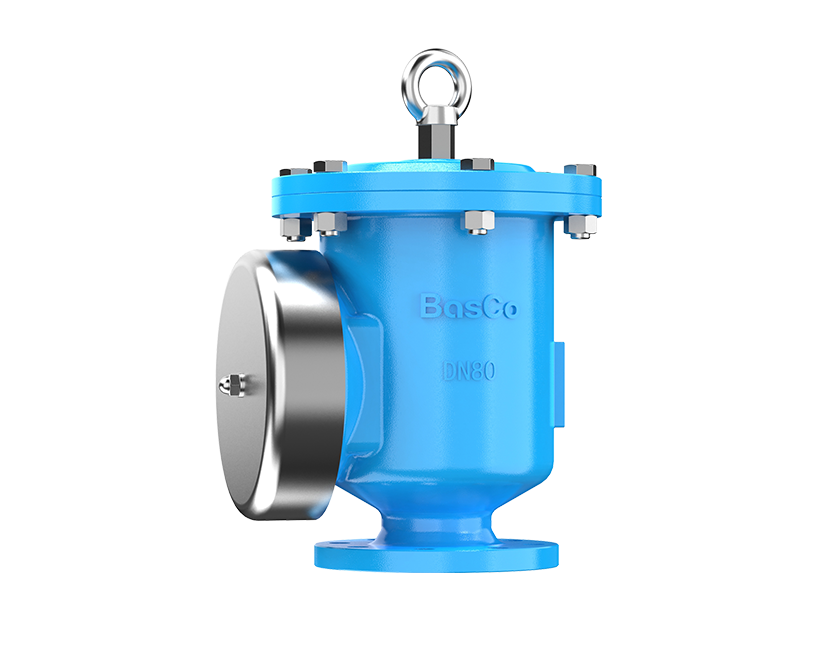
The pressure vacuum relief valve, often called a PVRV, is the primary breathing device on many storage tanks. It opens when internal pressure exceeds a selected positive set point and opens in the opposite direction when vacuum conditions develop. Under normal daily operation, this valve handles thermal expansion, minor pressure fluctuations, vapor displacement during filling, and air intake during product withdrawal.
The triggering mechanism is usually weight-loaded or spring-loaded, and the set pressure must align with the tank design pressure. In my experience, incorrect set points are one of the most common causes of chronic vent leakage, unnecessary emissions, and avoidable structural stress. A PVRV should not be selected only by connection size. It should be selected by capacity, set pressure, material compatibility, vapor behavior, and expected operating profile.
BASCO In-Line Pressure Vacuum Relief Valve
Emergency Vent Hatch
An emergency vent hatch is designed for high-capacity relief during abnormal conditions, especially external fire exposure. When a tank is exposed to fire, the liquid inside can generate vapor far beyond normal breathing rates. A standard PVRV is not intended to handle this extreme case by itself. The emergency vent provides a larger relief path at a higher pressure threshold, reducing the risk of tank rupture.
Although an emergency vent may rarely activate during normal operation, its sizing is critical. I consider it a last line of mechanical protection, not a decorative safety feature. If the fire-case calculation is wrong, the device may look correct on the tank but fail to provide enough relief capacity when it matters most. This is why I always review both the normal venting requirement and the emergency venting requirement during system evaluation.
Flame Arrester
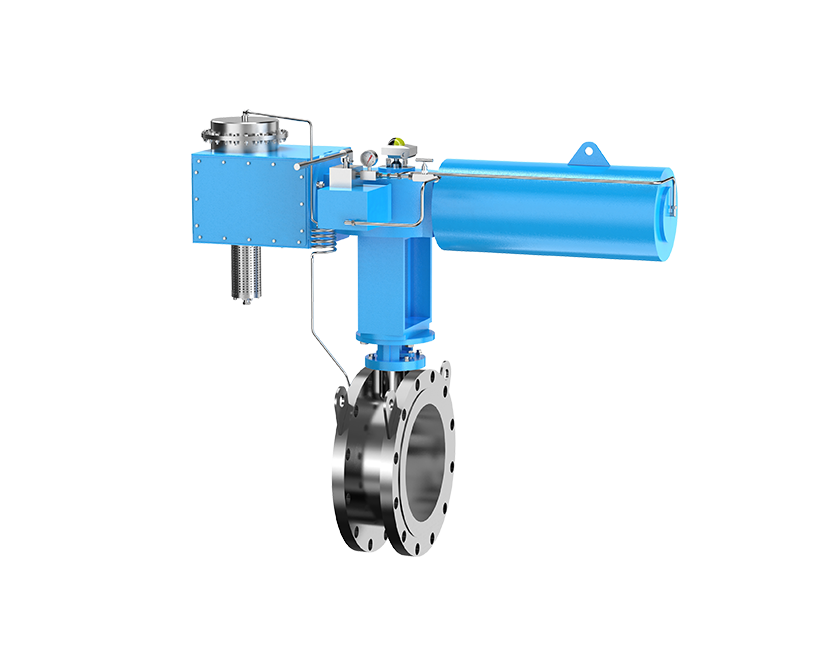
A storage tank flame arrester prevents flame from traveling back into the tank through vent piping. It works by cooling and quenching the flame front as it passes through a precisely designed metal element. In flammable vapor service, this device plays a critical role in preventing an external ignition event from becoming an internal tank explosion.
What many operators overlook is maintenance. Accumulated debris, polymerized vapor residue, ice, corrosion, or product contamination can restrict the element and reduce vapor flow. Over time, a dirty flame arrester can become a hidden pressure bottleneck. That restriction can compromise the performance of the PVRV, emergency relief path, or vapor recovery system connected downstream.

BASCO In Line Deflagration Flame Arrester
Overfill Protection System
Overfill protection adds a different layer of safety. Instead of managing vapor, it manages liquid level. A properly designed system typically combines high-level detection with alarm logic, automatic pump shutdown, or valve closure. Venting devices cannot compensate for uncontrolled liquid overfill.
When inflow exceeds tank capacity, only active level control prevents product release. In real facilities, overfill risk often increases after throughput expansion, operator turnover, or automation changes. I prefer to review level instrumentation, alarm response time, shutdown logic, and operating procedures together because overfill prevention depends on both hardware and human response.
| Component | Primary Role | Common Engineering Risk | Practical Selection Focus |
|---|---|---|---|
| Pressure Vacuum Relief Valve | Controls normal tank breathing and minor pressure or vacuum changes. | Incorrect set pressure or insufficient flow capacity. | Match set point, flow capacity, material, and operating profile. |
| Emergency Vent Hatch | Provides high-capacity relief during fire-case or abnormal overpressure events. | Undersized emergency relief area. | Size according to credible worst-case exposure and tank design limits. |
| Flame Arrester | Stops flame propagation through vent or vapor piping. | Blocked element causing hidden flow restriction. | Confirm flame type, gas group, piping layout, inspection access, and maintenance interval. |
| Overfill Protection | Prevents liquid from exceeding safe tank level. | Alarm without automatic response or poor operator timing. | Combine detection, alarm, shutdown logic, and operating procedures. |
How Do Safety Accessories Strengthen Tank Protection?
Safety accessories are often treated as secondary items, but in my experience they can determine whether the overall tank protection system performs smoothly or struggles under changing conditions. Devices such as pilot-operated pressure relief valves, emergency relief valves, and nitrogen blanketing valves help refine pressure control beyond the basic venting arrangement. They are especially valuable when the tank stores volatile, oxygen-sensitive, high-value, or emission-sensitive products. These accessories also make the system easier to explain visually, which is why they fit naturally into a product or application video.
The video below can be placed in this section because it supports the practical discussion of tank safety accessories. It gives readers a visual reference before they continue into the technical explanation. In B2B industrial content, I find that this placement works better than putting the video at the very top, because the reader first understands the system context and then sees how the accessories fit into that system.
Safety accessories such as pilot-operated pressure relief valves, emergency relief valves, and nitrogen blanketing valves help improve tank pressure control and emergency protection.
Pilot-Operated Pressure Relief Valves
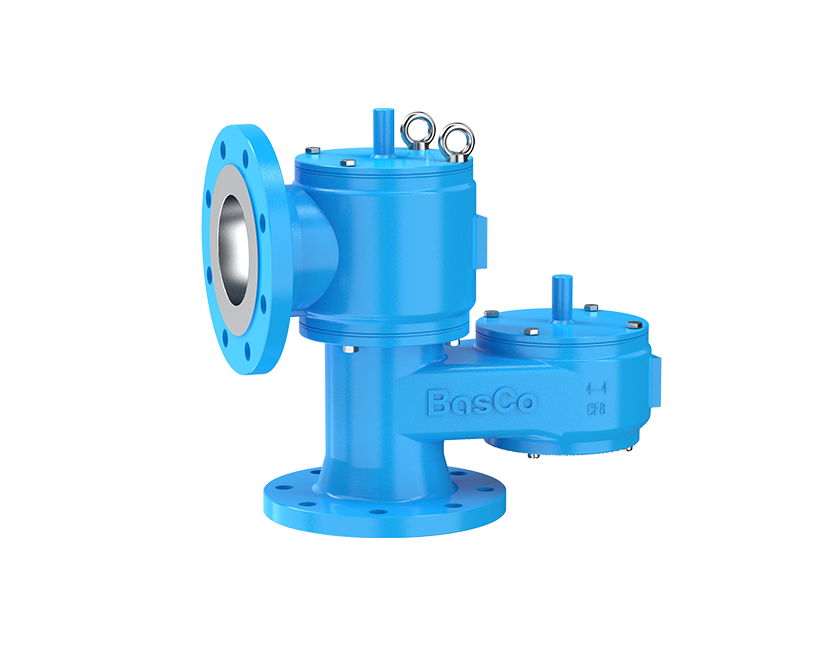
Pilot-operated pressure relief valves are useful when a tank or low-pressure system requires accurate pressure control with strong sealing performance close to the set point. Unlike a simple direct-loaded relief device, a pilot-operated design uses system pressure and a pilot mechanism to control the main valve. This can help reduce product loss, limit unnecessary vapor release, and improve pressure stability in applications where emissions or vapor conservation matter.
I usually consider pilot-operated pressure relief valves when the process needs tighter control than a conventional vent can provide. They are also valuable where operating pressure is close to the relief setting and seat leakage would create ongoing product loss or environmental concern. The trade-off is that they require careful application review, clean impulse paths, suitable materials, and proper maintenance. They should be selected as engineered pressure devices, not as generic accessories.

BASCO 5560 Pilot-operated Pressure Vacuum Relief Valve
Emergency Relief Valve
An emergency relief valve provides high-capacity pressure relief when abnormal pressure develops faster than normal venting equipment can manage. In some facilities, the term may be used alongside emergency vent hatch, depending on tank type, installation style, and product configuration. The practical purpose is the same: create a reliable relief path before pressure reaches a level that can damage the tank. This device becomes especially important in fire exposure, blocked outlet, runaway vapor generation, or severe process upset scenarios.
When I evaluate an emergency relief valve, I focus on credible worst-case events rather than routine breathing loads. The set pressure, flow capacity, discharge direction, material selection, and installation location must all be reviewed together. I also look at whether the discharge could expose personnel, ignition sources, nearby equipment, or environmental controls. A correctly sized emergency relief valve protects the tank, but a poorly routed discharge can create a new hazard.
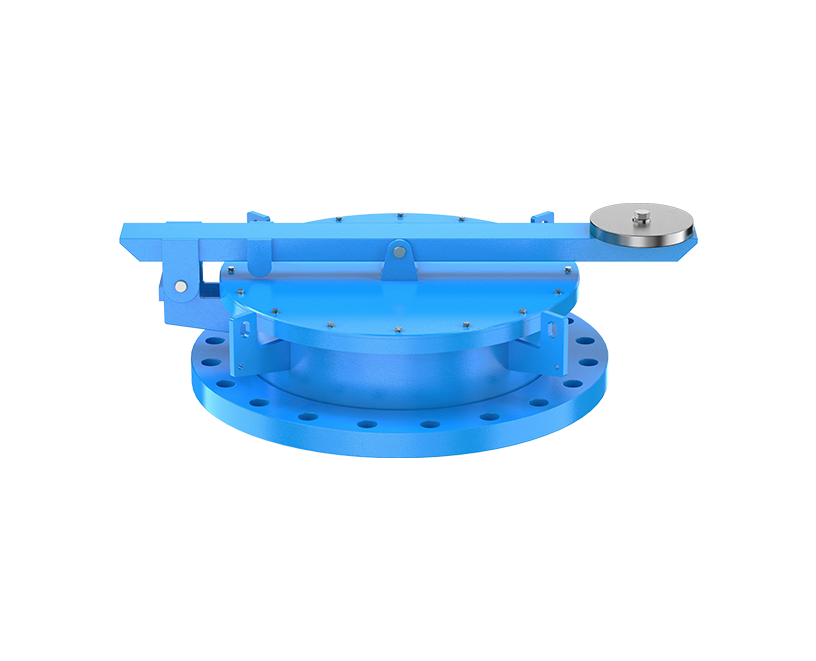
BASCO 7100 Emergency Pressure Relief Valve
Nitrogen Blanketing Valve
A nitrogen blanketing valve helps maintain a stable inert gas layer in the vapor space above the stored liquid. This is important for products that oxidize, absorb moisture, release flammable vapor, or require quality protection during storage. Instead of allowing air to enter freely during product withdrawal or cooling, the blanketing valve introduces nitrogen at a controlled pressure. The result is better vapor space control and lower oxygen exposure.
However, nitrogen blanketing must be coordinated with the rest of the tank safety system. If the blanketing set point conflicts with the PVRV, the tank may consume excessive nitrogen or vent more frequently than expected. If the nitrogen supply pressure is too high or the valve is oversized without proper control, the system can create unnecessary pressure cycling. In my experience, the best blanketing systems are designed together with PVRV settings, emergency relief capacity, and product vapor behavior.
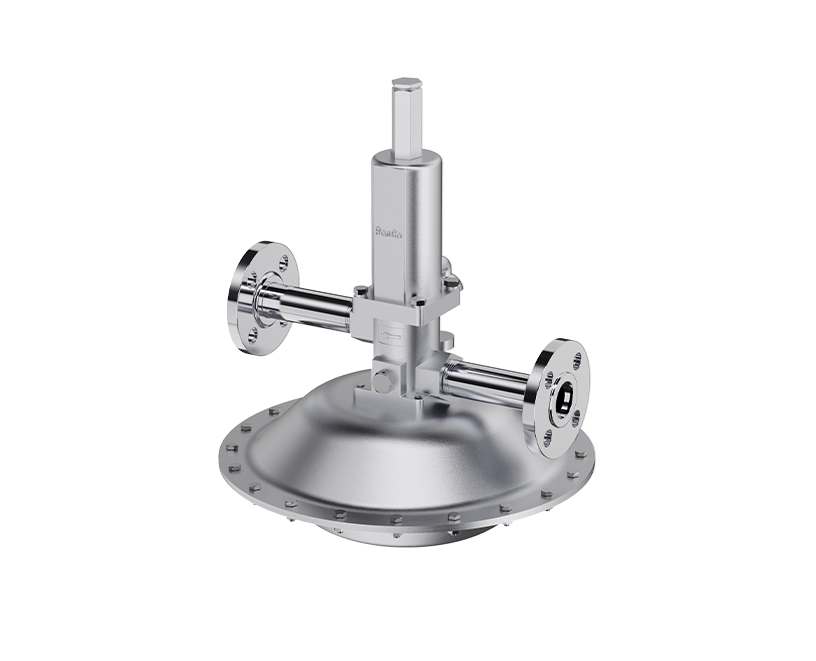
BASCO 8100 Self-adjusting Nitrogen Blanketing Valve
| Safety Accessory | What It Controls | Where It Adds Value | Key Design Concern |
|---|---|---|---|
| Pilot-Operated Pressure Relief Valve | Precise pressure relief and tight sealing near set pressure. | Emission-sensitive, vapor-conservation, or stable-pressure applications. | Pilot cleanliness, material compatibility, set pressure accuracy, and maintenance access. |
| Emergency Relief Valve | Rapid relief during abnormal overpressure events. | Fire-case, blocked vent, upset, or high vapor-generation scenarios. | Correct capacity, safe discharge routing, and reliable opening under emergency conditions. |
| Nitrogen Blanketing Valve | Controlled inert gas supply to the tank vapor space. | Oxidation control, moisture protection, vapor suppression, and product quality stability. | Coordination with PVRV settings, nitrogen supply pressure, and normal breathing demand. |
How Do These Components Work Together During Real Operation?
The real value of a complete tank safety system appears during dynamic events. During normal temperature changes, the PVRV opens and closes in small increments to maintain internal pressure within safe limits. If nitrogen blanketing is installed, the blanketing valve supplies inert gas when the tank pressure drops below its control range. If a flame arrester is installed in the vent path, it helps prevent an external ignition source from entering the tank.
During high-rate filling, vapor displacement increases significantly. The PVRV handles most of the normal vapor flow, provided it was sized correctly. The overfill protection system monitors rising liquid level and stands ready to interrupt filling if limits are approached. If the stored product releases flammable vapor, the flame arrester and vent routing become part of the same pressure-management discussion.
In a fire scenario, vapor generation accelerates dramatically. Once pressure exceeds the emergency relief set point, the emergency vent hatch or emergency relief valve opens to provide high-capacity relief. The PVRV alone would not be sufficient in this condition. This is where the difference between normal breathing design and emergency relief design becomes critical.
If an overfill event begins due to operational error, the high-level system triggers alarms and initiates automatic shutdown before liquid reaches the vent system. This prevents environmental release, product loss, and possible structural overloading. The key insight is that each component protects against a different failure mode, but they must be sized and calibrated with awareness of one another.
What Engineering Design Factors Must Be Considered?
Engineering a complete tank safety system requires more than copying a standard specification. Vent sizing must consider tank geometry, maximum filling rates, maximum withdrawal rates, vapor pressure of the stored fluid, ambient temperature range, and credible emergency exposure. Fire-case calculations must follow accepted engineering guidance while reflecting the actual installation environment. A tank located in a congested process area should not be evaluated the same way as a tank in an open, low-risk location.
Material compatibility also plays a significant role. Corrosive vapors can degrade valve seats, flame arrester elements, gaskets, and pilot components over time. In facilities handling solvents, light hydrocarbons, acids, or oxygen-sensitive liquids, I pay particular attention to vapor behavior and seasonal temperature swings. These factors directly affect breathing rates, leakage risk, nitrogen demand, and maintenance frequency.
Set pressure coordination is another area where many systems fail quietly. The nitrogen blanketing valve, PVRV, pilot-operated pressure relief valve, and emergency relief valve must not fight each other. If their set points overlap incorrectly, the tank may vent nitrogen continuously, lose product vapor, or experience unstable pressure cycling. A reliable system uses clear pressure bands, with each device assigned a specific operating role.
| Parameter | PVRV | Emergency Relief Valve or Emergency Vent | Nitrogen Blanketing Valve |
|---|---|---|---|
| Primary Function | Normal breathing control. | Abnormal or fire-case pressure relief. | Controlled inert gas supply. |
| Activation Frequency | Routine. | Rare. | Routine when pressure drops or product is withdrawn. |
| Flow Capacity | Moderate, based on normal venting demand. | High, based on emergency relief demand. | Controlled, based on blanketing demand. |
| Set Pressure Relationship | Low pressure and vacuum set points. | Higher than normal pressure relief settings. | Lower pressure control band to prevent air intake. |
| Risk if Misapplied | Chronic leakage, tank stress, or vacuum damage. | Catastrophic overpressure or unsafe discharge. | High nitrogen consumption, pressure instability, or oxygen ingress. |
What Are Common Failure Scenarios in Tank Safety Systems?
In field evaluations, the most frequent issue I encounter is undersized venting capacity due to inaccurate assumptions about pump rates. A facility may upgrade a transfer pump without revisiting the tank vent calculation. The tank then experiences higher vapor displacement than the original PVRV was designed to handle. The weakness may remain hidden until a fast filling operation creates an overpressure event.
Another common problem is a clogged flame arrester element restricting vapor flow without obvious warning signs. The device may still look intact from the outside, but the internal element may be fouled by dust, corrosion, product residue, or condensate. Once that restriction develops, the entire vent path loses capacity. This is why inspection access and maintenance planning are not minor details.
Nitrogen blanketing systems can also create problems when they are added after the original tank venting system is already in service. If the blanketing valve is oversized, poorly tuned, or set too close to the PVRV pressure setting, the system may waste nitrogen and vent more often than expected. If it is undersized, the tank may still pull air during withdrawal or cooling. A blanketing valve is not just a gas supply device. It is part of the pressure control strategy.
Improper installation contributes to system imbalance as well. Misaligned piping, excessive backpressure from long vent lines, incorrect discharge orientation, or incompatible materials can undermine design calculations. These failures are rarely dramatic at first. They develop gradually until an abnormal event exposes the weakness.
How Should I Approach Tank Safety System Selection?
When evaluating or designing a complete tank safety system, I begin with the stored fluid. Vapor pressure, flash point, corrosiveness, oxygen sensitivity, moisture sensitivity, and temperature behavior directly influence vent sizing, flame arrester selection, nitrogen blanketing requirements, and material choice. I then review actual operating data, especially maximum inflow and outflow rates. Nameplate assumptions are useful, but real pump curves and operating procedures are better.
Next, I review the pressure control sequence. The blanketing valve should support the tank during vacuum-side pressure drops. The PVRV should manage routine breathing. The pilot-operated pressure relief valve may be used where tighter pressure control or better sealing is needed. The emergency relief valve or emergency vent should remain reserved for credible abnormal events.
Finally, I review compliance, maintenance, and lifecycle cost. Environmental emission limits may require vapor conservation or vapor recovery integration. Fire risk exposure influences emergency relief capacity. Maintenance access affects whether the system will stay reliable after installation. A technically correct design that cannot be inspected or maintained will not remain safe for long.
When Should a Tank Safety System Be Upgraded?
Upgrades become necessary when operating conditions change. Increased throughput, new stored products, higher ambient temperatures, modified piping, new nitrogen blanketing requirements, or revised emission expectations can all invalidate original venting calculations. I often recommend reassessment after facility expansions, near-miss incidents, product changes, or recurring vent leakage. These are signals that the tank is no longer operating under the assumptions used in the original design.
Many tanks operate for years under conditions that slowly drift beyond their original design basis. A pump gets upgraded. A product changes. A vapor recovery line is added. A flame arrester becomes partially restricted. Each change may look small by itself, but together they can alter the pressure behavior of the tank. Periodic engineering review prevents these latent vulnerabilities from becoming failures.
What Is the Best Way to Think About Complete Tank Protection?
A complete tank safety system is fundamentally about coordinated pressure and risk management. In my experience, the difference between minimum compliance and real protection lies in how well the components function together under dynamic conditions. A PVRV protects against routine pressure and vacuum changes. An emergency relief device protects against abnormal overpressure. A flame arrester manages ignition risk. An overfill system manages liquid level. Safety accessories such as pilot-operated pressure relief valves and nitrogen blanketing valves refine system performance when the process requires tighter control.
At BASCO, we approach tank protection as an integrated engineering challenge rather than a component sale. If you are reviewing your current storage setup or planning a new installation, I recommend evaluating vent sizing, emergency relief, flame protection, nitrogen blanketing, overfill safeguards, and safety accessories as one unified system. That integrated perspective is what ultimately protects your assets, your people, and your operation.