

When I review incidents and nonconformities involving flame arresters, the root cause is rarely the device itself. The real issue is almost always that the flame arrester was treated as a standalone safety product rather than as part of an Ex system with defined boundaries, assumptions, and limits of use. This is exactly why ISO/IEC 80079-49:2024 reframes flame arrester selection as a compliance exercise, not a catalog exercise.
From my perspective, the standard is very clear: a flame arrester is only compliant when its selection, installation, and operating conditions remain entirely within its certified scope. The moment we stretch assumptions, ignore uncertainty, or “hope” that operating conditions stay benign, we step outside Ex compliance. That is why defensibility matters more than optimism.
What I aim to demonstrate in this article is how I personally approach flame arrester selection so that, if challenged by an auditor, inspector, or authority having jurisdiction, I can show that my decision-making process followed a conservative, standards-aligned logic rather than informal engineering judgment alone.
One of the biggest misunderstandings I encounter is the belief that ISO/IEC 80079-49 is primarily about testing methods or product marking. In reality, the standard places significant responsibility on the system designer and user to demonstrate that the flame arrester is suitable for the intended conditions of use and that those conditions are well understood.
The standard explicitly expects me to define the explosion protection concept, the system boundaries, and the foreseeable operating scenarios that influence flame transmission risk. It also requires that I respect limits of use as hard compliance boundaries, not as advisory guidance. In practice, that means I must be able to explain why the selected arrester type is appropriate, not merely that it is certified.
Most importantly, the standard assumes that uncertainty must be treated conservatively. If I cannot confidently exclude certain ignition or propagation modes, I am expected to assume the more severe case rather than the more convenient one.

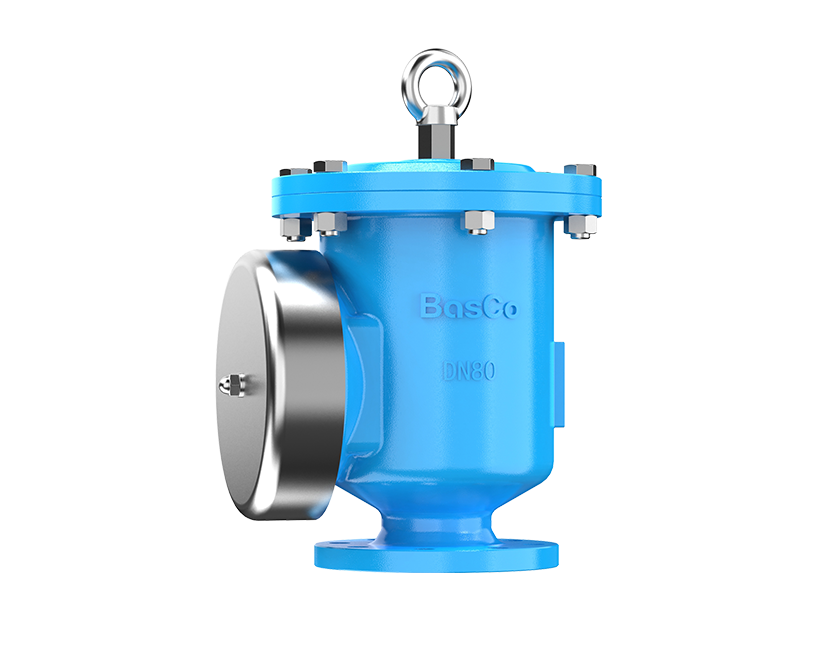
Structure diagram of BASCO Flame Arrester
I often tell customers that a flame arrester's limits of use function like an invisible fence. As long as the application stays inside that fence, compliance is intact. The moment any parameter crosses it—intentionally or not—the certification no longer applies, regardless of how reputable the manufacturer may be.
Limits of use typically include parameters such as maximum operating pressure, allowable gas group, temperature range, flow velocity, installation orientation, and distance to potential ignition sources. Under ISO/IEC 80079-49, these limits are not optional design targets; they are absolute boundaries tied directly to the validity of the certification.
This is why I never evaluate a flame arrester datasheet in isolation. I always cross-check each stated limit against real operating data, including startup, shutdown, upset conditions, and foreseeable abnormal operation. If even one credible scenario exceeds a certified limit, the application is no longer compliant.
|
Limit of Use Parameter |
Why I Treat It as Non-Negotiable |
|
Maximum pressure |
Pressure affects flame speed, quenching distance, and structural integrity |
|
Gas group |
Flame propagation behavior varies dramatically between groups |
|
Temperature range |
Elevated temperatures reduce safety margins |
|
Flow direction |
Reverse flow can invalidate test assumptions |
Deflagration and detonation are often explained as “slow versus fast flames”, but that oversimplification leads to poor selection decisions. From my experience, the more meaningful distinction is the coupling mechanism between the reaction zone and the pressure wave.
In a deflagration, flame propagation is driven by thermal diffusion and mass transfer, and pressure rise is relatively gradual. In a detonation, the chemical reaction is coupled directly to a shock front, creating extreme pressure and temperature spikes that can overwhelm devices designed only for deflagration conditions.
What matters for flame arrester selection is not just how fast the flame moves, but whether the system geometry, confinement, turbulence, and mixture composition could allow a deflagration-to-detonation transition. Long pipes, obstacles, dead ends, and high reactivity mixtures all increase this risk, even if ignition initially appears benign.
One of the most important compliance principles I follow is this: uncertainty must never be resolved in favor of lower risk. ISO/IEC 80079-49 reinforces this by requiring conservative assumptions whenever ignition behavior cannot be reliably predicted.
If I do not have definitive evidence that ignition will always occur under low-energy, non-congested conditions, I cannot ethically or compliantly assume deflagration-only behavior. In those cases, I must select a detonation-capable flame arrester or redesign the system to eliminate detonation risk entirely.
This conservative approach is not about overengineering; it is about maintaining the integrity of the Ex protection concept. If I knowingly select a deflagration arrester while acknowledging unresolved uncertainty, I am effectively stepping outside the certified scope of use.

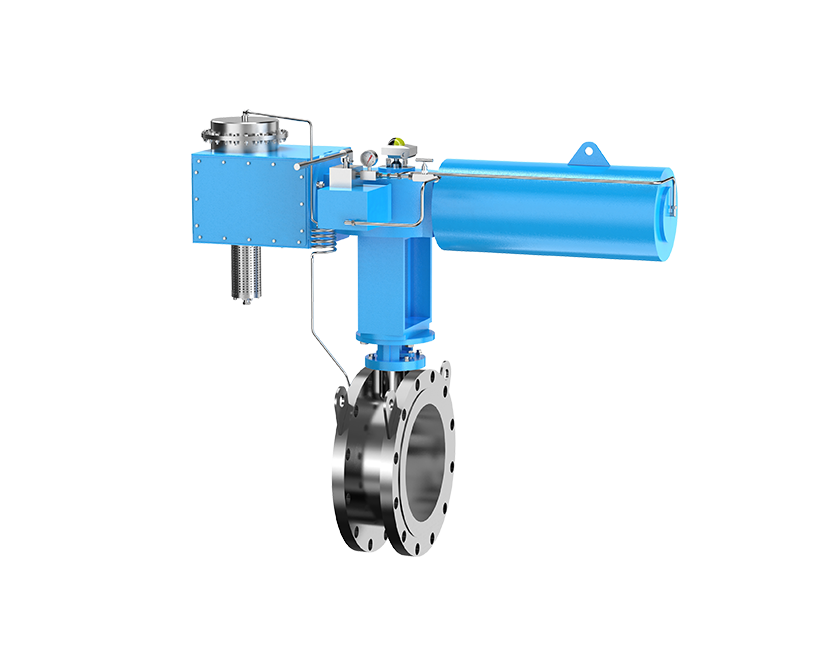
Installation diagram of flame arrester installation points
Before I finalize any flame arrester selection, I ask myself a simple but uncomfortable question: do I actually know enough to justify this choice? In many real-world projects, the honest answer is “not yet”.
Critical inputs include gas composition, operating pressure, temperature profiles, line geometry, ignition sources, and interaction with other Ex equipment. Missing data does not excuse noncompliance; it triggers a requirement for conservative assumptions or additional engineering controls.
When I lack reliable information, I either obtain it through analysis and testing or I deliberately select equipment rated for the worst credible case. Anything in between is a gamble, not a defensible compliance strategy.
|
Required Input |
Consequence if Unknown |
|
Gas group |
Must assume more severe group |
|
Line length |
Detonation risk cannot be excluded |
|
Ignition energy |
Cannot justify deflagration-only selection |
|
Process pressure |
Certification scope may be exceeded |
In practice, not every parameter can be pinned down with laboratory precision. ISO/IEC 80079-49 acknowledges this reality but does not relax compliance expectations because of it. Instead, it places responsibility on me to manage uncertainty through conservative design and documented assumptions.
If parameters such as mixture variability or operating transients cannot be tightly controlled, I must ensure the flame arrester's certified limits fully envelope those variations. If that is not feasible, the application is, by definition, outside the certified scope.
This is also where documentation becomes critical. I make sure that assumptions, uncertainties, and mitigation measures are explicitly recorded so that the compliance rationale remains transparent and defensible over time.
This is a point that surprises many engineers and purchasers. A flame arrester can be fully certified and still be misapplied. Certification applies only when the device is used exactly as tested and specified.
Applications become invalid when installation orientation is changed, when operating conditions exceed certified limits, when upstream or downstream geometry alters flame behavior, or when maintenance practices degrade performance. Even interaction with other Ex equipment can invalidate assumptions made during certification testing.
From a compliance standpoint, it does not matter that “the arrester itself is certified”. What matters is whether the application remains within the certified limits of use.
I approach flame arrester selection by explicitly defining the intended use, foreseeable misuse, and system boundary responsibilities. Intended use describes normal operation. Foreseeable misuse includes reasonably predictable deviations, such as blocked vents or abnormal startup sequences.
System boundaries define what I am responsible for controlling and what assumptions I make about external conditions. ISO/IEC 80079-49 expects these definitions to be deliberate, not implicit.
By doing this work upfront, I reduce the risk of hidden assumptions undermining compliance later in the project lifecycle.
When I review manufacturer documentation, I look for more than just an Ex marking. I expect clear identification of the applicable standard, the explosion type (deflagration or detonation), gas group coverage, pressure and temperature limits, and installation constraints.
Missing or ambiguous information is a red flag. If I cannot trace a parameter back to a certified limit, I cannot confidently claim compliance.

Classification of BASCO flame arrester
My selection logic always follows a structured path: define the Ex concept, identify credible ignition scenarios, assess uncertainty, apply conservative assumptions, verify limits of use, and document everything. This approach aligns directly with ISO/IEC 80079-49 and withstands external scrutiny.
The goal is not to choose the smallest or cheapest device, but the one whose certified scope genuinely matches the application. That is what makes the decision defensible.
When I select a flame arrester today, I do it with the expectation that someone may challenge my decision years from now. By treating ISO/IEC 80079-49:2024 as a governing framework, respecting limits of use as mandatory boundaries, and resolving uncertainty conservatively, I protect not only the system but also my professional credibility.
If you are evaluating flame arresters and want to be confident that your selection is Ex-compliant, defensible, and aligned with current standards, I encourage you to step back from product lists and focus on the system-level logic instead. That shift in perspective is often the difference between nominal compliance and real explosion protection.

How to Size a Pressure Vacuum Relief Valve According to API 2000
2026-08-18Flame Arrester Guide: Types, Applications, Selection, and Industrial Solutions
2026-08-04Common Causes of Dust Collector Explosions and How to Protect Against Them
2026-07-13BasCo conducts "CPR+AED Emergency Training to Strengthen Workplace Life Safety Defense"
2026-06-18Copyright © Jiangsu Bafang Safety Device Co., LTD. All Rights Reserved