

In my experience working with pressure protection systems across chemical, pharmaceutical, and energy facilities, rupture disks are often treated as simple“last line” devices. That assumption usually holds—until a disk fails prematurely, bursts off-set, or collapses under vacuum. When that happens, engineers quickly realize that not all rupture disks behave the same way under real operating conditions.
What I'll state clearly upfront is this: reverse-acting rupture disks provide superior burst accuracy, fatigue resistance, and vacuum capability in most modern, pressure-cycling processes, while forward-acting disks still have a place in simpler, low-cycle, cost-sensitive applications. The trade-off is complexity and upfront cost versus long-term reliability and tolerance control. In real plants with pressure fluctuations, temperature swings, and compliance pressure, reverse-acting designs almost always reduce risk and lifecycle cost.
Below, I'll break down how these two designs actually work, why their performance differs, and how I approach selection when safety, uptime, and regulatory compliance are on the line. This analysis follows the technical structure you outlined and is grounded in field selection logic rather than marketing claims.
A rupture disk is a non-reclosing pressure relief device designed to burst at a predetermined differential pressure. Unlike a safety relief valve, it has no moving parts and no reseating mechanism. Once it activates, it provides full, instantaneous opening.
In real systems, I most often see rupture disks used in two ways: as a standalone protection device for fast-acting overpressure scenarios, or installed upstream of a PSV to isolate corrosive media, prevent leakage, or improve overall system tightness. The key point is that rupture disks are precision components, not commodity consumables.
A forward-acting rupture disk is a flat or slightly domed membrane installed so that process pressure loads the disk in tension. As pressure increases, the membrane stretches until the material's tensile limit is exceeded.
From a mechanical standpoint, this is the simplest rupture disk design—and that simplicity is both its strength and its weakness.
Bursting occurs when the membrane's stress exceeds its ultimate tensile strength. Because the same thin section is responsible for pressure resistance and burst control, small variations in thickness, temperature, or surface damage can significantly affect performance.
In practice, this is why forward-acting disks typically have wider burst tolerances.
Forward-acting disks are easy to understand and relatively inexpensive, but they are inherently sensitive to fatigue and vacuum. In systems with pressure cycling, I've seen these disks fail well below nameplate burst pressure due to micro-cracking and work hardening.
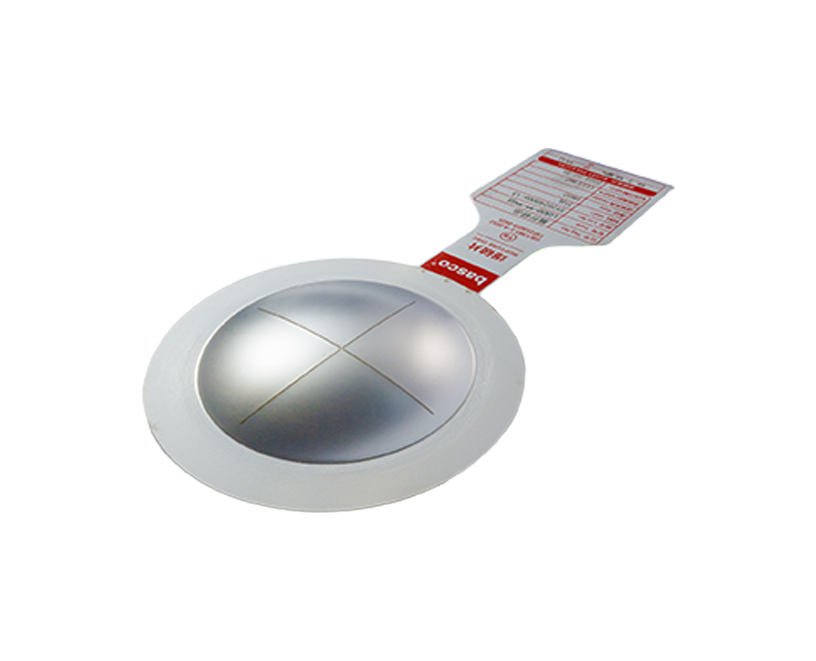
BASCO Forward Acting Rupture Disk
A reverse-acting rupture disk uses a pre-formed dome installed against the direction of process pressure. Instead of stretching, the disk remains largely in compression during normal operation.
This structural difference fundamentally changes how stress is distributed in the material.
When the set pressure is reached, the dome snaps through (buckles) and is then cut open by a knife blade or scored pattern. The burst pressure is governed primarily by dome geometry rather than material tensile strength.
That geometric control is the reason reverse-acting disks achieve much tighter burst tolerances.
Because the membrane isn't cyclically stretched, fatigue damage accumulates far more slowly. In pressure-cycling applications, this difference is not theoretical—it directly impacts replacement intervals and unplanned downtime.
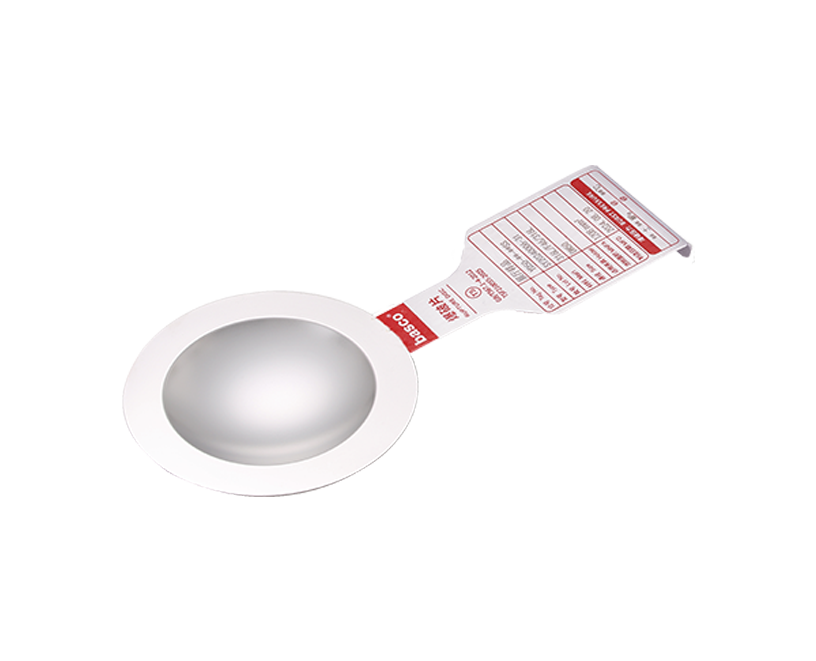
BASCO Reverse Acting Rupture Disk
The table below summarizes how these designs differ in the parameters that matter most in real plants.
|
Parameter |
Forward-Acting Disk |
Reverse-Acting Disk |
|
Load direction |
Tension-loaded |
Compression-loaded |
|
Typical burst tolerance |
Wider (±5–10%) |
Tighter (often ±2–5%) |
|
Fatigue resistance |
Poor in cyclic service |
Excellent for pressure cycling |
|
Vacuum capability |
Limited or none |
Inherently vacuum resistant |
|
Sensitivity to damage |
High |
Lower |
What this table doesn't show—but experience does—is how these differences compound over years of operation.
Selection should always start with the operating profile, not the catalog price. I focus on a few non-negotiable questions:
In high-cycle, temperature-variable, or hygienic processes, reverse-acting disks consistently outperform forward-acting designs over the full lifecycle.
The most common mistake I see is choosing purely on price, assuming a rupture disk is a“one-time” component. That mindset ignores fatigue, downtime, and validation costs.
Another frequent error is overlooking vacuum or backpressure. Forward-acting disks can collapse or deform under even modest reverse pressure, leading to unpredictable burst behavior.
Finally, installation orientation errors are surprisingly common. A reverse-acting disk installed backward will not behave as designed, and I've seen this mistake defeat otherwise robust safety systems.
From a practical engineering standpoint, reverse-acting rupture disks align better with how modern process plants actually operate—frequent pressure changes, strict compliance, and low tolerance for unplanned outages. Forward-acting disks still make sense in stable, low-cycle systems, but they should be chosen intentionally, not by default. If you start with real operating conditions rather than datasheets, the correct choice usually becomes obvious.
If you're evaluating rupture disks for a specific service condition, feel free to treat this framework as a starting point—I've found that disciplined selection upfront saves far more time and cost than any corrective action later.
Reverse-acting rupture disks are more accurate because burst pressure is controlled by dome geometry rather than material tensile strength.
Yes. Their compression-loaded design dramatically improves fatigue life under pressure cycling.
Generally no. Most forward-acting disks require vacuum supports and still remain vulnerable to deformation.
In most industrial applications, reverse-acting rupture disks last significantly longer due to reduced fatigue damage and tighter manufacturing control.

How to Size a Pressure Vacuum Relief Valve According to API 2000
2026-08-18Flame Arrester Guide: Types, Applications, Selection, and Industrial Solutions
2026-08-04Common Causes of Dust Collector Explosions and How to Protect Against Them
2026-07-13BasCo conducts "CPR+AED Emergency Training to Strengthen Workplace Life Safety Defense"
2026-06-18Copyright © Jiangsu Bafang Safety Device Co., LTD. All Rights Reserved