












When engineers ask me about pilot-operated pressure vacuum relief valves, the real question is rarely what the valve is. More often, the discussion is about when it actually makes engineering sense. Over the years at BASCO, I have seen projects over-specify pilot-operated PVRVs because they sounded more advanced, and I have also seen spring-loaded valves used in applications where pressure margins were too narrow for stable performance.
From my experience as a BASCO engineer working with atmospheric storage tanks, pilot-operated PVRVs provide their greatest value when low set pressure accuracy, seat tightness, emissions control, and stable operation are critical. They can outperform spring-loaded designs at very low pressure settings, especially on large tanks or volatile product storage applications. However, they are not universal upgrades. In many tank systems, a properly selected spring-loaded PVRV remains the simpler, lower-maintenance, and more practical solution.
In this article, I will explain how pilot-operated PVRVs work, why they perform well at very low set pressures, how they compare with spring-loaded PVRVs, and when BASCO typically recommends them for real storage tank projects.
What Exactly Is a Pilot-Operated PVRV?
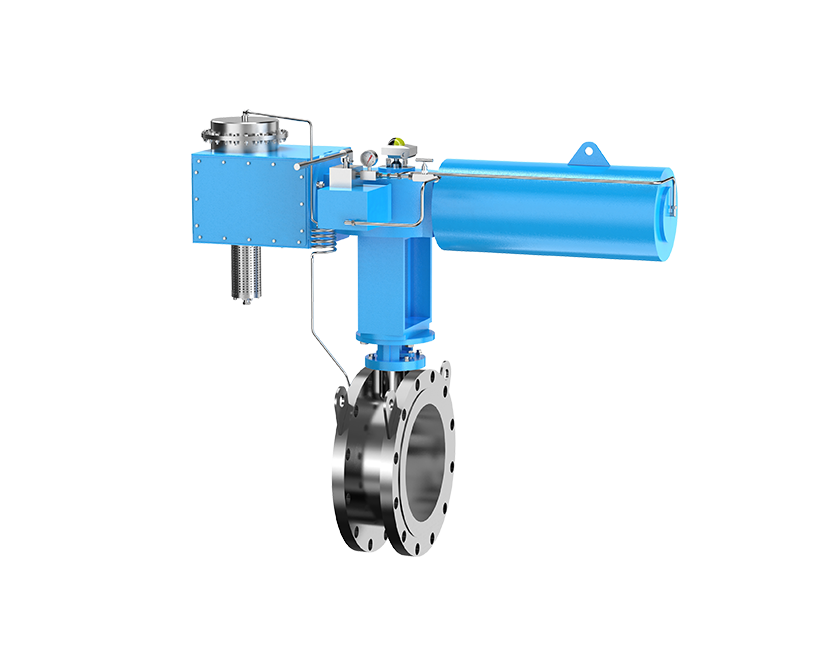
A pilot-operated PVRV is a pressure and vacuum relief device where the main valve is controlled by a smaller pilot valve instead of relying only on direct spring force. The pilot senses tank pressure and controls the loading pressure on the main valve diaphragm, piston, or pallet.
From an engineering standpoint, this separation is the key advantage. The pilot controls setpoint accuracy and stability, while the main valve provides flow capacity. This allows the valve to remain tightly sealed at low pressures without sacrificing relieving performance when it opens.
In contrast, a spring-loaded PVRV must balance seat tightness and opening force through the same spring mechanism. As set pressure becomes very low, that compromise becomes more difficult to manage.

Structure diagram of a pilot-operated PVRV.
How Does a Pilot-Operated PVRV Work?
In normal operation, tank pressure is sensed by the pilot. The pilot maintains loading pressure on the main valve, keeping it closed and tightly seated. When tank pressure reaches the pilot setpoint, the pilot vents the loading pressure and allows the main valve to open rapidly.
The same concept applies to vacuum relief, either through a separate vacuum pilot or an integrated dual-function pilot assembly. The main valve does not gradually creep open. It remains closed until the pilot gives a clear opening signal.
This is why pilot-operated PVRVs are especially stable at low pressures. The main valve does not need a weak spring to crack open gradually. It follows pilot logic and opens more decisively.
Pilot-operated PVRV working principle and operation demonstration.
Why Do Pilot-Operated PVRVs Perform Better at Very Low Set Pressures?
Very low set pressures, often measured in inches of water column, are where spring-loaded PVRVs begin to struggle. At these pressures, the spring must be light enough to open easily, but strong enough to maintain sealing force. That balance is difficult.
Pilot-operated designs avoid much of this compromise. The pilot can be tuned for very low set pressure response, while the main valve remains fully loaded and tightly sealed until opening is required.
In practice, this can mean lower vapor leakage, reduced product losses, and more stable opening behavior during thermal breathing. For volatile liquid storage tanks or tanks operating near MAWP limits, the difference is often meaningful.
How Does the Pilot System Improve Seat Tightness and Stability?
Seat tightness comes from consistent loading. In pilot-operated PVRVs, the closing force on the main seat is not limited only by mechanical spring tolerances. It is controlled by pressure loading and pilot operation.
This allows the valve to maintain a tight seal across a wider operating range. Temperature swings, minor vapor pressure changes, and small tank pressure fluctuations have less impact on sealing performance.
From a stability perspective, pilot operation also reduces gradual lift behavior. When the pilot opens, the main valve opens decisively. When pressure drops, it reseats cleanly. This is one reason pilot-operated PVRVs can help reduce chatter in low-pressure tank venting applications.
How Does a Pilot-Operated PVRV Compare with a Spring-Loaded PVRV?
I always recommend comparing these two designs before making a selection. Each has a valid place in tank venting design, but their strengths are different.
| Feature | Pilot-Operated PVRV | Spring-Loaded PVRV |
|---|---|---|
| Low pressure accuracy | Excellent | Limited at very low setpoints |
| Seat tightness | Very high | Moderate to low |
| Emissions control | Superior when properly maintained | Acceptable for many tanks |
| Mechanical simplicity | More complex | Simple |
| Maintenance effort | Higher | Lower |
| Initial cost | Higher | Lower |
From my experience at BASCO, the right choice depends on operating pressure, tank size, breathing capacity, product volatility, emissions requirements, and maintenance capability.
When Should a Pilot-Operated PVRV Be Used Instead of a Spring-Loaded Valve?
Pilot-operated PVRVs are necessary when performance margins are narrow. I typically recommend them for large fixed-roof tanks with very low MAWP, tanks storing high-vapor-pressure or high-value products, facilities operating close to environmental permitting limits, and systems exposed to frequent thermal cycling.
These are the situations where the advantages of pilot operation become measurable rather than theoretical. Outside of these cases, a well-selected spring-loaded PVRV often performs reliably and is easier to maintain.
The key is not whether pilot-operated technology is more advanced. The key is whether the tank actually needs the additional accuracy, sealing performance, and stability.
How Do Tank Size and Breathing Capacity Affect Valve Selection?
Tank size directly affects required breathing capacity. Larger tanks experience higher volumetric flow during in-breathing and out-breathing events, especially during rapid temperature changes or liquid transfer operations.
Pilot-operated PVRVs handle large flow rates effectively because the main valve can be sized for capacity without compromising setpoint accuracy. Spring-loaded designs can become more sensitive as size increases and pressure settings decrease.
This is why pilot-operated PVRVs are more common on large crude oil tanks, refined product tanks, and terminal storage tanks, while spring-loaded valves remain common on smaller chemical or utility tanks.
How Does API 2000 Influence PVRV Selection?
API 2000 does not require every tank to use a pilot-operated PVRV. Instead, it provides a venting framework for protecting atmospheric and low-pressure storage tanks against overpressure and vacuum conditions.
I interpret API 2000 as a decision framework rather than a product mandate. It pushes engineers to evaluate normal venting, emergency venting, operating margins, vapor behavior, and reliability.
In many low-pressure applications, pilot-operated PVRVs become the most practical way to meet those performance requirements with stable operation and reduced leakage.
Why Are Pilot-Operated PVRVs More Expensive?
Pilot-operated PVRVs cost more because they include additional control components and require tighter manufacturing control. The pilot assembly, impulse passages, loading chamber, diaphragm or piston components, and precision sealing surfaces all add complexity.
However, the cost comparison should not stop at purchase price. For tanks storing volatile or high-value products, reduced vapor loss and improved seat tightness may provide long-term economic value.
| Cost Factor | Pilot-Operated PVRV | Spring-Loaded PVRV |
|---|---|---|
| Initial purchase cost | Higher | Lower |
| Product loss potential | Lower | Higher in low-pressure service |
| Maintenance complexity | Higher | Lower |
| Best economic fit | Large or emissions-sensitive tanks | General storage applications |
Do Pilot-Operated PVRVs Reduce VOC Emissions?
Yes, when they are properly selected, installed, and maintained. Better seat tightness means less vapor leakage during normal operation. Over time, this can reduce product losses and fugitive emissions.
This matters most for volatile organic compounds, high-vapor-pressure products, and facilities operating under strict environmental limits. In these cases, small leakage improvements can become significant over the life of the tank.
However, the benefit depends on maintenance discipline. A neglected pilot-operated PVRV can perform worse than a well-maintained spring-loaded valve.
Why Do Pilot-Operated PVRVs Help Avoid Chatter?
Chatter often occurs when a valve opens and closes rapidly due to unstable pressure conditions. Spring-loaded valves can be more vulnerable to this behavior at low set pressures because they may lift gradually and then reseat repeatedly.
A pilot-operated valve behaves differently. The pilot senses pressure, vents loading pressure, and allows the main valve to open more decisively. This cleaner opening action can improve stability during relieving events.
At BASCO, when we investigate chatter problems, we always review valve sizing, inlet pressure loss, outlet pressure behavior, and valve type together. The valve is only one part of the system.
Can Pilot-Operated PVRVs Be Used with Flame Arresters?
Yes. Pilot-operated PVRVs can be used together with flame arresters when the tank stores flammable products or when vent outlets may be exposed to ignition sources.
The important issue is pressure drop. A flame arrester adds resistance to the venting path, and that resistance must be included in the venting calculation.
At BASCO, we typically evaluate the PVRV, flame arrester, vent piping, and emergency venting requirements as one complete tank protection system rather than isolated devices.

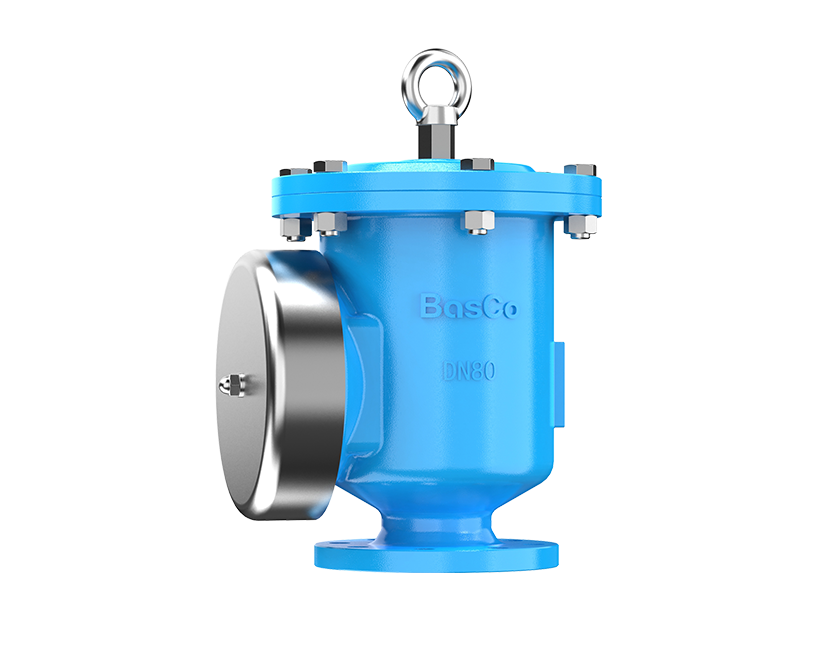
BASCO 5510 Pilot-Operated PVRV.
What Failure Modes Should Engineers Understand?
No valve design is immune to failure. Pilot-operated PVRVs introduce different risks than spring-loaded designs, so failure mode review is essential.
Depending on pilot configuration and loading logic, a pilot-operated valve may be designed to fail open or fail closed. Fail-open behavior prioritizes tank protection, while fail-closed behavior prioritizes product retention. Neither option is universally correct.
Common risks include pilot line blockage, freezing in cold climates, contamination from dirty vapors, and improper commissioning. These risks are manageable, but only if they are considered during design and maintenance planning.
What Are the Real-World Limitations of Pilot-Operated PVRVs?
The biggest limitation is maintenance discipline. Pilot-operated PVRVs require more inspection points, cleaner signal paths, and more careful commissioning than simple spring-loaded valves.
Another limitation is over-specification. I have seen pilot-operated PVRVs installed on small tanks with generous pressure margins where they provided little real benefit. In those cases, complexity was added without improving safety, emissions control, or compliance.
Engineering judgment matters more than valve sophistication.
Are Pilot-Operated PVRVs Suitable for Small Storage Tanks?
In most cases, they are not the first choice. Small tanks rarely operate at pressures low enough to justify the added complexity. A quality spring-loaded PVRV usually meets API 2000 requirements with fewer maintenance demands.
There are exceptions, especially for high-value or highly volatile products, but those should be evaluated case by case.
Which Industries Commonly Use Pilot-Operated PVRVs?
Pilot-operated PVRVs are commonly used in petroleum storage terminals, chemical plants, refined product tank farms, biofuel facilities, and large atmospheric storage installations where low-pressure accuracy and emissions control matter.
At BASCO, petroleum storage and terminal applications account for many pilot-operated PVRV discussions because tank size, vapor pressure, and environmental requirements often make seat tightness a real engineering priority.
What Selection Mistakes Do Engineers Commonly Make?
The most common mistake is assuming that pilot-operated automatically means better. Selection should be driven by set pressure, tank size, breathing rate, product volatility, maintenance capability, and regulatory context.
Another mistake is ignoring failure modes. Pilot-operated PVRVs require clear decisions about fail-open or fail-closed behavior, especially in environmental or safety-critical services.
I also see projects where flame arrester pressure drop, vent piping losses, and emergency venting requirements are reviewed too late. Those factors can change the final valve selection.
How Should Engineers Prepare a Pilot-Operated PVRV RFQ?
A strong RFQ should provide the tank operating pressure, allowable pressure and vacuum limits, required flow capacity, stored media, vapor pressure, temperature range, tank size, applicable standards, and whether a flame arrester will be installed.
At BASCO, complete operating data allows us to evaluate whether pilot-operated design is truly justified or whether a spring-loaded PVRV would be more practical.

BasCo 5500 Pilot-operated Pressure Vacuum Relief Valve
5560 pilot-operated pressure relief valve animation.
FAQ
Are pilot-operated PVRVs API 2000 compliant?
They can be used in API 2000-based venting designs when properly selected and sized for the tank's pressure, vacuum, and breathing requirements.
Do pilot-operated PVRVs require more maintenance?
Yes. They require pilot inspection, signal path checks, and careful commissioning. This added maintenance should be considered during selection.
Are pilot-operated PVRVs always better than spring-loaded PVRVs?
No. They are better in specific low-pressure, high-sealing, or emissions-sensitive applications. For many standard tanks, spring-loaded valves remain practical and reliable.
Can pilot-operated PVRVs freeze?
They can be affected by freezing if moisture enters pilot lines or control passages. Cold-climate applications require careful design and maintenance planning.
What happens if the pilot fails?
The result depends on pilot configuration. Some systems are designed to fail open for tank protection, while others may prioritize product retention. This must be reviewed before selection.
Can pilot-operated PVRVs be used with flame arresters?
Yes, but flame arrester pressure drop must be included in the venting calculation.
Final Thoughts and Next Steps
Pilot-operated PVRVs are powerful tools when used for the right reasons. They are not universal upgrades, and they are not shortcuts around engineering judgment.
From my experience at BASCO, successful tank venting design depends on understanding the relationship between tank operating pressure, breathing capacity, emissions requirements, maintenance capability, and system-level pressure drop.
If you are evaluating tank venting requirements under API 2000 and need help deciding between pilot-operated and spring-loaded PVRVs, BASCO can review your application and recommend a practical solution based on real operating conditions.