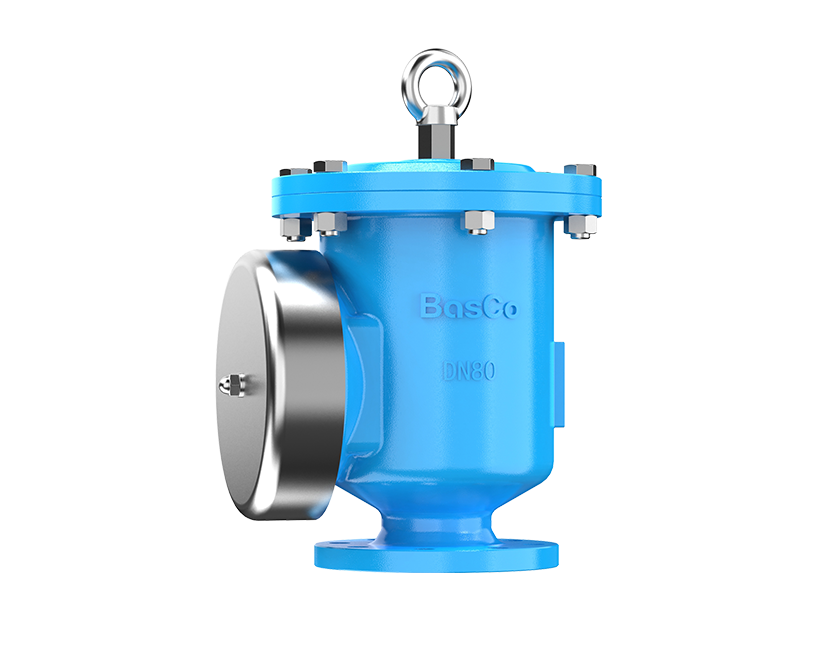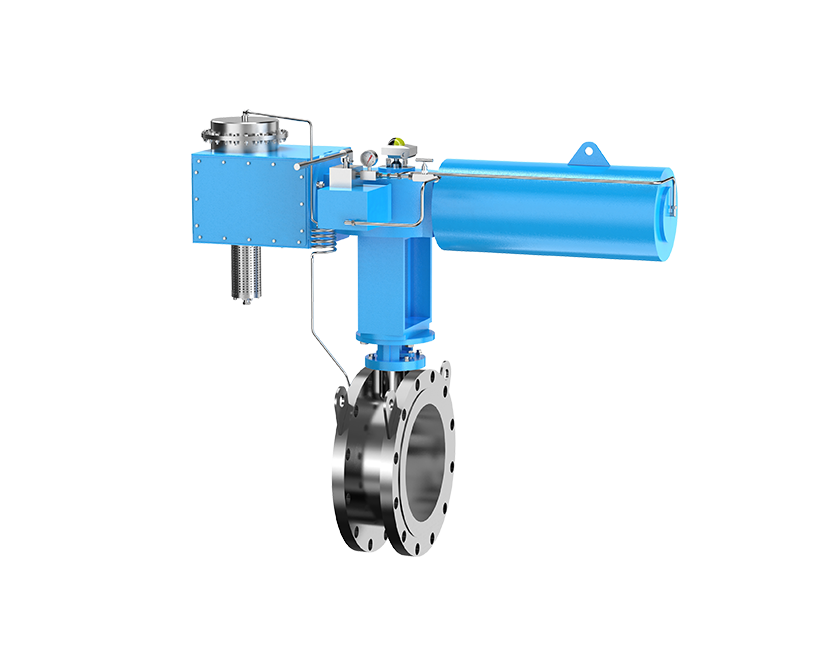


When I help clients specify a breather valve, the real question is rarely about price or brand. What they're really asking is whether the valve will protect the tank, survive the operating reality, and avoid becoming a maintenance headache two years down the line. Pilot-operated and direct-acting breather valves may look similar on a datasheet, but in practice they behave very differently once you introduce large vapor flows, tight pressure limits, or frequent cycling.
In this article, I'll walk through how I evaluate these two valve types from an engineering and lifecycle perspective. I'll tie the discussion directly to real operating scenarios, explain how API requirements influence my decisions, and highlight the specification mistakes I see most often in industrial projects. Everything here is based on applied experience, not brochure-level comparisons .
At a high level, the distinction comes down to how the valve senses pressure and how much force is required to open it. A direct-acting breather valve relies entirely on a spring or weighted pallet that lifts when tank pressure exceeds the setpoint. That simplicity is attractive, but it also means the valve's sealing, accuracy, and flow performance are directly tied to the mechanical movement of that main pallet.
A pilot-operated breather valve separates sensing from flow. A small pilot valve detects pressure changes and uses tank pressure itself to actuate a larger main valve. Because the pilot requires very little force to operate, the main valve can stay tightly sealed until the precise setpoint is reached, then open fully with minimal overpressure.
This architectural difference explains almost every performance gap I see between the two designs in the field.
Large storage tanks with low allowable overpressure are where pilot-operated designs clearly earn their keep. In these systems, vapor generation can spike quickly during filling, emptying, or thermal expansion, yet the tank may only tolerate a few inches of water column before structural risk appears.
With a direct-acting valve, increasing flow capacity almost always means increasing pallet size or reducing spring stiffness. Both approaches make the valve more sensitive to vibration, wind, and chatter. The result is early simmering, pressure instability, and product losses long before the nominal setpoint is reached.
Pilot-operated valves avoid this trade-off. Because the pilot senses pressure independently, the main valve can remain fully closed until activation, then open wide with very little additional pressure buildup. In practical terms, I get higher certified flow at tighter setpoints, which is exactly what large atmospheric tanks demand.
|
Factor |
Direct-Acting Valve |
Pilot-Operated Valve |
|
Flow capacity at low pressure |
Limited |
Excellent |
|
Setpoint stability |
Moderate |
High |
|
Sensitivity to wind/vibration |
High |
Low |
|
Product loss before opening |
Higher |
Minimal |

Cross Section of a Pilot Operated Relief Valve
(source:www.researchgate.net )
Frequent cycling is where many direct-acting valves quietly fail long before anyone notices. Every small pressure fluctuation causes the pallet to lift slightly, reseat, and lift again. Over time, this micro-cycling wears sealing surfaces, fatigues springs, and allows deposits to build up on the seat.
I've seen tanks with normal day–night breathing cycles where direct-acting valves needed rebuilding annually. The maintenance team often blamed poor installation or process variability, but the root cause was simply that the valve design wasn't suited for constant modulation.
Pilot-operated valves, by contrast, are essentially binary in operation. They stay tightly closed during normal breathing and open decisively only when the pilot setpoint is exceeded. That behavior dramatically reduces seat wear and extends service intervals, especially in tanks with frequent but small pressure swings.
Tank size alone doesn't dictate valve choice, but it strongly influences the consequences of a poor one. Large tanks have higher vapor volumes and slower pressure recovery, which means any delay or instability in venting is amplified.
I look closely at vapor generation rate rather than nominal tank volume. High-rate scenarios like rapid pump-in operations, nitrogen blanketing failures, or emergency fire exposure quickly overwhelm direct-acting valves sized near their limits. Pilot-operated valves handle these transient events more gracefully because their full lift is achieved almost instantly.
For small tanks with modest breathing rates, direct-acting valves can be perfectly acceptable. Problems arise when engineers extrapolate that success to larger or more dynamic systems without revisiting the underlying assumptions.

Breath valve operation
Media compatibility is often treated as a materials discussion, but valve design plays an equally important role. Vapors containing VOCs, sticky hydrocarbons, or corrosive components tend to foul moving parts over time.
Direct-acting valves expose their main sealing surface directly to the process vapor. Any buildup affects seating force and setpoint accuracy. In corrosive services, springs and guides are particularly vulnerable, even when upgraded materials are specified.
Pilot-operated valves isolate the sensing function in the pilot, which typically handles very small flow volumes. This isolation reduces fouling risk on the main seat and allows me to tailor pilot materials more precisely to the vapor composition.
Setpoint accuracy isn't just about compliance; it directly affects emissions, product loss, and structural safety. Direct-acting valves inherently require some overpressure to overcome spring force and inertia. That means the actual opening pressure is often higher than the nominal setpoint, especially at high flow.
Pilot-operated valves operate much closer to true set pressure. Because the pilot responds to pressure rather than force balance on a large pallet, the deviation between setpoint and opening pressure is minimal. In tight-margin designs, that accuracy can be the difference between staying within regulatory limits and exceeding them during peak events.
Cold weather exposes weaknesses that might never appear in mild conditions. Ice formation on a direct-acting valve can prevent smooth pallet movement, leading to delayed opening or incomplete reseating. Springs also lose elasticity at low temperatures, further affecting performance.
Pilot-operated valves are not immune to cold, but their sealed main valve and lower moving mass reduce the risk of icing-related failures. When combined with proper weather hoods or trace heating, they tend to maintain function more reliably in extreme environments.
Many engineers treat American Petroleum Institute API 2000 as a sizing exercise only. In reality, its implications go further. The standard emphasizes relieving capacity, pressure accuracy, and protection under worst-case scenarios, not just normal operation.
While both valve types can be designed to meet API 2000 flow requirements, pilot-operated valves make it easier to do so without sacrificing tight setpoints or operational stability. When I'm working on tanks with narrow pressure limits, API 2000 considerations often push me toward a pilot-operated solution even if a direct-acting valve technically “passes” on paper.
Initial purchase price is only one part of the equation, and often the least important. Direct-acting valves are cheaper upfront, but higher maintenance frequency, shorter service life, and increased emissions can quickly erase that advantage.
Pilot-operated valves cost more initially, but their longer inspection intervals, lower product loss, and better reliability often result in a lower total cost of ownership over the tank's life.
|
Cost Element |
Direct-Acting |
Pilot-Operated |
|
Initial cost |
Low |
Higher |
|
Maintenance frequency |
High |
Low |
|
Emissions/product loss |
Higher |
Lower |
|
Service life |
Shorter |
Longer |
|
Long-term TCO |
Often higher |
Often lower |
The most frequent mistake is oversimplifying the selection process. Engineers often default to direct-acting valves because “they've always worked before”, without reassessing operating conditions. Another common error is oversizing direct-acting valves to meet flow requirements, which worsens stability and increases simmering.
I also see overdesign in the opposite direction, where pilot-operated valves are specified for very small tanks with benign service. In those cases, the added complexity may not deliver proportional value.
My approach is to match valve behavior to system behavior. If the tank experiences large, fast pressure changes or operates close to its pressure limits, I lean toward pilot-operated designs. If the system is small, slow, and forgiving, a well-chosen direct-acting valve can be entirely appropriate.
The goal isn't to choose the “best” valve in isolation, but the most appropriate one for the real operating environment.
When I step back and ask which valve I'd want protecting my own tank, the answer depends on flow demand, pressure sensitivity, and how much operational variability I expect over time. Pilot-operated breather valves consistently outperform in large-flow, low-pressure, and high-cycling applications, especially when API 2000 margins are tight. Direct-acting valves still have a place, but only when their limitations are fully understood and accepted.
If you're specifying a breather valve and want confidence that it will perform not just on day one, but throughout the tank's life, I recommend evaluating the system behavior first and the valve type second. If you'd like, I'm always happy to walk through a specific application and explain how I'd approach the selection in practice.

Where Are Rupture Disks Used in Chemical and Petrochemical Plants?
2026-09-21Burst Pressure Tolerance Explained: How Accurate Are Rupture Disks?
2026-09-16Full-Process Quality Control for Rupture Discs
2026-09-01Rupture Disk Selection Guide: How to Choose the Right Type, Pressure, Material, and Size
2026-08-25Copyright © Jiangsu Bafang Safety Device Co., LTD. All Rights Reserved