











In industrial pressure systems, overpressure rarely happens without warning signs. However, what I’ve seen over the years is that many systems fail not because engineers ignore pressure protection entirely, but because they misunderstand how pressure actually behaves during upset conditions. In real facilities, thermal expansion, blocked outlets, vapor generation, and process instability can all create pressure spikes much faster than operators expect.
From my experience as a BASCO engineer working on industrial pressure protection systems, a pressure relief valve (PRV) is not simply a safety accessory—it is the final mechanical safeguard preventing catastrophic equipment failure. The real engineering challenge is not installing a relief valve, but selecting one that behaves correctly under dynamic operating conditions. Set pressure, blowdown, back pressure, inlet losses, and fluid characteristics all influence how the valve performs in real systems. A poorly selected PRV may leak, chatter, open too late, or fail to reseat properly, even if its nominal sizing appears correct on paper.
In this article, I’ll explain how pressure relief valves work, how engineers actually size and select them, why PRV vs PSV distinctions matter, and what failure modes we encounter most often in real industrial applications.
What Is a Pressure Relief Valve?
A pressure relief valve is a mechanical device designed to protect pressurized systems from excessive internal pressure.
When system pressure exceeds a predetermined limit, the valve opens automatically to discharge fluid and reduce pressure to a safe level. Once pressure returns to an acceptable range, the valve closes again.
From an engineering standpoint, the PRV serves as the final line of defense between a controlled pressure system and catastrophic failure.
In practical applications, pressure relief valves are used on pressure vessels, pipelines, pumps, compressors, heat exchangers, and storage systems across industries such as oil and gas, chemical processing, power generation, and manufacturing.

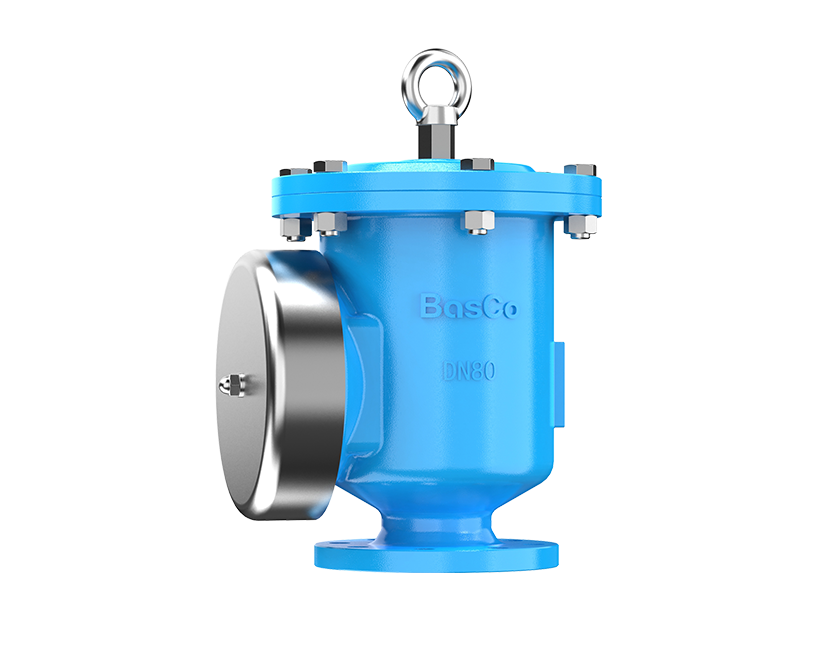
BasCo Pressure Relief Valve
How Does a Pressure Relief Valve Work?
At its core, a pressure relief valve operates using force balance between system pressure and the valve closing mechanism.
Under normal operating conditions, the valve remains closed because spring force or pilot control force exceeds the process pressure acting on the valve seat. Once system pressure rises above the configured set pressure, the valve begins to open.
What Is Set Pressure?
Set pressure is the pressure at which the valve begins to open under specified operating conditions.
This is one of the most important parameters in relief valve design because it defines the activation point of the protection system.
From my experience, many operational issues occur because engineers focus only on nominal set pressure without considering pressure accumulation or dynamic pressure fluctuations.
In real systems, the actual opening behavior can be influenced by inlet losses, back pressure, and flow instability.
How Do Opening and Reseating Work?
Once pressure exceeds the set point, the valve opens and begins discharging fluid.
As pressure decreases, the valve eventually reseats and closes again. However, the closing pressure is intentionally lower than the opening pressure. This difference is called blowdown.
Blowdown prevents rapid cycling and unstable valve behavior during pressure recovery.
| Parameter | Function |
| Set pressure | Defines opening point |
| Overpressure | Allows rated relieving capacity |
| Blowdown | Defines reseating differential |
| Reseating pressure | Determines valve closure |
What Types of Pressure Relief Valves Are Used?
Different PRV designs are used depending on system pressure, fluid type, flow requirements, and operating conditions.
What Is a Spring-Loaded Pressure Relief Valve?
Spring-loaded relief valves are the most common design in industrial systems.
In these valves, a calibrated spring applies force to keep the valve closed. When process pressure exceeds spring force, the valve opens automatically.
From my experience, spring-loaded designs are highly reliable and mechanically simple, making them suitable for a wide range of applications.
What Is a Pilot-Operated Relief Valve?
Pilot-operated valves use system pressure itself to control valve opening behavior.
Compared to spring-loaded designs, they can provide tighter sealing, higher operating pressure ratios, and larger relieving capacity.
These valves are often used in high-pressure systems where stable operation near set pressure is required.

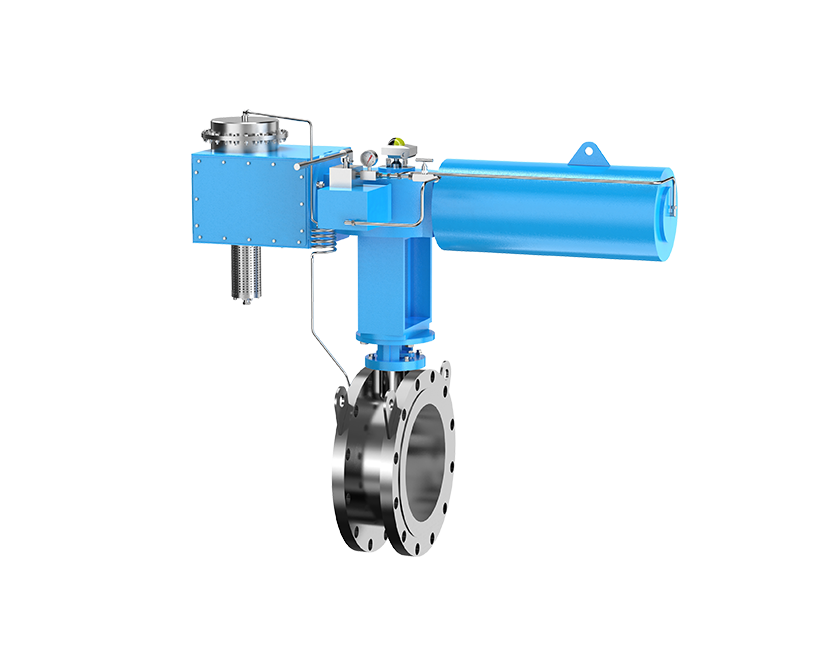
BasCo Pilot-operated Pressure Vacuum Relief Valve
What Is a Balanced Bellows Relief Valve?
Balanced bellows valves are designed to reduce the influence of back pressure on valve performance.
In many industrial systems, discharge piping creates built-up back pressure during relieving conditions. Without compensation, this pressure can alter valve opening characteristics.
Balanced bellows designs isolate the spring chamber from discharge pressure, improving operational stability.
What Is the Difference Between a Pressure Relief Valve and a Safety Valve?
This is one of the most misunderstood topics in industrial pressure protection.
Technically, both devices protect against overpressure, but they behave differently.
A safety valve is typically designed for compressible fluids such as steam or gas and opens rapidly using a pop-action mechanism. A pressure relief valve, however, generally opens more gradually and is commonly used in liquid systems.
From my experience at BASCO, many customers use the terms interchangeably, but the application logic and flow behavior are very different.
| Feature | Pressure Relief Valve | Safety Valve |
| Typical fluid | Liquid | Gas / steam |
| Opening behavior | Gradual | Rapid pop action |
| Flow control | Modulating | Full lift |
| Common application | Process liquids | Boilers / steam systems |
Pressure relief devices are also used outside process plants, but their design and operating purpose may differ. For example, hydraulic pressure relief valves limit oil pressure in hydraulic circuits and help protect pumps, cylinders, motors, and hydraulic lines from overload. They should not be treated as direct substitutes for code-certified safety relief valves used on pressure vessels, boilers, or process systems.

from linkedin
Why Are Pressure Relief Valves Important?
Pressure systems are designed within strict mechanical limits.
Without a properly functioning relief valve, unexpected overpressure can lead to vessel rupture, piping failure, environmental release, or explosion.
In real industrial operations, pressure spikes are not rare events. Thermal expansion, blocked discharge lines, control valve failures, and fire exposure can all create dangerous pressure accumulation.
From my experience, the PRV is often the last passive mechanical protection layer available when active control systems fail.
How Do Engineers Size a Pressure Relief Valve?
Sizing is one of the most critical and most misunderstood aspects of pressure relief system design.
A correctly selected valve is not simply chosen by pipe size. It must be capable of discharging enough fluid to prevent pressure from exceeding allowable accumulation limits.
What Conditions Must Be Evaluated During Sizing?
The governing scenario depends on the system.
In practical PRV sizing, engineers evaluate blocked outlet, thermal expansion, fire exposure, vapor generation, and control valve failure scenarios to determine the worst-case relieving demand.
From my experience, identifying the true worst-case scenario is often more important than the actual calculation itself.
Why Does Back Pressure Matter?
Back pressure significantly affects valve performance.
Superimposed back pressure exists before the valve opens, while built-up back pressure develops during relieving flow through the discharge system.
Excessive back pressure can reduce relieving capacity, alter set pressure behavior, and cause instability. This is why discharge piping design is just as important as valve sizing itself.
Why Is Inlet Pressure Loss Dangerous?
One of the most common causes of PRV chatter is excessive inlet pressure loss.
If pressure drops too much between the protected equipment and the valve inlet, unstable opening behavior occurs.
In real systems, poor piping layout is often the root cause of chatter and premature valve wear.
| Parameter | Engineering Impact |
| Set pressure | Defines activation point |
| Relieving capacity | Determines discharge requirement |
| Fluid type | Affects flow model |
| Back pressure | Influences valve stability |
| Inlet losses | Impacts opening behavior |
What Factors Should Be Considered During PRV Selection?
Selection should always start with process conditions.
Why Does Pressure Matter?
Operating pressure determines valve design limits and set pressure requirements.
Proper margin between operating pressure and set pressure is critical for stable operation.
How Does Temperature Affect Valve Performance?
Temperature affects material compatibility, spring behavior, and sealing performance.
High-temperature systems often require specialized metallurgy and soft-seat considerations.
Why Does Fluid Type Change Valve Selection?
Liquid, gas, steam, and multiphase systems behave differently during relieving conditions.
This changes flow calculations, discharge coefficients, and valve design requirements.
How Does Back Pressure Affect Valve Stability?
Back pressure directly influences opening and reseating performance.
From my experience, ignoring back pressure is one of the most common design mistakes in complex piping systems.
What Are the Most Common PRV Problems and Failure Modes?
Real-world PRV failures are rarely caused by a single issue.
Most problems result from interaction between system dynamics, improper sizing, and maintenance conditions.
Why Do Pressure Relief Valves Leak?
Leakage often occurs due to seat damage, contamination, corrosion, or operation too close to set pressure.
Frequent simmering near set pressure gradually damages sealing surfaces.
What Causes PRV Chatter?
Chatter is usually caused by unstable pressure conditions.
The most common causes include excessive inlet pressure loss, oversized valves, improper discharge piping, and dynamic flow instability.
From my experience, chatter can destroy valve internals surprisingly quickly.
Why Does Corrosion Cause PRV Failure?
Corrosion affects springs, seats, bellows, and sealing surfaces.
In corrosive services, improper material selection dramatically reduces valve reliability and service life.
What Standards Govern Pressure Relief Valves?
Pressure relief valves are heavily regulated because they protect critical pressure systems.
What Is the Role of ASME Standards?
ASME standards define design, construction, testing, and certification requirements for pressure protection devices.
ASME Section VIII is especially important for pressure vessel applications.
How Do API Standards Apply to PRVs?
API standards define sizing methods, installation practices, and operational guidance.
API 520 and API 521 are widely used in oil and gas and process industries.
From my experience, compliance with these standards is not just regulatory—it directly improves system reliability and safety consistency.
Conclusion
Pressure relief valves are one of the most important mechanical safety devices used in industrial pressure systems. Their role extends far beyond simple overpressure release to include system stability, equipment protection, and operational reliability.
From my experience at BASCO, successful PRV selection depends on understanding the entire pressure system—not just the valve itself. Set pressure, blowdown, back pressure, piping dynamics, and real operating conditions all determine how the valve performs in practice.
For engineers and plant operators, properly sizing and selecting a pressure relief valve is ultimately about ensuring long-term safety, reliability, and process stability under both normal and upset operating conditions.