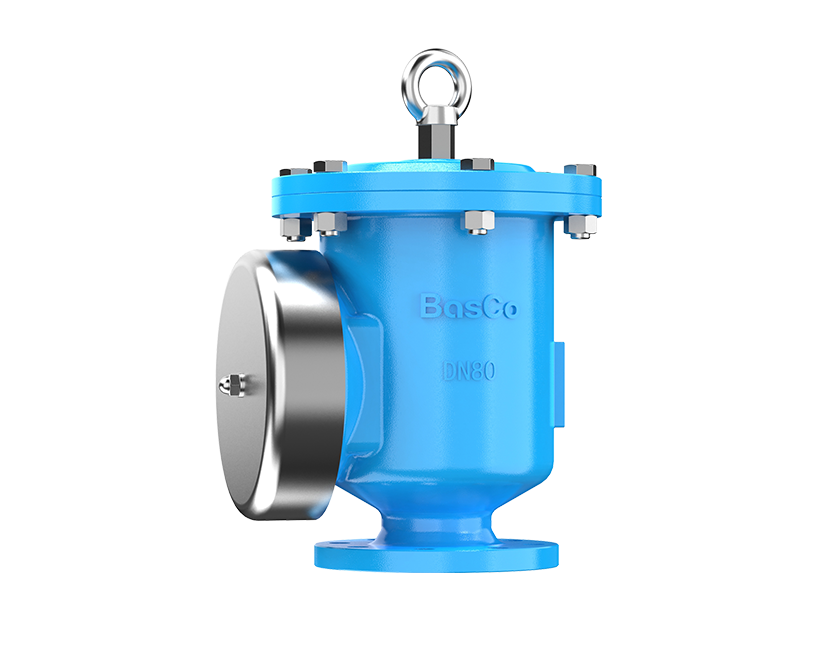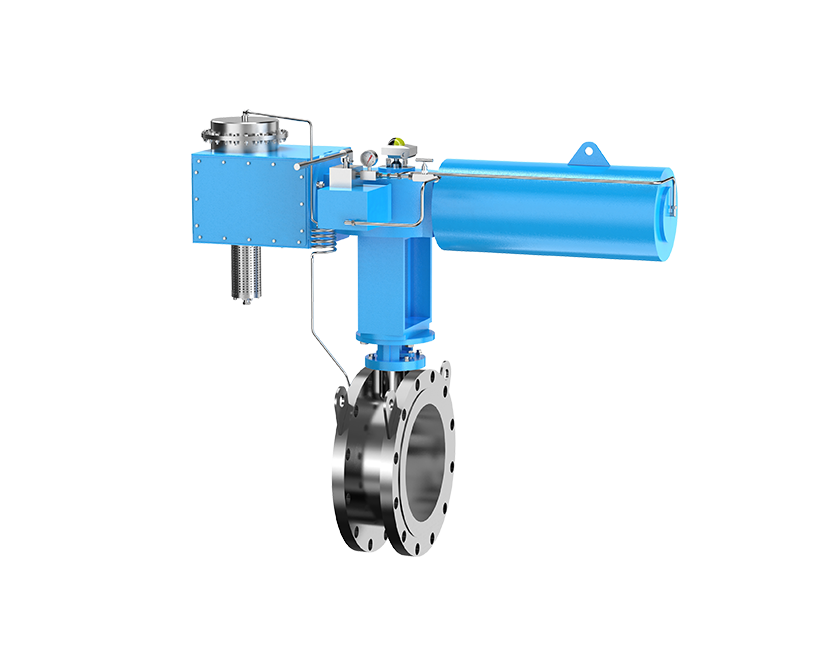


In any industry that relies on pressurized tanks, vessels, or pipeline systems, safe pressure control is non-negotiable. As processes become more complex and operating conditions more demanding, manufacturers need safeguards that respond instantly when something goes wrong. That is the core purpose of an Emergency Pressure Relief Valve (EPRV)—a device designed to prevent catastrophic failure when a system experiences a severe and unexpected pressure spike.
Unlike standard Emergency Pressure Vacuum Relief Valve that manage routine fluctuations, an EPRV serves as the last line of defense. It is engineered for abnormal or extreme conditions—fire exposure, sudden runaway reactions, mechanical failures, or any scenario where internal pressure escalates beyond the capacity of the primary relief system. By opening rapidly and venting excess pressure, it prevents ruptures, explosions, and potentially large-scale safety incidents.
EPRVs are widely used across oil & gas, chemical processing, petrochemicals, storage terminals, pharmaceuticals, wastewater systems, and any environment where pressurized containment is part of daily operations. Their role is not supplemental—it is fundamental to facility safety, asset integrity, and regulatory compliance.
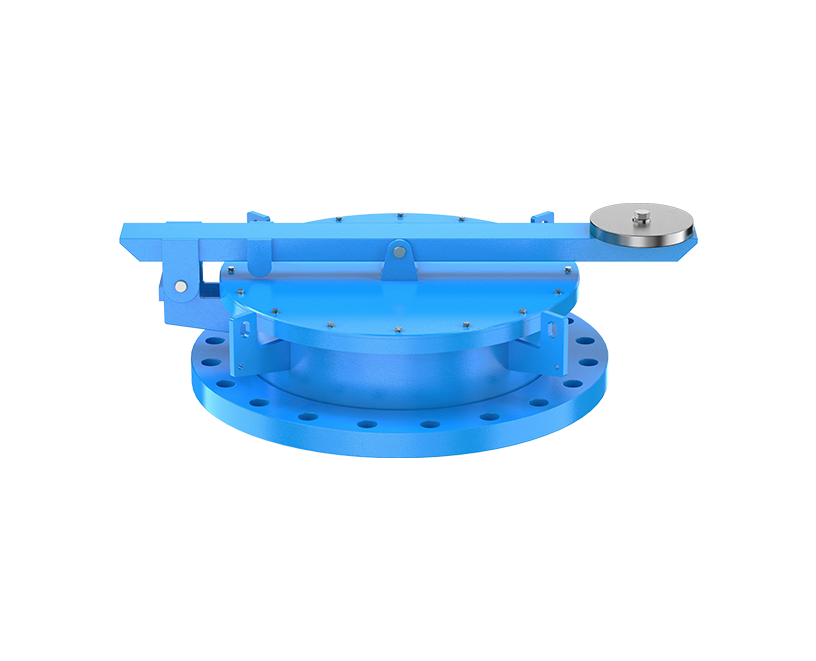
At the heart of the valve's function is a simple principle: open instantly when pressure exceeds a preset limit, close automatically when conditions normalize. But achieving this reliably under extreme loading requires careful engineering.
When internal pressure rises above the valve's set point, the EPRV's mechanism disengages—often through a hinged or spring-balanced structure—allowing the lid or disk to lift rapidly. This sudden opening provides a high-capacity flow path that vents large volumes of gas or liquid in a short time. Because emergency events can develop within seconds, speed is paramount. Full-lift designs are common because they maximize throughput during critical moments.
Once pressure falls back to safe levels, the valve reseats. High-precision sealing minimizes leakage, ensuring the tank or vessel regains its pressure-retention integrity. Robust construction—stainless steel, carbon steel, or corrosion-resistant alloys—helps the valve survive high temperatures, corrosive media, and repeated cycling without performance loss.

In a well-designed process plant, multiple safety barriers are expected to work together. But real-world operations introduce unpredictable failures. An EPRV steps in when:
A tank or vessel exposed to fire experiences rapid thermal expansion of its contents. Even a normal relief valve may not handle the extreme spike in vapor pressure. Emergency valves are sized for these worst-case scenarios.
Uncontrolled polymerization, decomposition reactions, or process upsets can accelerate pressure buildup far beyond design conditions. EPRVs are meant to engage during these abnormal kinetics.
Primary valves can stick, pipelines can clog, pumps can fail, and instrumentation can misread process conditions. When these faults cascade, only an emergency valve has the capacity to vent quickly enough to avoid structural failure.
Storage tanks, especially large fixed-roof tanks, are prone to sudden pressure differentials due to environmental changes. An EPRV provides additional breathing capacity when normal vents are insufficient.
In each of these cases, the emergency valve is not replacing the primary relief system—it is complementing it, forming a critical redundant layer in the safety architecture. For a deeper explanation of how normal venting devices such as PVRVs, flame arresters, and nitrogen blanketing valves interact under real operating conditions, refer to our engineering reference on integrated tank protection design.

To perform reliably during extreme pressure events, emergency relief valves incorporate several defining features:
Emergency situations often demand rapid, high-volume venting. Larger orifice designs and full-lift mechanisms allow the valve to evacuate pressure faster than standard devices.
While the valve must open instantly under duress, it must remain tightly sealed during normal operation. Precision machining and high-quality sealing elements ensure minimal emissions and improved tank efficiency.
Industrial service may involve corrosive chemicals, sour gas, acidic vapors, or wastewater conditions. Materials such as stainless steel or special corrosion-resistant alloys help the valve withstand harsh environments and repeated cycles.
After venting, the system must recover stability. Advanced hinge and reseating mechanisms ensure the valve closes cleanly, maintaining airtight performance without manual intervention.
Across global operations, valves often need to comply with multiple flange standards and testing requirements. Multi-standard compatibility simplifies installation and international deployment.
These design characteristics make EPRVs suitable for severe service conditions while maintaining long-term reliability and low total cost of ownership.
Seeing water or liquid exit an emergency relief valve can be alarming, but it usually indicates a recognizable issue within the system. Common causes include:
Sudden spikes—such as pump failures, rapid start/stop cycles, or hydraulic shock events—can momentarily lift the valve and expel fluid.
Seals lose elasticity, springs weaken, and components accumulate mechanical fatigue. This can lead to minor leakage or premature lifting.
In water treatment or utility systems, scaling, sediment buildup, or corrosion can restrict movement of the valve, causing improper sealing.
The remedy depends on the cause. Specialized waterproof or corrosion-resistant valve designs, smart monitoring systems, and quick-replacement components help maintain performance and reduce downtime.

Across industrial environments, safety experts consistently emphasize three core principles for keeping emergency valves reliable:
Annual or semiannual assessments verify reseating performance, corrosion levels, and actuation behavior. Just like preventive maintenance for pumps or compressors, routine inspections catch early-stage failures before they escalate.
Every medium behaves differently under pressure. Water systems may require scale-resistant construction. Chemical systems often demand high corrosion resistance. High-temperature service calls for reinforced materials engineered to maintain strength at elevated heat loads.
If a valve fails to close after lifting, exhibits severe corrosion, or does not respond when pressure exceeds its set point, immediate replacement is necessary. Emergency valves cannot function as partial safeguards—full reliability is mandatory.
These rules align with industry best practices and help operators prevent unplanned shutdowns or incidents.
Choosing the correct EPRV is as important as installing one. Poor sizing or mismatched materials can compromise performance during critical events.
Engineers must calculate the maximum credible overpressure event—from fire exposure to abnormal process reactions. This determines the required flow capacity and orifice size.
Gases expand rapidly under heat; liquids are incompressible and demand faster relief pathways. Valve geometry and sealing mechanism should correspond to the fluid's behavior.
Tank volume, operating pressure, vent line design, and insulation levels influence valve response. For storage applications governed by API 2000, compliance with breathing and emergency venting criteria is essential.
Corrosion, temperature variations, and chemical exposure dictate the choice of body, seal, and spring materials.
Facilities handling hazardous vapors may need flame-arresting designs or non-sparking components. Wastewater systems may require self-draining valves to minimize residue accumulation.
Proper selection directly impacts operating safety, maintenance cycles, and the long-term integrity of the containment system.

|
Feature |
Standard Relief Valve |
Emergency Pressure Relief Valve |
|
Primary Purpose |
Manage routine pressure fluctuations |
Respond to extreme, abnormal overpressure events |
|
Flow Capacity |
Moderate |
Very high (full-lift, large orifice) |
|
Activation Conditions |
Expected process deviations |
Fire exposure, runaway reactions, major malfunctions |
|
Leakage Performance |
Tight sealing |
Ultra-low leakage to maintain vessel integrity |
|
Materials |
Standard industrial metals |
Reinforced or corrosion-resistant alloys |
|
Reseating Mechanism |
controlled |
engineered for precise resealing after high-force opening |
|
Maintenance Frequency |
Regular |
Critical safety inspection intervals |
|
System Role |
First-line pressure control |
Last line of defense |
Emergency Pressure Vacuum Relief Valve exist for one purpose: to protect life, equipment, and facilities when every other safeguard has reached its limit. They provide rapid venting capability during the most severe overpressure events, ensuring tanks and vessels remain intact even under extreme conditions. As industries push for greater efficiency and higher operating pressures, the need for reliable emergency venting has grown significantly.
Choosing the right EPRV—properly sized, correctly specified, and maintained with discipline—directly enhances plant safety and operational continuity. For facilities looking to strengthen their protection strategy, engaging with experienced valve engineers is the best path to ensuring compliance, reliability, and peace of mind.

Need help selecting the right emergency pressure relief valve for your system?
Reach out BASCO today for engineering guidance, application analysis, and tailored safety solutions.

Where Are Rupture Disks Used in Chemical and Petrochemical Plants?
2026-09-21Burst Pressure Tolerance Explained: How Accurate Are Rupture Disks?
2026-09-16Full-Process Quality Control for Rupture Discs
2026-09-01Rupture Disk Selection Guide: How to Choose the Right Type, Pressure, Material, and Size
2026-08-25Copyright © Jiangsu Bafang Safety Device Co., LTD. All Rights Reserved