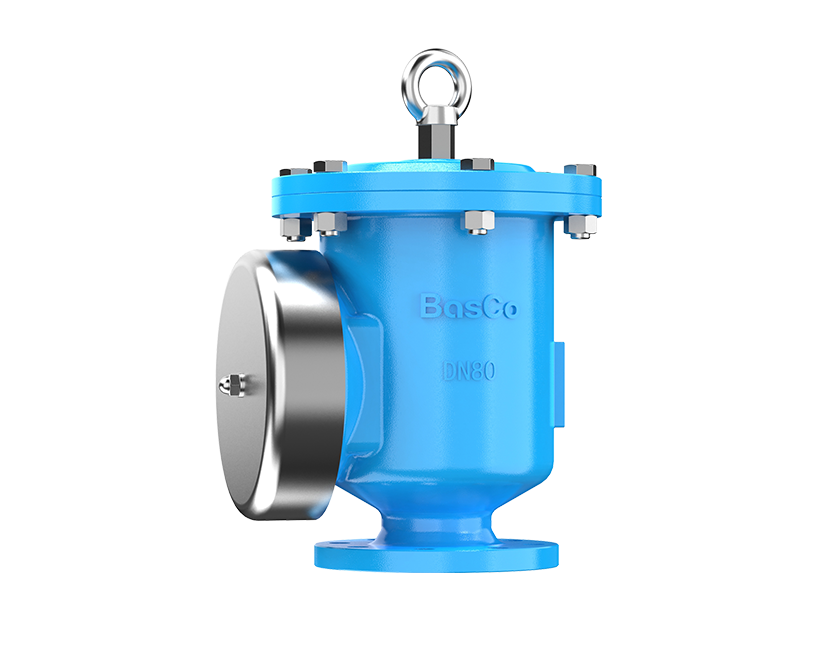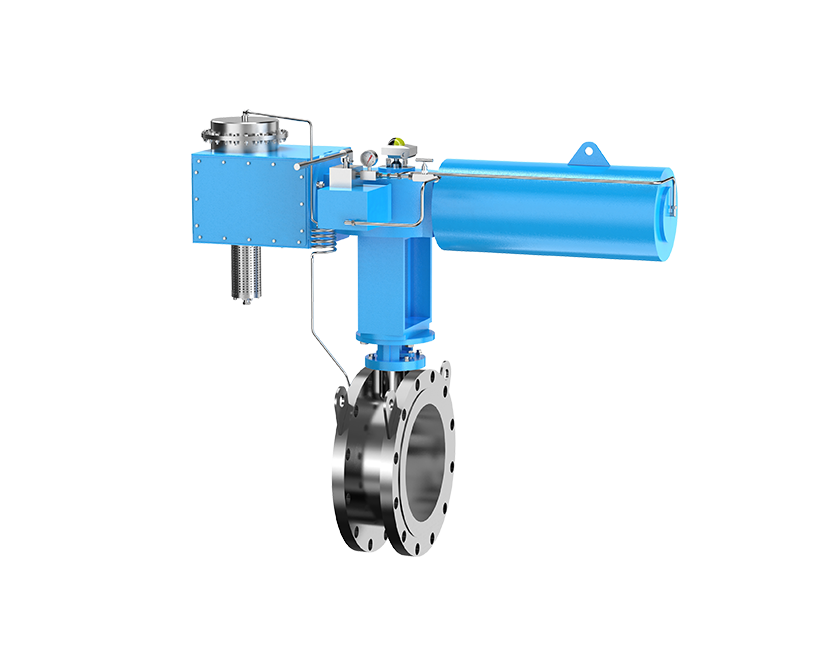


At BasCo, we work with pressure protection applications where a small selection error can create serious operating risk. In chemical plants, oil and gas facilities, pharmaceutical production lines, storage tanks, and pressure vessels, overpressure protection is never just a catalog item. When we review customer applications, the root cause behind pressure risk is often practical and familiar: a blocked outlet, thermal expansion, unexpected reaction, valve malfunction, or a process upset that develops faster than the control system can respond.
From our engineering experience at BasCo, a rupture disk is one of the most direct and reliable pressure relief devices when a system requires fast opening, tight sealing, and predictable overpressure protection. The main trade-off is clear: a rupture disk provides full opening and excellent leak-tightness, but it is a non-reclosing, single-use device that must be replaced after activation. That is why we do not recommend selecting a rupture disk only by flange size or price. The better approach is to review burst pressure, operating temperature, process media, material compatibility, holder configuration, back pressure, and installation conditions together. When these factors are properly evaluated, a BasCo rupture disk can provide a practical, low-maintenance, and dependable layer of pressure safety for industrial systems.
In this article, I will explain rupture disk selection from the perspective of our BasCo engineering team. I will cover how rupture disks work, why different designs are used, what mistakes we often see in customer projects, and how BasCo’s Forward Acting Scored Rupture Disk can fit real pressure protection applications. The goal is not to make rupture disk selection sound complicated. The goal is to make sure the device performs correctly when the system actually needs protection.
A rupture disk is a non-reclosing pressure relief device designed to protect equipment from overpressure. It is installed in a holder or pressure relief assembly, usually between flanges, and it remains sealed during normal operation. When system pressure reaches the specified burst pressure, the disk opens rapidly and releases pressure from the protected equipment.
Unlike a spring-loaded safety valve, a rupture disk has no moving mechanical parts. This is one reason we often recommend rupture disks for applications where fast response, tight sealing, and low routine maintenance are important. Once the disk bursts, however, it cannot be reset. The system must be shut down, inspected, and fitted with a replacement disk before operation resumes.
In BasCo project discussions, rupture disks are commonly selected for three practical reasons: they respond quickly, they provide excellent sealing before activation, and they have a simple structure with limited maintenance demand. These advantages are especially important when the system handles hazardous, toxic, corrosive, expensive, or high-purity media. In these applications, even small leakage through a conventional valve can become a safety, environmental, or product-quality issue.
We also use rupture disks when the process requires a clean and predictable pressure relief path. Because the disk opens fully after bursting, it can provide rapid pressure discharge during a serious overpressure event. That full-bore opening is one reason rupture disks are widely used in pressure vessels, reactors, pipelines, storage tanks, and safety valve isolation systems.
The working principle of a rupture disk is based on controlled material failure under pressure. The disk is engineered with a specific geometry, thickness, material, and manufacturing process so that it opens at a defined burst pressure. In a scored rupture disk, the scored pattern helps guide the opening behavior and improves predictability compared with random tearing.
When internal pressure rises, mechanical stress builds in the disk. Once that stress exceeds the designed strength limit, the disk ruptures along its intended opening pattern. Pressure is then relieved through the opening, helping protect the vessel, pipeline, or equipment body from exceeding its allowable pressure limit.
One of the first points we clarify with customers is that operating pressure and burst pressure are not the same. Operating pressure is the normal pressure range of the process. Burst pressure is the pressure at which the rupture disk is designed to open. If these two values are too close, pressure pulsation, temperature variation, or small process upsets may shorten service life or cause premature bursting.
At the same time, the burst pressure cannot be selected too high. If the disk does not open before the protected equipment reaches an unsafe condition, the safety function is compromised. This is where BasCo’s engineering review becomes important. We look at process stability, equipment design pressure, burst tolerance, temperature effects, and required relieving capacity together before recommending a suitable rupture disk.
| Parameter | Engineering Meaning | Why We Check It |
|---|---|---|
| Operating pressure | Normal process pressure during stable operation | Confirms whether the disk can remain stable without premature fatigue |
| Burst pressure | Pressure at which the disk is designed to open | Determines the activation point of the protection device |
| Burst tolerance | Allowed variation around the marked burst pressure | Prevents unrealistic expectations about exact opening pressure |
| Design margin | Safety gap between operating conditions and burst point | Improves reliability and reduces nuisance bursting |
Rupture disk working principle.
Different rupture disk designs are used because pressure systems do not all behave the same way. Some systems have stable pressure, some experience frequent cycling, some handle corrosive media, and some operate under vacuum or back pressure. In our selection work at BasCo, we first review the process behavior before deciding which disk structure is appropriate.
We usually ask whether the system pressure is steady or fluctuating, whether the media is gas or liquid, whether corrosion is present, and whether downstream pressure exists. These questions quickly narrow the selection range and prevent customers from treating all rupture disks as interchangeable parts.
Forward acting rupture disks are designed to burst when pressure acts on the concave side of the disk. They are widely used because the structure is straightforward and the working logic is easy to understand. A forward acting scored rupture disk, such as BasCo’s product shown above, uses scoring to guide the burst pattern and improve opening behavior.
From our experience, forward acting scored rupture disks are often suitable for applications where the pressure condition is reasonably stable and the system requires reliable, cost-effective overpressure protection. However, they still need to be selected carefully for operating ratio, temperature, and pressure cycling. A simple disk design does not mean simple selection.
Reverse buckling rupture disks operate differently. Instead of stretching directly until rupture, the disk first buckles under pressure and then opens. This design can offer better fatigue resistance and may allow higher operating pressure ratios in suitable applications.
We often consider reverse buckling designs when the process has pressure cycling or when the operating pressure is closer to the required relief pressure. The decision depends on the actual process data. A reverse buckling disk is not automatically better than a forward acting disk, but it can be the stronger choice when pressure stability is a concern.
Graphite rupture disks are commonly used in corrosive chemical environments where metal compatibility becomes difficult. They provide strong chemical resistance and are often selected for aggressive media. The trade-off is that graphite has different mechanical behavior from metal, so installation, handling, and operating conditions must be reviewed carefully.
| Rupture Disk Type | Key Advantage | Typical Application |
|---|---|---|
| Forward acting scored disk | Simple structure and predictable opening pattern | Stable pressure systems and general industrial protection |
| Reverse buckling disk | Better resistance to pressure cycling | Cyclic pressure systems or higher operating ratios |
| Graphite rupture disk | Strong corrosion resistance | Aggressive chemical processes |
This is one of the most common questions customers ask our BasCo engineering team. Both rupture disks and safety valves protect equipment from overpressure, but they do it in very different ways. A rupture disk opens by bursting and must be replaced afterward. A safety valve opens mechanically and can reclose when pressure drops.
The right choice depends on what the system needs. If the application requires tight sealing, fast opening, simple construction, or corrosion isolation, we often consider a rupture disk first. If the system needs repeated pressure relief without replacing a component, a safety valve may be more suitable. In many real systems, the two devices are used together.
In practice, rupture disks are often installed upstream of safety valves. This arrangement can protect the valve from corrosive or sticky media, reduce leakage, and keep the safety valve clean until an overpressure event occurs. It is especially useful when the process fluid could damage valve internals or create fugitive emission concerns.
However, this combination must be engineered correctly. The space between the rupture disk and safety valve may require monitoring, and back pressure effects must be considered. At BasCo, we do not recommend combining components casually without reviewing the full relief path and application requirements.
In BasCo application reviews, we often see rupture disks used in series with safety valves when the process media may corrode, contaminate, or damage the valve internals. In this arrangement, the rupture disk acts as a sealed isolation barrier during normal operation. When overpressure occurs, the disk bursts first, and the safety valve then performs its pressure relief function according to the system design.
| Feature | Rupture Disk | Safety Valve |
|---|---|---|
| Response behavior | Instant full opening after burst | Mechanical opening with reclosing capability |
| Reusability | Single-use device | Reusable after pressure drops |
| Leakage performance | Excellent leak-tight sealing | May require maintenance to control leakage |
| Maintenance | Low routine maintenance, replacement after activation | Periodic inspection and calibration required |
| Best use case | Fast relief, clean sealing, corrosive or hazardous media | Repeated relief events where reclosing is needed |
BasCo rupture disks are used in industries where overpressure can damage equipment, interrupt production, or create serious safety risks. We commonly see applications in chemical processing, oil and gas, pharmaceutical manufacturing, energy systems, storage tanks, pressure vessels, reactors, heat exchangers, and pipeline protection. The applications vary, but the goal is always the same: release pressure before the equipment reaches a dangerous condition.
In chemical processing applications, a High Pressure Reactor may experience rapid pressure buildup caused by runaway reactions, gas generation, blocked outlets, thermal expansion, or control system failure. A properly selected rupture disk provides a fast, non-reclosing pressure relief path before the reactor exceeds its allowable pressure limit. In pharmaceutical systems, rupture disks can support sterile or contamination-sensitive operations because they remain sealed until activation. In storage tanks and pressure vessels, they provide a direct pressure relief path when rapid discharge is required.
At BasCo, we value testing because it shows the physical reality behind the calculation. A rupture disk may look like a simple metal membrane, but during activation, the event is fast, forceful, and highly dependent on proper disk design. Testing helps our engineers and customers understand why burst pressure, scoring, holder fit, and installation direction all matter.
The BasCo rupture disk test video below provides a direct visual reference for rupture behavior. We do not treat a video alone as final proof of suitability, but it is a helpful communication tool when discussing pressure relief with plant engineers, EHS teams, and procurement staff. The final selection must still be based on the actual process pressure, temperature, media, size, and installation conditions.
BasCo rupture disk test.
From BasCo’s engineering standpoint, rupture disk selection is not just choosing a pressure rating from a catalog. It requires understanding the full operating environment, including pressure, temperature, media, corrosion, vacuum, back pressure, installation orientation, and relief path design. The more complete the application data, the more reliable the final selection will be.
The mistake we see most often is treating burst pressure as the only selection parameter. Burst pressure matters, but it is only one part of performance. If the material is wrong, the disk may corrode. If temperature is ignored, the actual burst behavior may change. If the holder is mismatched, the disk may not perform as designed. Good selection is always a system-level review.
Burst pressure must be selected based on system design pressure, maximum allowable working pressure, normal operating pressure, and required relief conditions. The operating pressure should have enough margin below the marked burst pressure to avoid premature activation. At the same time, the burst pressure must be low enough to protect the equipment before unsafe pressure is reached.
Temperature affects material strength and rupture disk performance. A disk selected at room temperature may not behave the same way at elevated process temperature. This is why we always ask for operating temperature and maximum upset temperature when reviewing a rupture disk application.
The rupture disk material must be compatible with the process media. Corrosive chemicals, wet gases, solvents, steam, or reactive fluids can degrade unsuitable materials over time. Material compatibility is not only a durability issue. It directly affects safety and burst reliability.
Back pressure exists when pressure is present on the downstream side of the disk. It can influence burst behavior and must be considered carefully, especially when a rupture disk is installed before a safety valve or connected to a discharge header. Ignoring back pressure is a common reason for poor relief system performance.
The rupture disk holder, flange condition, torque, flow direction, and installation orientation all affect performance. Even a correctly selected disk can fail to perform properly if it is installed in the wrong holder or mounted incorrectly. For this reason, we recommend reviewing the disk and holder as one assembly, not as separate parts.
| Selection Parameter | Why It Matters | BasCo Engineering Check |
|---|---|---|
| Burst pressure | Defines when the disk activates | We compare it with operating pressure, design pressure, and required relief point |
| Temperature | Affects material strength and burst behavior | We confirm normal, maximum, and upset temperature conditions |
| Material | Controls corrosion resistance and media compatibility | We review process fluid, humidity, cleaning chemicals, and contamination risk |
| Back pressure | Influences burst performance and downstream relief behavior | We check safety valve combination, discharge piping, and header pressure |
| Holder type | Ensures correct clamping and opening performance | We verify holder model, flange standard, torque, and flow direction |
In customer projects, we have seen several recurring rupture disk selection mistakes. The first is choosing a burst pressure too close to normal operating pressure. This may look efficient on paper, but in real systems pressure fluctuation, temperature change, and vibration can reduce service life or trigger nuisance bursting.
The second mistake is ignoring temperature. Some buyers compare products using standard room-temperature data, even though the actual process operates much hotter or colder. That creates uncertainty because disk material strength changes with temperature. A rupture disk should always be evaluated at the actual operating temperature, not only at catalog conditions.
The third mistake is choosing material only by price or availability. If the media is corrosive, wet, abrasive, or chemically reactive, material compatibility becomes a safety factor. A disk that slowly degrades in service may not fail visibly before it becomes unreliable. That is why our BasCo team prefers to review media information early, especially for chemical and pharmaceutical applications.
The fourth mistake is overlooking installation details. Incorrect holder selection, wrong flow direction, poor flange alignment, or improper tightening can change the way the disk opens. When customers contact us after premature failure, the root cause is not always the disk itself. Often, the problem is incomplete application data or an installation condition around the disk.
Rupture disks should be selected and applied according to relevant pressure safety standards and project requirements. In many pressure vessel applications, ASME requirements are an important reference. ISO standards may also apply depending on the project location, industry, and customer specification.
At BasCo, we treat standards as the baseline, not the entire engineering answer. Compliance helps confirm that the rupture disk meets recognized safety and performance expectations. However, the engineer must still verify whether the selected disk fits the actual media, temperature, pressure, holder, and relief system design. A standard-compliant product can still be misapplied if the selection process is incomplete.
A good rupture disk quotation starts with complete technical information. When we receive only pipe size and pressure, we know the selection is not ready. Our engineering team needs enough data to understand the real application, not just the mechanical connection.
For a practical RFQ, we recommend providing operating pressure, required burst pressure, operating temperature, process media, disk size, flange or holder standard, back pressure condition, vacuum condition, and whether the disk is used alone or with a safety valve. This information helps BasCo recommend a rupture disk that matches the system instead of guessing from incomplete details.
| Required Information | Description | Why It Helps Our Selection |
|---|---|---|
| Operating pressure | Normal system pressure | Confirms operating margin below burst pressure |
| Burst pressure | Required activation pressure | Defines the main protection point |
| Temperature | Normal and maximum operating temperature | Allows correction for material strength and performance |
| Media | Gas or liquid composition | Determines material compatibility and corrosion resistance |
| Size and connection | Pipe, flange, or holder size | Ensures mechanical compatibility with the installation |
| Back pressure | Downstream pressure condition | Prevents incorrect burst behavior or relief design error |
Engineers should consider BasCo rupture disks when the project requires practical pressure protection, clear product selection, and support for real industrial operating conditions. The BasCo Forward Acting Scored Rupture Disk is especially relevant for systems where a simple, direct, and predictable pressure relief device is needed. For many plants, that combination of controlled opening, tight sealing, and straightforward maintenance is exactly what the application requires.
What matters most is not only the rupture disk itself, but also whether the selection process reflects the actual application. At BasCo, we review pressure data, temperature, media, installation, and downstream conditions with the customer before recommending a solution. That engineering conversation helps move the decision beyond price and flange size toward correct safety performance and long-term reliability.
Our final recommendation is to treat rupture disk selection as a pressure safety decision, not a commodity purchase. A rupture disk may look simple, but its performance depends on careful coordination between burst pressure, temperature, material, holder design, installation condition, and process behavior. When those details are reviewed correctly, the rupture disk becomes one of the most dependable components in the pressure protection system.
For engineers and procurement teams, we recommend preparing complete application data before requesting a quotation. For OEMs and plant owners, we recommend involving BasCo early when equipment design, relief path, or material compatibility is still being reviewed. That early discussion usually leads to better selection, fewer installation problems, and more reliable protection after commissioning.
At BasCo, we believe a good rupture disk must do two things well: stay sealed when the system is operating normally, and open decisively when the system needs protection. That is the standard our engineering team applies when reviewing rupture disk applications, and it is the standard we use when helping customers select BasCo rupture disks for real industrial service.

Copyright © Jiangsu Bafang Safety Device Co., LTD. All Rights Reserved