
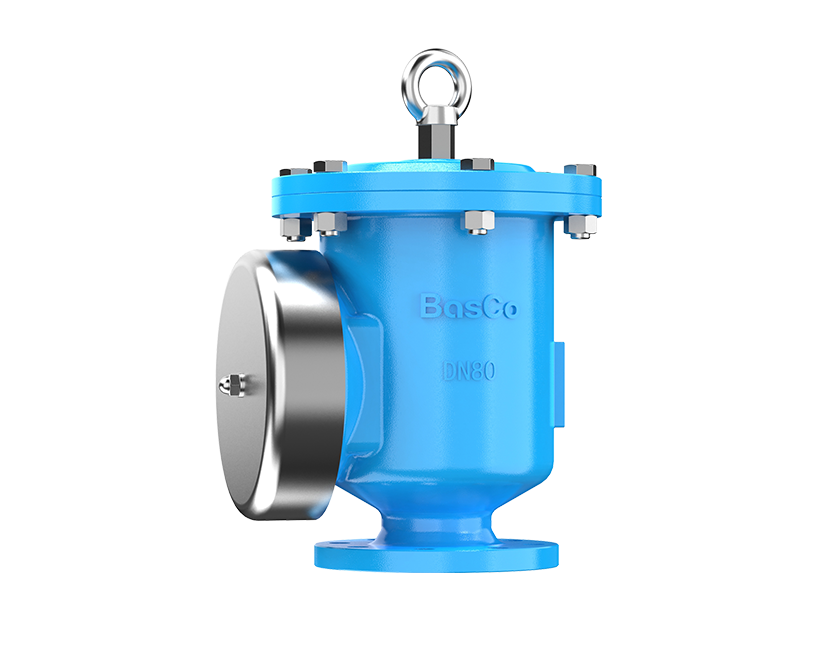

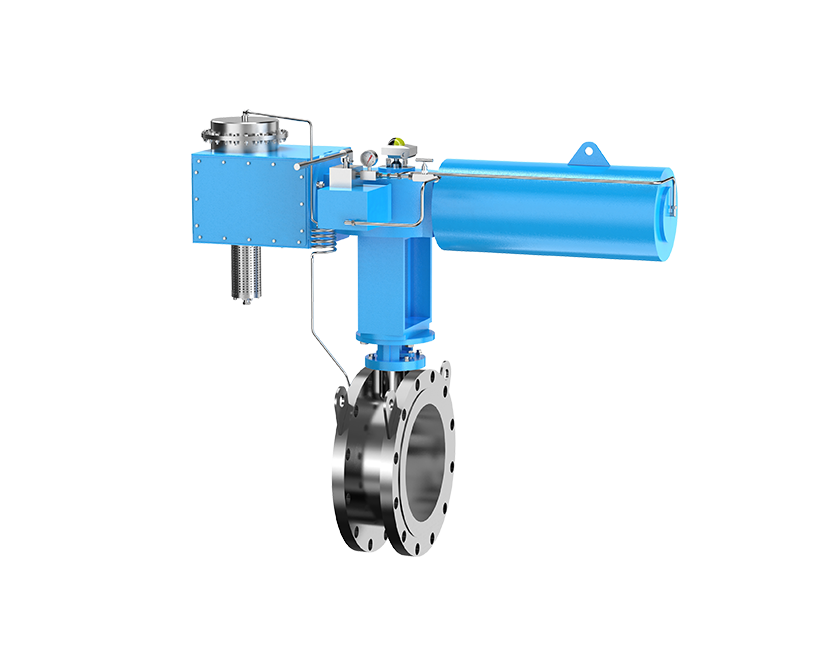










In pressure systems, most engineers immediately think about pressure relief devices when discussing equipment protection. However, in real industrial projects, the challenge is rarely whether a relief valve exists—it is whether the selected valve can actually protect the system under upset conditions. Over the years at BASCO, I’ve seen pressure systems equipped with correctly installed valves that still experienced instability because back pressure, inlet losses, and operating conditions were not properly evaluated during design.
From my experience as a BASCO engineer working on pressure protection systems, a safety relief valve (SRV) is not simply a compliance component—it is the final mechanical barrier between process instability and equipment failure. A properly selected SRV must respond correctly under dynamic operating conditions, including pressure accumulation, thermal expansion, vapor generation, and abnormal process events. In real projects, set pressure alone is never enough. Blowdown behavior, reseating performance, back pressure effects, and fluid characteristics all determine whether the valve performs safely in operation. Poor selection can lead to chatter, leakage, unstable opening, or premature failure even when the nominal specification appears correct.
In this article, I’ll explain how safety relief valves work, how we evaluate SRV selection at BASCO, the differences between SRV, PRV, and PSV systems, and the engineering considerations that influence real-world performance.
What Is a Safety Relief Valve?
A safety relief valve is a pressure protection device designed to automatically relieve excess pressure and protect equipment from overpressure conditions.
Unlike standard control devices, the SRV acts as a passive mechanical safeguard. When system pressure exceeds the configured set pressure, the valve opens automatically and releases fluid until safe pressure conditions are restored.
From an engineering perspective, the SRV protects equipment against failure caused by pressure accumulation beyond design limits.
In practical applications, safety relief valves are widely used on pressure vessels, boilers, tanks, pipelines, reactors, and process systems.
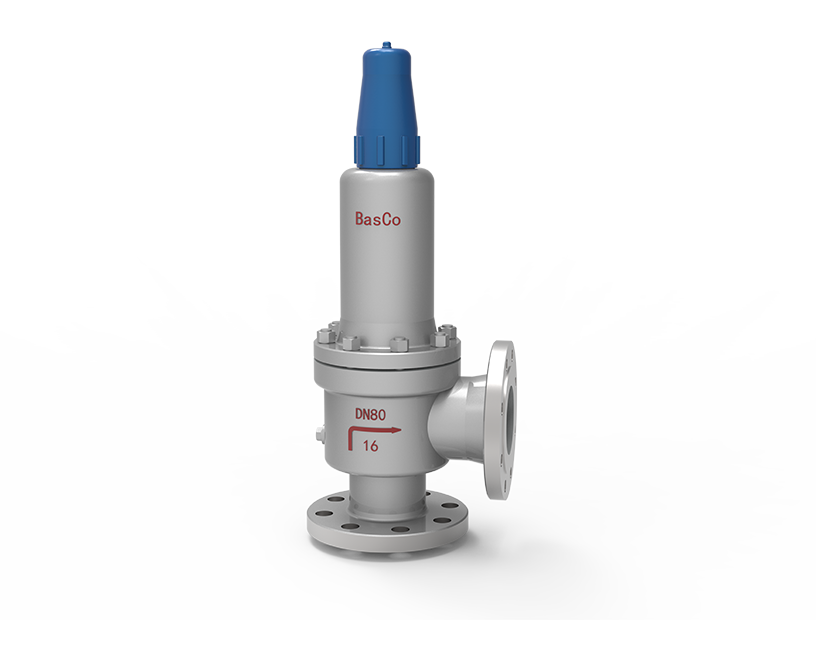
BasCo Safety Relief Valve
How Does a Safety Relief Valve Work?
The operating principle of an SRV is based on force balance between process pressure and the closing mechanism.
During normal operation, spring force or pilot control keeps the valve closed. When internal pressure exceeds the configured threshold, the valve begins opening and relieves pressure.
Set Pressure
Set pressure defines the point at which the valve starts opening.
From my experience at BASCO, many operational problems occur because users focus only on set pressure while ignoring accumulation and dynamic process effects.
In actual installations, inlet losses and back pressure can shift effective opening behavior.
Opening Mechanism
As pressure rises beyond the set point, the valve lifts and begins discharging fluid.
For gas and steam services, the valve may exhibit rapid opening characteristics. Liquid systems often show more modulating behavior.
The opening pattern depends on valve design and process media.
Reseating Behavior
After relieving pressure, the valve closes again once pressure drops below the reseating threshold.
The difference between opening and closing pressure is called blowdown.
Blowdown prevents unstable cycling and excessive opening frequency.
| Parameter | Engineering Role |
|---|---|
| Set pressure | Opening point |
| Accumulation | Allowable pressure rise |
| Blowdown | Reseating differential |
| Back pressure | Influences stability |
| Reseating pressure | Closure point |
What Types of Safety Relief Valves Are Used?
Different SRV designs are selected depending on pressure conditions, fluid properties, installation layout, and required relieving behavior.
Spring Loaded Safety Relief Valves
Spring-loaded valves are the most common SRV type.
A calibrated spring applies closing force to the valve seat. Once process pressure exceeds spring force, the valve opens automatically.
At BASCO, these valves are widely used because of their mechanical simplicity and reliability.
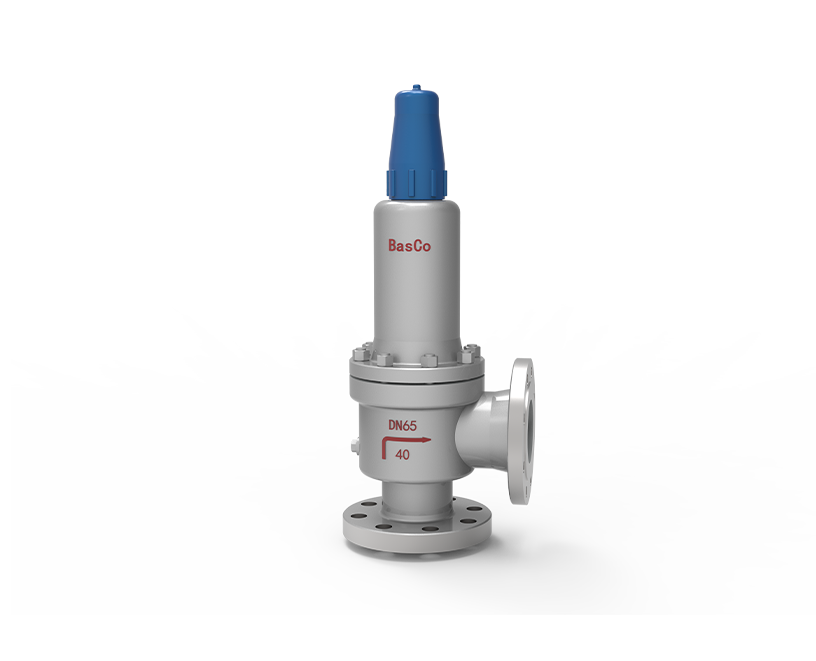
BasCo Closed Spring Loaded Full Lift Type Safety Relief Valve
Pilot Operated Safety Relief Valves
Pilot-operated designs use process pressure itself to control valve operation.
Compared with conventional spring-loaded valves, they generally provide higher relieving capacity, improved sealing performance, and more stable operation near the configured set pressure.
From my experience at BASCO, pilot-operated SRVs are commonly selected for high-pressure applications where operating pressure remains close to the set point and leakage control becomes important.
Balanced Bellows Safety Relief Valves
Balanced bellows valves reduce the influence of back pressure.
In real industrial systems, discharge piping often creates built-up back pressure during relieving conditions.
Without compensation, back pressure can change opening characteristics and reduce stability. Balanced bellows construction isolates the spring chamber from discharge effects.
What Is the Difference Between SRV, PRV, and PSV?
This is one of the most common questions we receive at BASCO.
Many users use the terms interchangeably, but engineering behavior differs significantly.
| Feature | SRV | PRV | PSV |
|---|---|---|---|
| Function | Pressure and safety protection | Pressure control | Rapid overpressure protection |
| Typical fluid | Mixed service | Liquid | Gas / steam |
| Opening behavior | Combined behavior depending on service | Modulating | Pop action |
| Common applications | Process systems | Liquid systems | Boilers / steam |
From an engineering standpoint, PRV usually refers to liquid-service pressure relief applications where modulating flow behavior is preferred.
PSV is more commonly associated with gas and steam systems that require rapid opening and full-lift response during overpressure events.
SRV combines both protection concepts and can be applied across mixed operating environments depending on process requirements.
At BASCO, this distinction becomes especially important during sizing calculations and certification selection.
What Is the Difference Between a Safety Relief Valve and a Safety Valve?
Although they appear similar, operating behavior differs.
A safety valve is usually designed for compressible media such as steam and gas. It opens rapidly using pop-action characteristics and reaches full lift quickly.
A safety relief valve can operate across both liquid and compressible fluid applications.
From my experience, selection errors often occur when steam applications are treated the same as liquid systems.
| Feature | SRV | Safety Valve |
|---|---|---|
| Fluid compatibility | Mixed | Gas / steam |
| Opening behavior | Variable | Rapid |
| Application range | Broad | Steam focused |
| Flow behavior | Modulating and lift response | Full lift |
Where Are Safety Relief Valves Used?
Safety relief valves are used wherever overpressure risk exists.
Boilers rely on safety relief valves for steam overpressure protection. Pressure vessels use them to protect equipment from dangerous pressure accumulation. Storage tanks may require SRVs for pressure management under specific service conditions, while process systems use them to control upset scenarios caused by blocked flow, thermal expansion, or vapor generation.
At BASCO, storage tanks and pressure vessels are among the most common SRV applications we encounter.
What Factors Should Be Considered During SRV Selection?
Selection begins with understanding operating conditions and the governing overpressure scenario.
Pressure Conditions
Operating pressure determines set pressure selection and allowable accumulation.
Proper margin between operating pressure and set pressure is essential for stable operation.
Temperature Conditions
Temperature influences material performance, spring behavior, and sealing reliability.
High-temperature systems often require upgraded materials.
Fluid Characteristics
Liquid, gas, steam, and multiphase systems behave differently during relieving events.
This directly changes sizing calculations and valve behavior.
Back Pressure Effects
Back pressure is one of the most overlooked design factors.
We regularly see systems where discharge piping causes instability because back pressure was ignored during selection.
| Parameter | Engineering Impact |
|---|---|
| Pressure | Defines operating limit |
| Temperature | Guides material selection |
| Fluid | Changes flow model |
| Back pressure | Affects stability |
| Installation layout | Influences performance |
What Are the Most Common SRV Problems and Failure Modes?
Real SRV failures usually result from system interaction rather than isolated valve defects.
Chatter
Chatter occurs when unstable opening and closing cycles develop during operation.
In our projects at BASCO, the most common causes include excessive inlet pressure loss, oversized valve selection, improper discharge piping, and dynamic flow instability.
Once chatter begins, repeated impact loading can quickly damage internal components and reduce service life.
Leakage
Leakage usually develops gradually rather than appearing as a sudden failure.
Common causes include seat damage, corrosion, debris contamination, and frequent simmering near set pressure conditions.
Over time, continuous minor leakage accelerates sealing surface wear and reduces long-term reliability.
Blowdown Problems
Improper blowdown causes unstable reseating.
Excessively small blowdown may create cycling, while excessive blowdown delays closure.
Correct blowdown settings are critical for stable operation.
What Standards Govern Safety Relief Valves?
ASME Standards
ASME standards define construction, certification, testing, and performance requirements.
ASME Section VIII is especially important for pressure vessels.
API Standards
API standards define sizing logic, installation practices, and system evaluation methods.
API 520 and API 521 are widely used for industrial pressure protection.
At BASCO, these standards are often the basis for project evaluation and RFQ review.
How Should Engineers Prepare an SRV RFQ?
One issue I frequently encounter is incomplete operating data during quotation requests.
From my experience at BASCO, the most important inputs include operating pressure, set pressure, fluid characteristics, temperature, required relieving capacity, and back pressure information.
Installation layout and applicable ASME or API requirements should also be identified early because these factors directly affect sizing and certification decisions.
Providing complete operating conditions at the RFQ stage significantly improves selection accuracy and reduces redesign risk later in the project.
Conclusion
Safety relief valves are among the most important protection devices used in industrial pressure systems. Their role extends beyond simple pressure release to include equipment protection, operational stability, and system reliability.
From my experience at BASCO, successful SRV selection depends on understanding the complete process environment—not only the valve itself. Set pressure, blowdown, back pressure, inlet losses, and real operating conditions all determine actual performance.
For engineers and plant operators, selecting the correct SRV ultimately means designing a pressure protection system that remains stable, compliant, and reliable throughout long-term operation.