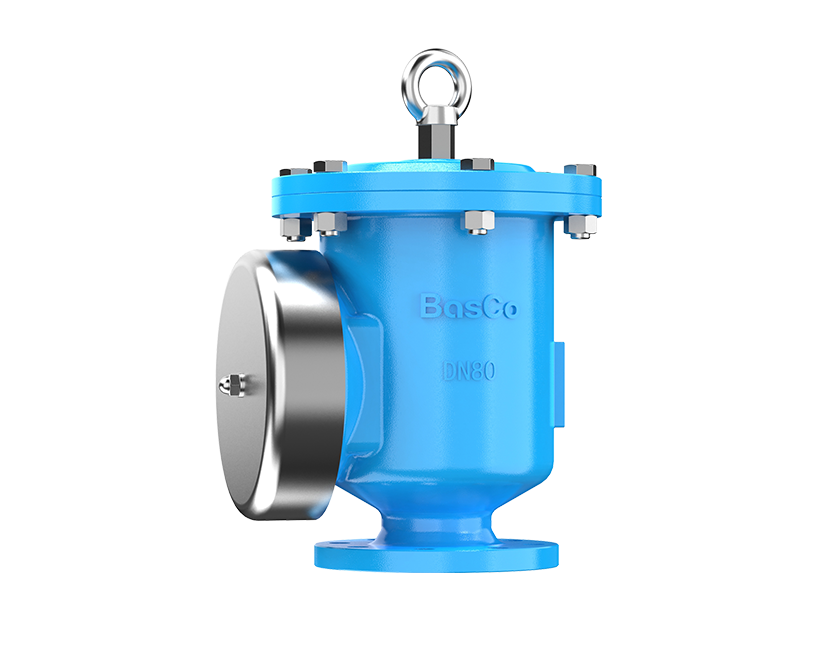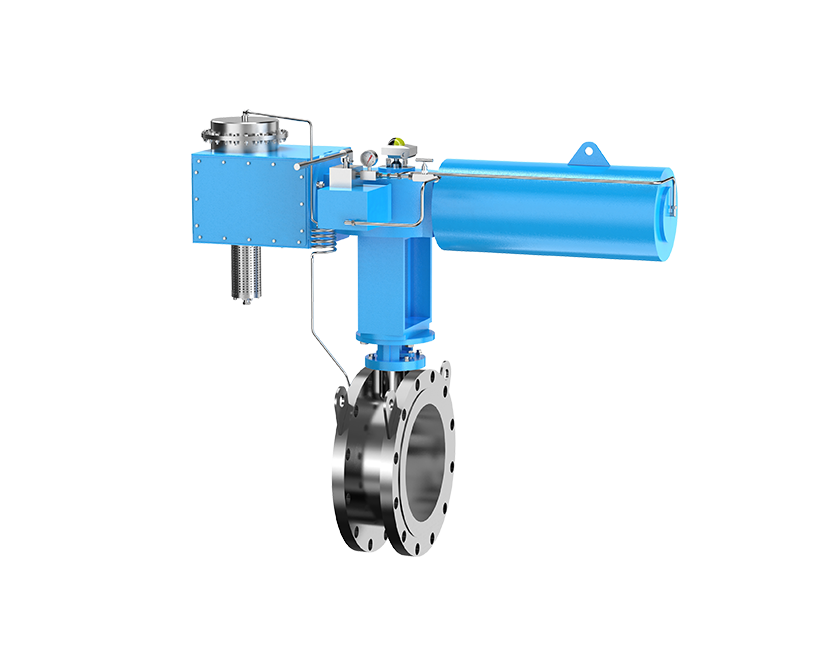


In pressure systems, most engineers are familiar with standard pressure relief valves. However, in real industrial environments, not all overpressure scenarios are equal. Some events develop slowly and predictably, while others, such as fire exposure or runaway reactions, can escalate rapidly and exceed the capacity of standard protection systems.
From my experience working on pressure vessel and process safety design, an emergency relief valve (ERV) is not just a larger relief device. It is specifically designed to handle abnormal, high-energy scenarios where rapid pressure rise and large flow release are required. The key difference lies in both sizing philosophy and application logic. Emergency relief valves are selected based on worst-case scenarios defined by standards like API 521, not just normal operating deviations. Misunderstanding this distinction is one of the most common causes of under-designed pressure protection systems.
In this article, I explain how emergency relief valves work, when they are required, and how engineers actually size and select them in real projects.
An emergency relief valve is required when a system may experience abnormal or extreme conditions that lead to rapid pressure increase beyond normal design assumptions. In practical engineering, emergency scenarios are defined by how quickly pressure rises and how much energy is involved. Unlike routine pressure fluctuations, these conditions often involve external or uncontrolled factors.
The most common example is fire exposure. When a vessel is exposed to external fire, heat input increases dramatically, causing internal fluid to expand or vaporize. This can lead to rapid pressure buildup that exceeds the capacity of standard relief systems. Another critical scenario is a runaway chemical reaction, where temperature and pressure can increase exponentially and make standard relief assumptions invalid. Blocked outlet conditions are also important because if flow is restricted while pressure continues to build, the system can reach dangerous levels very quickly.
From my experience, these scenarios are not theoretical. They are explicitly considered in design standards and must be evaluated during system design.
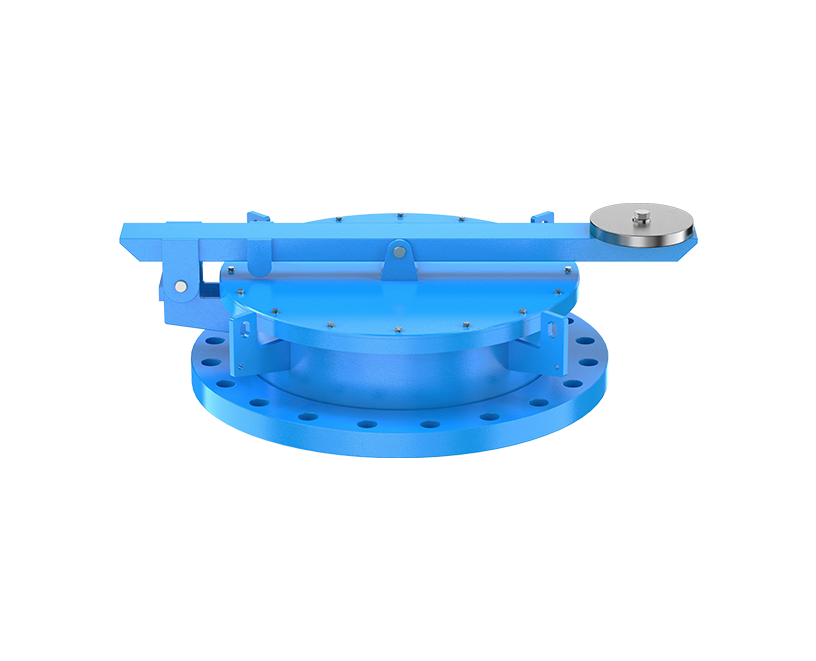
The operating principle of an emergency relief valve is similar to that of standard pressure relief devices, but the performance requirements are significantly higher. When system pressure reaches the set pressure, the valve opens to release fluid. Under emergency conditions, however, the valve must open rapidly and achieve full lift quickly enough to handle large flow rates.
The key difference is in capacity and response behavior. Emergency relief valves are designed to handle large volumetric flow rates and maintain stability under extreme conditions. In real systems, the ability to maintain stable discharge without chatter or instability is critical because the valve is often responding to a fast-escalating event rather than a routine upset.
Spring-loaded emergency relief valves are mechanically actuated and open when pressure exceeds the set point. They are simple, widely understood, and reliable in many services. At the same time, their capacity may be limited in very large emergency cases where rapid full-flow response is required.
Pilot-operated valves use system pressure to control the opening behavior of the main valve. In larger systems, they can provide higher capacity and better control under varying operating conditions. From my experience, these are often selected where large relieving capacity and tighter operating performance are both required.
In some services, rupture disks are used together with relief valves. The rupture disk provides instant response and full-bore opening, while the valve provides a more controlled relief function. This combination is often used in highly critical systems where both leak-tight isolation and emergency discharge performance matter.
| Type | Key Advantage | Typical Use |
| Spring-loaded | Simple and reliable | General emergency relief |
| Pilot-operated | High capacity and better control | Large systems |
| Rupture disk combination | Instant response | Critical protection |
This is where emergency relief design becomes fundamentally different from standard valve selection. API 521 provides guidance for sizing emergency relief systems under different scenarios, and the key engineering logic is that sizing is based on the worst-case heat input or reaction rate rather than on normal operating conditions.
For example, in a fire case, the heat input to the vessel is estimated from the exposed surface area and fire conditions. That heat input is then converted into a vapor generation rate, which determines the required relief capacity. In a blocked outlet case, the engineer instead evaluates how continued inflow or internal energy input will raise pressure if discharge is prevented.
In practical terms, sizing means determining how much fluid must be released to prevent system pressure from exceeding allowable limits. That requires estimating the governing emergency scenario, calculating the resulting vapor or fluid generation, and then selecting a valve with adequate discharge capacity. In my experience, the biggest challenge is rarely the formula itself. It is identifying the true governing case.
| Parameter | Engineering Role |
| Set pressure | Defines the activation point |
| Accumulation | Defines the allowable pressure rise |
| Flow rate | Defines required discharge capacity |
| Fluid properties | Affects the sizing method and coefficient selection |
Emergency relief valves are governed by several key standards that define both design and application. API 520 and API 521 provide guidance for valve sizing and relief system design, while ASME Section VIII defines requirements related to pressure vessel protection. Depending on region and project specifications, ISO standards may also apply.
From an engineering standpoint, compliance with these standards is not optional. It establishes the baseline for safe system design and ensures that the relief device is evaluated within an accepted technical framework.
Selecting the right emergency relief valve begins with understanding the process conditions, including pressure, temperature, and fluid type. Material compatibility is also critical, especially in corrosive or high-temperature environments where standard valve materials may not be suitable.
The next step is evaluating the governing emergency scenario. Whether the critical case is fire exposure, runaway reaction, or blocked flow will directly influence required capacity and response expectations. Installation factors must also be reviewed because inlet losses and back pressure can significantly affect valve performance.
From my experience, proper selection is never just a catalog exercise. It is a combination of calculation, process understanding, and system-level engineering judgment.
One of the most common mistakes is oversizing. While this may appear conservative, oversized valves can become unstable and chatter during operation, which reduces reliability and may damage the valve internals over time.
Another issue is ignoring back pressure. In many systems, back pressure reduces effective capacity and changes valve opening behavior. Inlet losses are also frequently overlooked. Excessive pressure drop upstream of the valve can delay opening and reduce the effectiveness of the relief system during an actual emergency.
These problems are often hidden during design review but become serious operational issues once the system is in service.
Emergency relief valves are widely used in industries where pressure systems operate under potentially hazardous conditions. Common examples include oil and gas facilities, chemical plants, and pressure vessels handling volatile or reactive fluids.
In these environments, emergency scenarios such as fire exposure, reaction upsets, or process blockage must be anticipated during design. That is why emergency relief valves are considered a core part of pressure protection strategy rather than an optional accessory.
This is a common point of confusion. A safety valve is typically associated with steam systems and is designed to open rapidly at set pressure. A pressure relief valve is a broader category used in liquid or gas systems. An emergency relief valve, by contrast, is usually defined more by its application logic than by a unique mechanical format.
In practice, an emergency relief valve is selected and sized specifically for abnormal, worst-case scenarios. A standard PSV may protect against routine deviations, but an ERV is intended to protect the system when a severe event creates unusually high relieving demand.
| Feature | ERV | PSV |
| Application | Emergency scenarios | General protection |
| Sizing basis | Worst-case conditions, often per API 521 | Normal or expected overpressure deviations |
| Capacity | High | Moderate |
| Response expectation | Rapid, high-flow emergency discharge | Controlled relief |

Where Are Rupture Disks Used in Chemical and Petrochemical Plants?
2026-09-21Burst Pressure Tolerance Explained: How Accurate Are Rupture Disks?
2026-09-16Full-Process Quality Control for Rupture Discs
2026-09-01Rupture Disk Selection Guide: How to Choose the Right Type, Pressure, Material, and Size
2026-08-25Copyright © Jiangsu Bafang Safety Device Co., LTD. All Rights Reserved