

In gas pipeline systems, explosion behavior is rarely static. In many real-world projects I've worked on, the initial combustion event starts as a deflagration, but as the flame travels through the pipeline, it accelerates due to turbulence and confinement. Under the right conditions, this can transition into detonation—a process that significantly increases pressure and destructive potential.
From my experience in explosion protection design, an in-line unstable detonation flame arrester is specifically designed to stop explosions during the transition phase between deflagration and stable detonation. This is one of the most dangerous and least understood stages of flame propagation. Unlike standard flame arresters, these devices must handle rapidly changing pressure, irregular shock waves, and high thermal loads. Selecting the correct arrester in this phase is critical, because underestimating DDT risk can lead to complete system failure.
In this article, I'll explain how unstable detonation develops, how these arresters work, and how engineers determine when they are required.
Understanding unstable detonation requires analyzing how explosions evolve inside pipelines.
Deflagration is a relatively slow combustion process driven by heat transfer. It typically moves at subsonic speeds and produces moderate pressure rise.
Detonation, on the other hand, is a shock-driven process. It propagates at supersonic speeds and generates extremely high pressure and temperature.
The transition between these two states is not immediate—it evolves dynamically inside pipelines.
DDT is one of the most critical phenomena in explosion engineering.
As a flame moves through a pipeline, turbulence increases due to obstacles such as bends and valves. This turbulence accelerates the flame, increasing pressure and temperature. At a certain point, the flame transitions into detonation.
From my experience, this transition rarely happens in open systems—but in pipelines, it becomes a realistic and dangerous scenario.
Unstable detonation occurs during the transition phase. The explosion wave is irregular, with fluctuating pressure and velocity.
Stable detonation, in contrast, is fully developed and consistent. It represents the highest energy state.
The challenge with unstable detonation is unpredictability. It produces non-uniform shock loads, which can be even more difficult for equipment to handle than steady detonation.

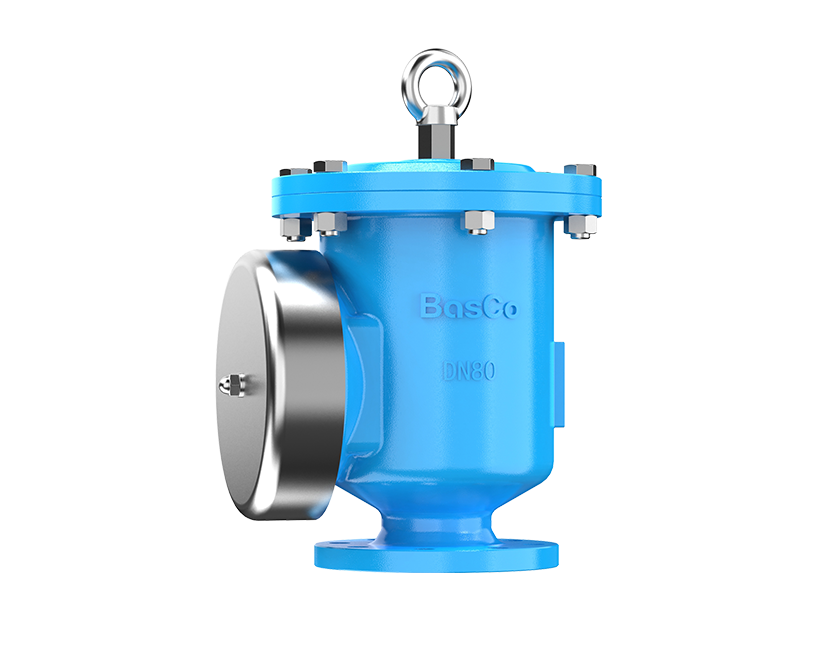
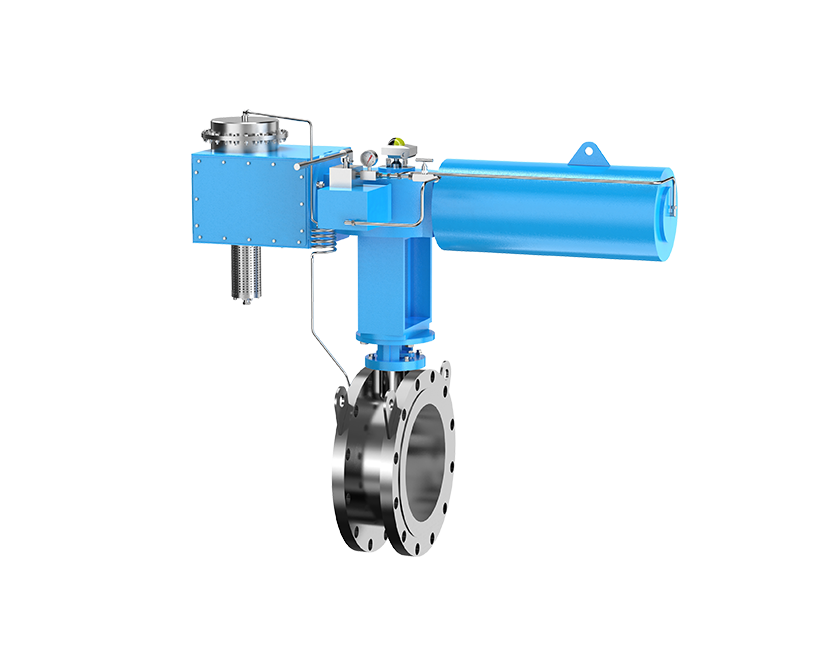
BASCO In Line Unstable Detonation Flame Arrester
An unstable detonation flame arrester must handle both flame quenching and shock absorption under rapidly changing conditions.
The internal element forces the flame through narrow channels, where heat is quickly dissipated. This interrupts combustion by lowering the temperature below the ignition point.
At the same time, the device must withstand fluctuating shock waves. Unlike stable detonation arresters, which deal with consistent loads, unstable detonation arresters must handle irregular and rapidly changing pressure spikes.
This dual requirement makes their design particularly complex.
Standard flame arresters are designed for deflagration conditions. They are effective at stopping low-speed flame propagation but are not built to handle the dynamic conditions of DDT or detonation.
When exposed to unstable detonation, these devices may experience:
In real systems, this often happens because the risk of DDT was underestimated during design.

The need for this type of arrester depends on whether your system can enter the DDT phase.
In practical engineering, this is determined by a combination of pipeline length, gas reactivity, and system geometry. Longer pipelines allow more distance for flame acceleration, while reactive gases increase flame speed.
From my experience, systems with moderate pipeline length and significant turbulence often fall into this “transition risk zone”. These systems are not yet stable detonation environments, but they cannot be safely protected by deflagration arresters.
These arresters are commonly used in pipeline systems where explosion conditions can evolve dynamically.
Typical applications include chemical processing pipelines, gas transport systems, and biogas installations. In these systems, flame propagation is influenced by flow conditions and system geometry, making DDT a realistic risk.
Selection should be based on a structured evaluation of system conditions rather than a single parameter.
Gas type determines how easily flame acceleration occurs. Pipeline length and geometry influence the likelihood of DDT. Flow conditions and pressure affect both explosion behavior and arrester design requirements.
Certification is also critical, as it ensures the device has been tested under real detonation conditions.
|
Parameter |
Engineering Impact |
|
Gas type |
Determines flame speed |
|
Pipeline length |
Influences DDT risk |
|
Geometry |
Affects turbulence |
|
Pressure |
Impacts structural design |
|
Certification |
Ensures reliability |
One of the most common mistakes is assuming that deflagration will remain stable throughout the system. In reality, flame acceleration is highly dependent on pipeline conditions.
Another issue is treating all detonation arresters as interchangeable. In practice, unstable and stable detonation arresters serve different purposes and must be selected accordingly.
I've also seen cases where engineers ignored turbulence effects caused by pipeline fittings, which significantly increased DDT risk.
In-line unstable detonation flame arresters are designed for one of the most complex and dangerous phases of explosion development—the transition from deflagration to detonation. Their role is to stop flame propagation under rapidly changing and unpredictable conditions.
From my perspective, understanding DDT is essential for proper system design. Many systems that appear safe under normal conditions can enter this transitional phase under the right circumstances.
For engineers and project designers, recognizing this risk and selecting the appropriate flame arrester is critical to ensuring safe and reliable operation.
It is a device designed to stop explosion waves during the transition from deflagration to detonation.
DDT stands for deflagration to detonation transition, where flame speed rapidly increases.
When pipeline conditions allow flame acceleration but not full stable detonation.
No. They are not designed for transitional explosion conditions and may fail.

Where Are Rupture Disks Used in Chemical and Petrochemical Plants?
2026-09-21Burst Pressure Tolerance Explained: How Accurate Are Rupture Disks?
2026-09-16Full-Process Quality Control for Rupture Discs
2026-09-01Rupture Disk Selection Guide: How to Choose the Right Type, Pressure, Material, and Size
2026-08-25Copyright © Jiangsu Bafang Safety Device Co., LTD. All Rights Reserved