

In gas handling systems, the most underestimated risk is not ignition—it's flame propagation inside pipelines. I've worked on projects where ignition didn't occur at the tank or reactor, but somewhere downstream in the piping system. Once the flame entered the pipeline, it accelerated rapidly, creating a far more dangerous situation than the original ignition point.
From my experience in industrial safety design, inline flame arresters are essential whenever there is a risk of internal flame propagation within pipelines. Unlike end-of-line arresters that protect against external ignition, inline models are specifically designed to stop flames traveling inside the system. However, they are more complex to select because engineers must consider flame acceleration, pipeline length, and the possibility of detonation. Choosing the wrong type—especially underestimating detonation risk—can lead to catastrophic failure.
In this article, I'll break down how inline flame arresters work, why they are more complex than standard designs, and how to select the right one based on real engineering logic.
An inline flame arrester is a safety device installed within a pipeline to prevent flames from propagating through the system.
Unlike end-of-line arresters, which are typically installed at vents or tank outlets, inline flame arresters are placed directly inside process piping. Their purpose is to stop flame fronts that originate within the system and prevent them from reaching upstream or downstream equipment.
In practical terms, they are used in systems where gas flows continuously and ignition can occur anywhere along the pipeline.

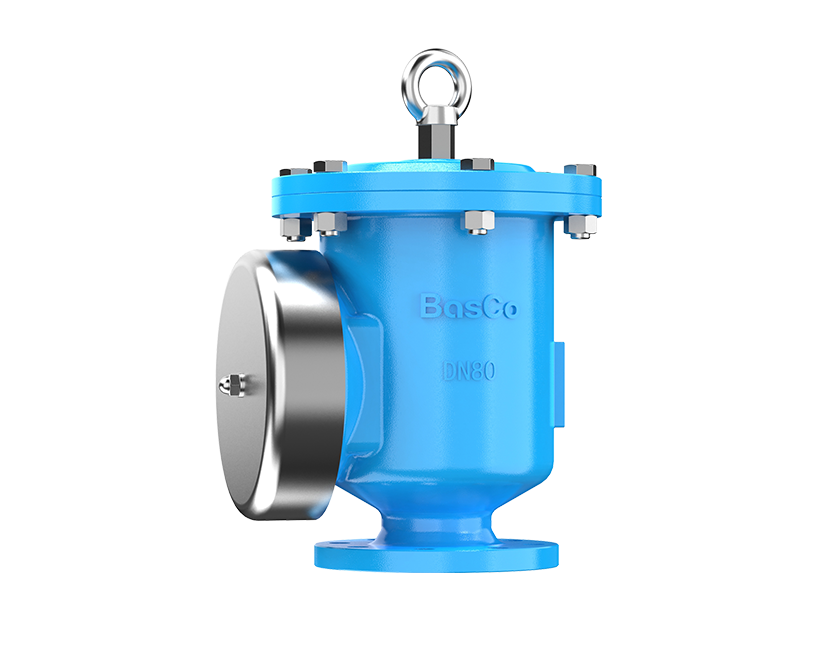
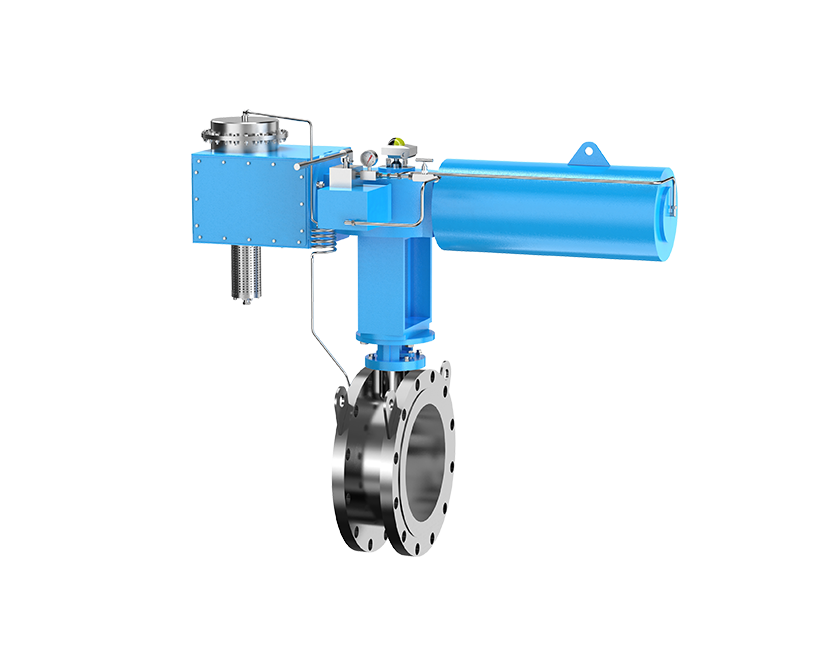
BASCO In Line Deflagration Flame Arrester
Inline flame arresters operate using the same fundamental principle as other flame arresters—flame quenching through heat absorption—but the conditions inside pipelines make the process more complex.
As a flame travels through a pipeline, it carries heat and energy forward. When it enters the flame arrester, it is forced through narrow metal channels.
These channels absorb heat rapidly, reducing the flame temperature below the ignition threshold and stopping combustion.
What many people underestimate is how flames behave inside pipelines.
In open environments, flames spread relatively slowly. Inside a pipeline, however, confinement and turbulence can cause the flame to accelerate. Bends, valves, and pressure changes can further increase turbulence.
From what I've seen in real systems, this acceleration is the reason inline flame arresters must be designed for much higher stress conditions than end-of-line units.
Inline flame arresters are classified based on the type of explosion they are designed to handle.
These are designed for low-speed flame propagation.
They are typically used in shorter pipelines or systems where the risk of flame acceleration is limited.
Detonation arresters are designed to handle high-speed explosion waves and pressure shocks.
In long pipelines or confined systems, flames can accelerate into detonation. In these cases, only detonation-rated arresters can provide reliable protection.
|
Type |
Application |
Risk Level |
|
Deflagration |
Short pipelines |
Moderate |
|
Detonation |
Long pipelines |
High |
This is one of the most important distinctions in system design—and one of the most misunderstood.
|
Feature |
Inline Flame Arrester |
End-of-Line Flame Arrester |
|
Installation |
Inside pipeline |
At vent outlet |
|
Risk addressed |
Internal flame propagation |
External ignition |
|
Explosion type |
Deflagration / detonation |
Mostly deflagration |
|
Design complexity |
High |
Lower |
From an engineering standpoint, the decision is not interchangeable.
If ignition can occur inside the system—or if gas flows through long pipelines—an inline flame arrester is required. End-of-line devices alone are not sufficient in these scenarios.

BASCO flame arrester classification
Inline flame arresters are widely used in systems where gases are transported through pipelines and ignition risks exist within the system.
Common applications include:
In one biogas project I worked on, inline flame arresters were installed between the digester and flare system to prevent flashback through the pipeline.
Inline flame arresters must handle more demanding conditions than end-of-line devices.
First, they must withstand higher pressure waves caused by confined explosions. Second, they must manage flame acceleration within pipelines, which can significantly increase flame speed.
Pipeline geometry also plays a role. Bends, valves, and length all influence how flames propagate.
Because of these factors, inline flame arrester selection is more dependent on system-specific conditions rather than standard sizing.
From a practical standpoint, selection should follow a structured approach.
Gas type is the starting point, as it determines explosion behavior. Pipeline length and configuration are also critical, as they influence whether deflagration can transition into detonation.
Flow rate must be considered to ensure that pressure drop remains within acceptable limits. Operating conditions such as temperature and corrosion also affect material selection.
|
Parameter |
Why It Matters |
|
Gas type |
Determines explosion characteristics |
|
Pipeline length |
Indicates detonation risk |
|
Flow rate |
Affects pressure drop |
|
Temperature |
Impacts materials |
|
Installation position |
Determines effectiveness |
One of the most common mistakes is assuming that end-of-line flame arresters provide sufficient protection for pipeline systems.
Another critical error is underestimating detonation risk. In long pipelines, using a deflagration arrester can result in failure under high-pressure conditions.
I've also seen cases where pressure drop was not considered, leading to reduced system efficiency.
Finally, improper installation—such as incorrect positioning—can compromise performance.
Inline flame arresters are essential components in pipeline safety systems where flame propagation can occur within the system. Their role is fundamentally different from end-of-line arresters, and their selection requires a deeper understanding of flame behavior, pipeline conditions, and explosion risk.
From my experience, the key to successful implementation lies in recognizing when inline protection is necessary and selecting the correct type based on real operating conditions. This is not just about compliance—it's about ensuring that the system remains safe under worst-case scenarios.
It is used to stop flame propagation inside pipelines and protect equipment from internal explosions.
Deflagration is slower flame propagation, while detonation involves high-speed shock waves and higher pressure.
It should be installed within pipelines at locations where flame propagation risk exists.
Yes, especially detonation-rated models, which are designed to withstand high-pressure explosion waves.

Where Are Rupture Disks Used in Chemical and Petrochemical Plants?
2026-09-21Burst Pressure Tolerance Explained: How Accurate Are Rupture Disks?
2026-09-16Full-Process Quality Control for Rupture Discs
2026-09-01Rupture Disk Selection Guide: How to Choose the Right Type, Pressure, Material, and Size
2026-08-25Copyright © Jiangsu Bafang Safety Device Co., LTD. All Rights Reserved