

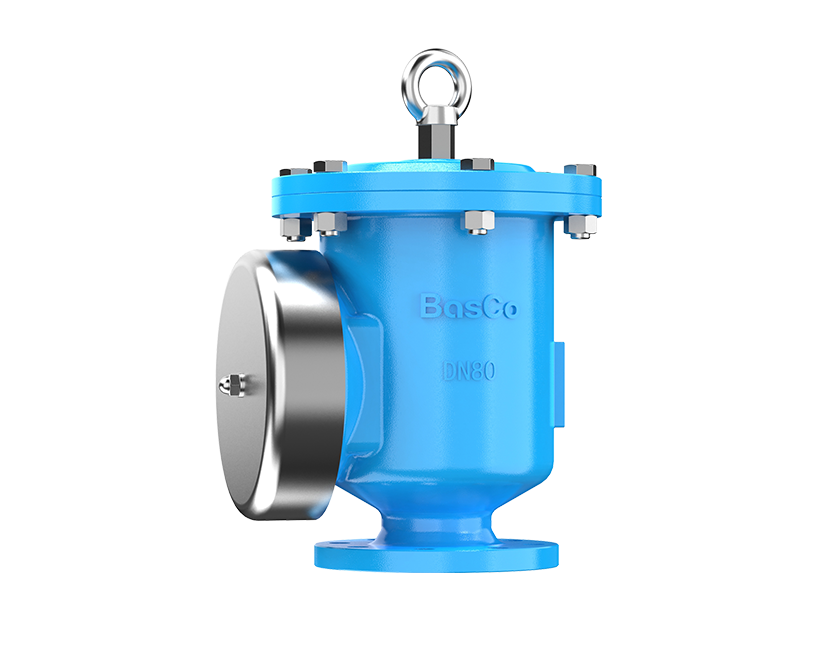

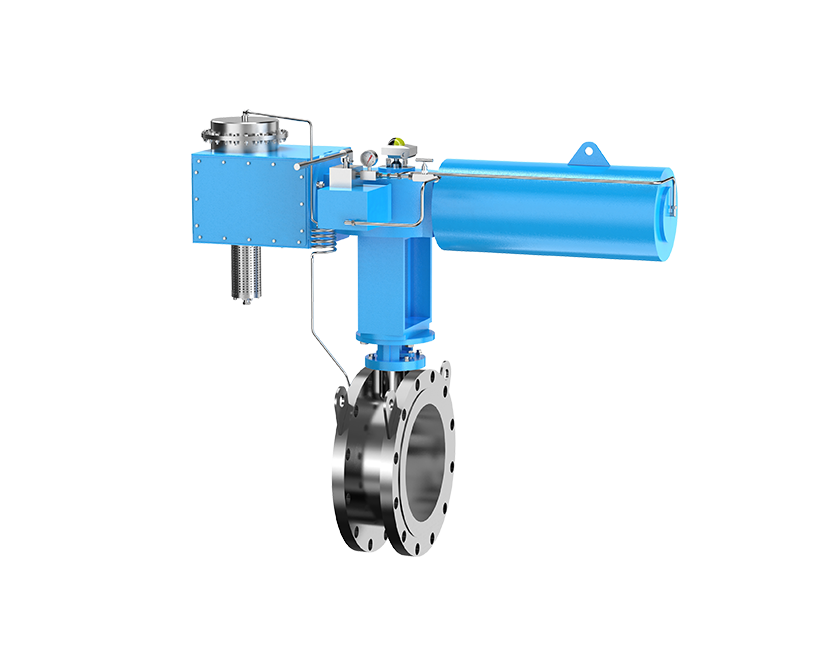










In industrial venting systems, the installation location of a pressure vacuum relief valve can significantly affect system behavior. Over the years, I’ve seen situations where a correctly sized PVRV still failed to perform properly because the piping layout and installation configuration were not considered during design. In many tank systems, engineers focus primarily on valve capacity while underestimating the impact of vent line dynamics and pressure losses.
From my experience as a BASCO engineer working on storage tank venting systems, an inline pressure vacuum relief valve is fundamentally different from an end-of-line configuration because it operates inside the vent piping system rather than directly at atmospheric discharge. This changes how pressure accumulates, how vacuum develops, and how flow resistance affects valve performance. In real applications, inline PVRVs must be evaluated as part of the entire vent system, including piping layout, flame arresters, vapor recovery equipment, and pressure drop behavior. Selecting the wrong inline configuration can lead to unstable venting, inaccurate set pressure performance, excessive emissions, or restricted tank breathing.
In this article, I’ll explain how inline PVRVs work, why installation position matters, how they interact with flame arresters and vent piping, and how we approach selection and sizing in real industrial systems.
What Is an Inline Pressure Vacuum Relief Valve?
An inline pressure vacuum relief valve is a venting device installed within a vent piping system rather than at the atmospheric discharge point.
From an engineering perspective, the term “inline” refers specifically to the valve location inside the vent line. Unlike end-of-line configurations that discharge directly to atmosphere, inline PVRVs operate within a closed or semi-closed piping arrangement connected to downstream equipment or vent headers.
This installation method changes how pressure and vacuum conditions behave throughout the system because the valve becomes part of the overall vent flow path.
In practical applications, inline PVRVs are commonly used in vapor recovery systems, process vent headers, and tank vent systems where downstream piping or flame protection equipment is present.
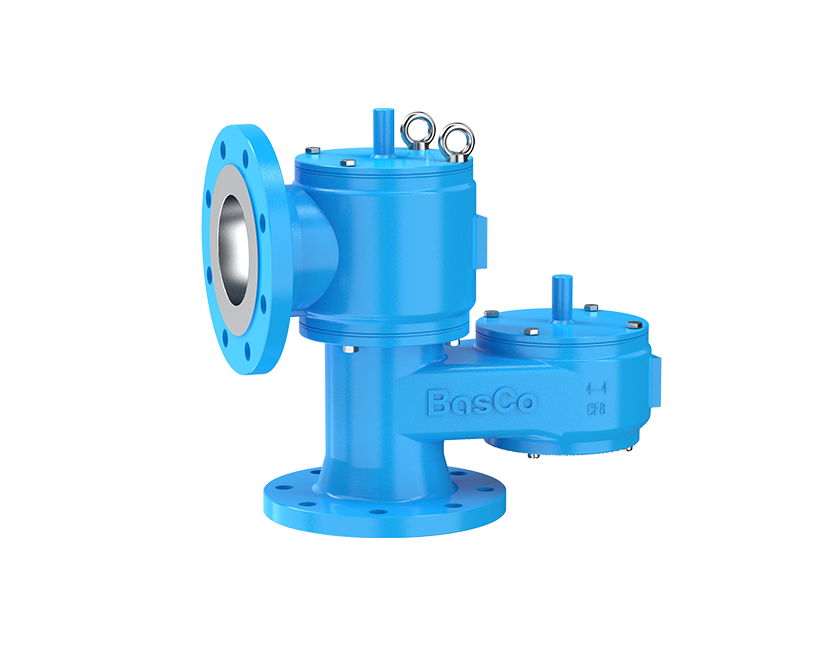
BasCo In-Line Pressure Vacuum Relief Valve
How Does an Inline PVRV Work?
An inline PVRV maintains safe tank pressure by automatically relieving positive or negative pressure conditions within the vent system.
Under normal operating conditions, the valve remains closed to reduce vapor loss and maintain system integrity. Once pressure or vacuum exceeds the configured set point, the valve opens to balance the condition.
Because the valve is installed within piping, system flow behavior has a much greater influence on performance compared to end-of-line installations.
How Does Pressure Relief Work in an Inline PVRV?
When internal tank or system pressure exceeds the pressure set point, the pressure pallet lifts and allows vapor flow through the vent system.
Unlike atmospheric discharge configurations, the relieved vapor may continue through downstream piping, vapor recovery equipment, or flare systems.
From my experience, this means engineers must evaluate not only valve capacity but also downstream flow resistance and pressure accumulation.
How Does Vacuum Relief Work in an Inline PVRV?
Vacuum conditions occur when internal pressure drops below atmospheric pressure.
When this happens, the vacuum pallet opens to allow air or gas into the system and prevent excessive inward pressure on the tank.
In inline systems, vacuum performance can be strongly influenced by piping length and restrictions, especially when flame arresters or vapor recovery units are installed downstream.
Why Does Inline Installation Matter?
This is one of the most important engineering considerations and one of the least understood.
An inline PVRV does not operate independently. Its performance is directly affected by the vent piping system surrounding it.
In practical systems, piping length, bends, reducers, flame arresters, and downstream equipment all create flow resistance. This resistance changes the actual pressure seen by the valve during operation. From an engineering standpoint, the valve and piping system must therefore be treated as a single integrated venting assembly.
This is especially important in large storage tank systems where even small pressure losses can affect breathing behavior and emissions performance.
What Is the Difference Between an Inline and End-of-Line PVRV?
This is one of the most common questions we receive from customers at BASCO.
The main difference is installation position and system interaction.
An end-of-line PVRV vents directly to atmosphere and is exposed to environmental conditions. An inline PVRV, however, operates inside a vent piping network and interacts continuously with downstream system pressure.
This distinction affects venting dynamics, maintenance strategy, pressure drop behavior, and flame protection integration.
| Feature | Inline PVRV | End-of-Line PVRV |
| Installation | Within vent piping | Atmospheric discharge point |
| System interaction | High | Moderate |
| Pressure drop sensitivity | Higher | Lower |
| Environmental exposure | Lower | Direct |
| Vapor recovery compatibility | Common | Limited |
Where Are Inline PVRVs Typically Used?
Inline PVRVs are commonly used in systems where venting is integrated with additional process or emission control equipment.
Why Are Inline PVRVs Used in Tank Vent Systems?
In storage tank applications, inline PVRVs are often connected to centralized vent headers or vapor recovery systems.
This allows vapors to be collected rather than released directly to atmosphere.
Why Are Inline PVRVs Used in Process Piping?
In process systems, inline venting arrangements help manage pressure fluctuations within enclosed piping networks.
This is particularly important where process gases must remain contained for safety or environmental reasons.
Why Are Inline PVRVs Common in Vapor Recovery Systems?
Vapor recovery systems rely on controlled vapor flow to maintain environmental compliance and minimize product loss.
Inline PVRVs allow pressure balancing while keeping the venting process integrated with recovery equipment.
From my experience, these systems require especially careful evaluation of pressure drop and flow dynamics.
How Are Inline PVRVs Integrated with Flame Arresters?
In many industrial venting systems, inline PVRVs are combined with flame arresters to provide integrated venting and explosion protection.
The flame arrester prevents flame propagation through the vent line, while the PVRV controls normal pressure and vacuum breathing.
However, this combination also introduces additional pressure loss.
From an engineering perspective, this is critical because excessive pressure drop can alter valve opening behavior and reduce effective venting capacity.
At BASCO, we always evaluate flame arrester resistance together with vent line losses during sizing calculations.
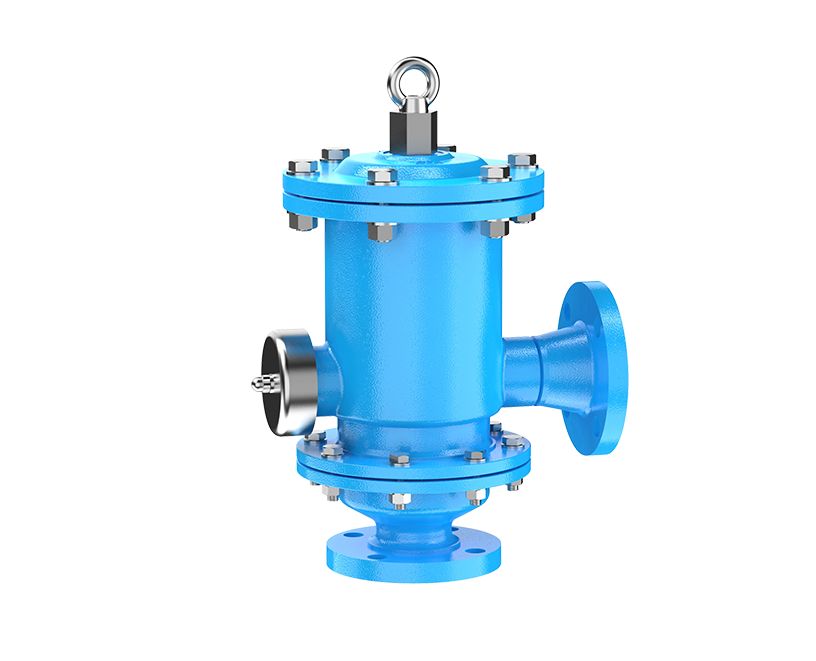
BasCo In-line Pressure Vacuum Relief Valve with Integrated Flame Arrester
What Factors Should Be Considered When Selecting an Inline PVRV?
Selection begins with understanding the entire venting system rather than the valve alone.
How Does Set Pressure Affect Inline PVRV Selection?
The valve set pressure must remain within allowable tank design limits while accounting for piping losses and downstream system behavior.
In inline systems, the effective pressure seen by the valve may differ from actual tank pressure due to flow resistance.
Why Is Flow Capacity Critical?
The valve must handle both pressure and vacuum flow requirements during worst-case breathing scenarios.
Insufficient capacity can cause excessive pressure accumulation or vacuum conditions inside the tank.
Why Does Pressure Drop Matter So Much in Inline Systems?
Pressure drop is one of the defining engineering challenges of inline venting systems.
Every component, including piping, elbows, flame arresters, and recovery equipment, adds resistance to flow.
This resistance affects valve response accuracy, venting efficiency, and pressure accumulation behavior.
In real projects, pressure drop is often the governing factor in vent system performance.
How Does Material Selection Affect Reliability?
Material selection depends on process media, corrosion conditions, and environmental exposure.
In corrosive systems, stainless steel construction is often preferred to improve long-term reliability.
| Parameter | Engineering Impact |
| Set pressure | Defines opening behavior |
| Flow capacity | Determines breathing performance |
| Pressure drop | Affects system dynamics |
| Material | Influences durability |
| Piping layout | Impacts venting efficiency |
What Are the Most Common Mistakes in Inline Venting Design?
One of the most common mistakes is treating the inline PVRV as an isolated component instead of part of a complete venting system.
I’ve also seen systems where flame arresters or long piping runs were added without recalculating pressure losses. This often causes unstable venting or inaccurate pressure control.
Another issue is improper piping layout. Excessive elbows, reducers, or undersized piping can significantly increase flow restriction.
Maintenance accessibility is also frequently overlooked, particularly in complex vapor recovery installations.
Conclusion
Inline pressure vacuum relief valves play a critical role in integrated industrial venting systems where pressure management must work together with piping networks, vapor recovery equipment, and flame protection devices.
From my experience at BASCO, successful inline venting design depends on understanding the entire system, not just the valve itself. Pressure drop, piping layout, flow dynamics, and integrated safety equipment all influence real-world performance.
For engineers and operators, selecting the correct inline PVRV is ultimately about designing a stable, reliable, and properly balanced venting system for long-term operation.